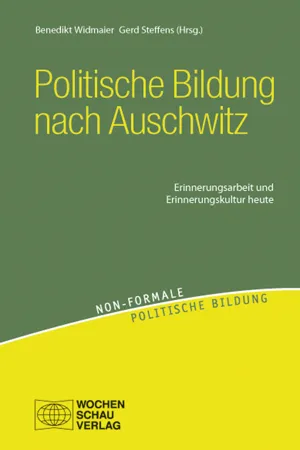
Stichworte wie "Vergangenheitsbewältigung" oder "Erinnerungskultur" waren nicht nur konstitutiv, sondern lange Zeit auch prägend für das Selbstverständnis der Politischen Bildung in Deutschland nach 1945. Gerade im Zusammenhang mit den sich häufenden Erinnerungsjahren stellt sich deshalb die Frage, in wie weit Adornos berühmte Formel einer "Erziehung nach Auschwitz" und seine pädagogische Prämisse und Forderung, "dass Auschwitz nicht noch einmal sei", heute noch von zentraler Bedeutung für Politische Bildung ist oder sein sollte. Diese Frage ist nicht zu trennen von aktuellen Forderungen, eine historisch-politische Bildung zu entwickeln, die auch den nachfolgenden Generationen und jungen Migranten/innen gerecht werden kann. Weitere aktuelle Herausforderungen für eine zeitgemäße "Politische Bildung nach Auschwitz" sind der wachsende Rechtsextremismus und die Frage nach einer Europäisierung von Erinnerung. Siebzig Jahre nach der Befreiung des KZ Auschwitz knüpft die non-formale Politische Bildung mit der Beteiligung an diesen Debatten an ihre normativ aufklärerischen Traditionen an. Der Band liefert einen wichtigen Beitrag zum Diskurs über Ziele, Aufgaben und Selbstverständnis der Politischen Bildung, der über die oft selbst gesetzten, engen Grenzen von schulischer Politikdidaktik und außerschulischer Politischer Bildung hinaus reicht und Erinnerungspädagogik als gemeinsame Aufgabe in den Blick nimmt.Mit freundlicher Unterstützung der Stiftung "Erinnerung, Verantwortung und Zukunft"
eBook - PDF
Politische Bildung nach Auschwitz
Erinnerungsarbeit und Erinnerungskultur heute
- 193 pages
- English
- PDF
- Available on iOS & Android
eBook - PDF
Politische Bildung nach Auschwitz
Erinnerungsarbeit und Erinnerungskultur heute
About this book
Information
Table of contents
- Inhalt
- Gerd Steffens/Benedikt Widmaier: Politische Bildung nach Auschwitz und die Erinnerungskultur heute. Zur Einführung
- Politische Bildung nach Auschwitz
- Erinnerung im gesellschaftlichen Wandel
- Erinnerung in Gedenkstätten
- Erinnerung als Prävention gegen Rechtsextremismus
- Erinnerung als europäisches Projekt
- Autorinnen und Autoren
Trusted by 375,005 students
Access to over 1.5 million titles for a fair monthly price.
Study more efficiently using our study tools.
Frequently asked questions
Yes, you can cancel anytime from the Subscription tab in your account settings on the Perlego website. Your subscription will stay active until the end of your current billing period. Learn how to cancel your subscription
No, books cannot be downloaded as external files, such as PDFs, for use outside of Perlego. However, you can download books within the Perlego app for offline reading on mobile or tablet. Learn how to download books offline
Perlego offers two plans: Essential and Complete
- Essential is ideal for learners and professionals who enjoy exploring a wide range of subjects. Access the Essential Library with 800,000+ trusted titles and best-sellers across business, personal growth, and the humanities. Includes unlimited reading time and Standard Read Aloud voice.
- Complete: Perfect for advanced learners and researchers needing full, unrestricted access. Unlock 1.5M+ books across hundreds of subjects, including academic and specialized titles. The Complete Plan also includes advanced features like Premium Read Aloud and Research Assistant.
We are an online textbook subscription service, where you can get access to an entire online library for less than the price of a single book per month. With over 1.5 million books across 990+ topics, we’ve got you covered! Learn about our mission
Look out for the read-aloud symbol on your next book to see if you can listen to it. The read-aloud tool reads text aloud for you, highlighting the text as it is being read. You can pause it, speed it up and slow it down. Learn more about Read Aloud
Yes! You can use the Perlego app on both iOS and Android devices to read anytime, anywhere — even offline. Perfect for commutes or when you’re on the go.
Please note we cannot support devices running on iOS 13 and Android 7 or earlier. Learn more about using the app
Please note we cannot support devices running on iOS 13 and Android 7 or earlier. Learn more about using the app
Yes, you can access Politische Bildung nach Auschwitz by Bededikt Widmaier, Gerd Steffens in PDF and/or ePUB format, as well as other popular books in Politics & International Relations & Political History & Theory. We have over 1.5 million books available in our catalogue for you to explore.