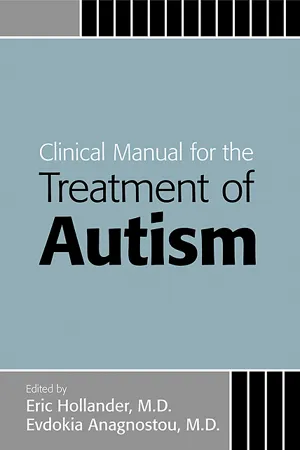
Reflecting tremendous gains over the past decade in our understanding of the causes of autism, Clinical Manual for the Treatment of Autism meets the increasing need for clear, up-to-date, and evidence-based treatment. Internationally known researchers -- who are also skilled in treating patients with autism -- share treatment approaches they have either developed or thoroughly tested for safety and efficacy.
The book describes in a straightforward manner how to diagnose autism, recognizing that patients may vary greatly in intelligence, language ability, disruptive behavior, and presence of comorbid disorders. It outlines the appropriate instruments to use for particular patients, providing examples and guidelines for evaluation and testing of individuals of all ages and levels of functioning, with a focus on initial diagnostic evaluation. It also evaluates the appropriate role of various medications for specific target symptoms and individuals: SSRIs and antidepressants, focusing on the rationale for their use and clinical trials in autism; anticonvulsants and mood stabilizers used to treat disruptive behaviors and mood instability; conventional and atypical antipsychotics, emphasizing studies using random assignment to active and control treatments; cholinesterase inhibitors, focusing on cholinergic mechanisms and treatment experience in autism; and stimulants and nonstimulants for the treatment of pervasive developmental disorder accompanied by hyperactivity, distractibility, and impulsiveness. In addition to pharmacological approaches, the book presents psychosocial treatments and includes well-accepted psychoeducational models for which there is sufficient evidence to recommend their use. In these chapters, the book: • Covers the use of applied behavior analysis, the DIR/Floortime approach, and peer relationship interventions.• Presents educational approaches, based on the experience of the TEACCH program in North Carolina, describing how its fundamental principles are utilized across the age spectrum.• Describes complementary and alternative treatments -- such as therapies targeting gastrointestinal function or the immune system or the use of nutritional supplements -- with an eye toward helping parents make informed choices.• Explores promising new avenues of treatment to address issues related to cognition and social and language deficits, focusing particularly on the potential of medications that target the glutamate and oxytocin brain systems.
Clinical Manual for the Treatment of Autism is an essential resource for a broad range of professionals, including psychiatrists, pediatricians, neurologists, psychologists, educators, and behavioral, speech, and occupational therapists. It is a state-of-the-art compendium of treatments that will help advance the care that people with autism receive.