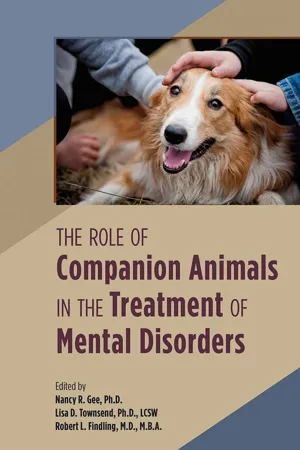
The Role of Companion Animals in the Treatment of Mental Disorders
- 314 pages
- English
- ePUB (mobile friendly)
- Available on iOS & Android
The Role of Companion Animals in the Treatment of Mental Disorders
About this book
From ancient literature to modern fiction and research reports in professional literature, the bond between humans and animals has been extensively documented. Although 70% of American households would vouch for the benefits of companion animals, the decision about whether to implement animal-based interventions for mental disorders is not always a simple one.
Unique both for its subject matter and for the depth of the information it provides, The Role of Companion Animals in the Treatment of Mental Disorders examines the existing evidence to support these practices as well as the risks associated with various types of programs.
This volume combines a thorough analysis of the latest research with practical examples and explores topics that include
• Ensuring animal welfare and well-being, with an emphasis on understanding applicable laws and regulations• Animal-assisted crisis interventions to prevent the onset of PTSD in individuals who have experienced significant traumas, such as natural disasters• Animal-assisted programs for youths at risk for mental disorders secondary to child maltreatment or contact with the juvenile justice system• Human-animal interaction (HAI) in specific disorders, including ADHD, autism spectrum disorder, depression, dementia, and anxiety• The application of HAIs in university campuses, hospital settings, and psychotherapy
As applicable for trainees and residents as it is for experienced mental health professionals, this book offers a scientifically grounded review of extant knowledge while highlighting what is not yet known about animal-based interventions in particular patient groups.
Readers will come away with an understanding of the role that animals can play in mitigating psychiatric symptoms, engaging patients in treatment, and enhancing well-being—as well as key principles and considerations for determining whether an animal-based intervention is appropriate for a given patient.
Frequently asked questions
- Essential is ideal for learners and professionals who enjoy exploring a wide range of subjects. Access the Essential Library with 800,000+ trusted titles and best-sellers across business, personal growth, and the humanities. Includes unlimited reading time and Standard Read Aloud voice.
- Complete: Perfect for advanced learners and researchers needing full, unrestricted access. Unlock 1.4M+ books across hundreds of subjects, including academic and specialized titles. The Complete Plan also includes advanced features like Premium Read Aloud and Research Assistant.
Please note we cannot support devices running on iOS 13 and Android 7 or earlier. Learn more about using the app.
Information
Table of contents
- Cover Page
- Title Page
- Copyright
- Contents
- Contributors
- Foreword
- 1 Introduction
- 2 A Working Partnership Between Clinicians and Therapy Dogs in the Treatment of Mental Disorders
- 3 Roles of Animals With Individuals Who Have Mental Illness
- 4 Companion Animals in Crisis Intervention
- 5 Companion Animals in the Treatment of At-Risk and Adjudicated Youth
- 6 Companion Animals in the Treatment of ADHD
- 7 Companion Animals in the Treatment of Autism Spectrum Disorder
- 8 Companion Animals in the Treatment of Depressive Disorders
- 9 Companion Animals in the Treatment of Stress and Anxiety
- 10 Companion Animals in the Treatment of PTSD
- 11 Companion Animals in the Treatment of Serious Mental Illness
- 12 Companion Animals Assisting Patients in Hospice
- 13 Companion Animals in the Treatment of Dementia and Aging-Related Concerns
- 14 Animal-Assisted Interventions for Improving the Mental Health and Academic Performance of University Students
- 15 Dog Visitation Programs in Hospitals
- 16 Animal-Assisted Therapy in Psychotherapy
- 17 Take-Home Messages
- Index