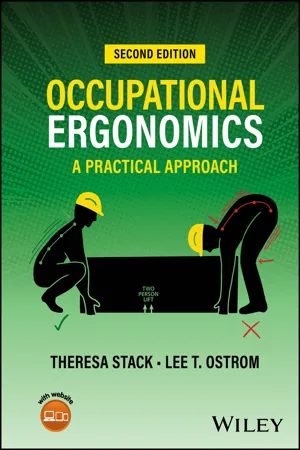
Develop a healthier connection between worker and work with this practical introduction
The United States Bureau of Labor Statistics estimates that 34% of all workdays lost each year are the result of work-related musculoskeletal disorders (WMSDs). These disorders result from a mismatch between a worker, their working conditions, and the task they perform. Improperly designed tasks or equipment, insufficient downtime between shifts or tasks, or even simple sitting position can all produce WMSDs. The key insights into preventing these disorders are produced by ergonomics, the scientific study of human bodies as they relate to objects, systems, and environments, especially work environments.
Occupational Ergonomics: A Practical Approach aims to supply an ergonomic toolkit for creating healthier relationships between workers' bodies and their work. Beginning with a set of foundational ergonomic principles, it then details multiple assessment techniques in ways easily adapted to specific workplace situations. This balance of theory and practice has made Occupational Ergonomics an essential reference concerning human beings and the work they do.
Readers of the second edition will also find:
- Up-to-date ergonomic research reflecting the latest clinical and workplace data
- Entirely new chapters on Work Physiology, Total Worker Health, Return on Investment, and more
- Major revisions to chapters on Elements of an Ergonomic Program, Workstation Design, Work-Related MSDs, How to Conduct an Assessments, and Office Ergonomics
- Detailed and updated case studies applying ergonomic assessment techniques to common workplace scenarios
Occupational Ergonomics is a must for workplace safety managers, safety coordinators, ergonomics program coordinators, facilities managers, and any professionals concerned with the work environment, and worker health and safety.