- English
- PDF
- Available on iOS & Android
About this book
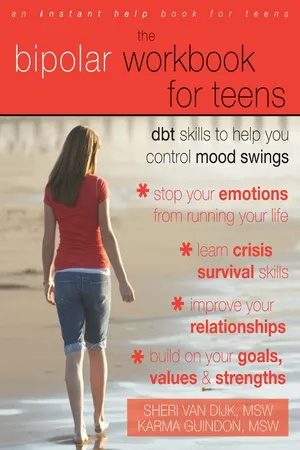
When you have bipolar disorder, it can sometimes seem like mood swings are keeping you from being the person you want to be. You may alternate between feelings of depression and overexcitement even though what you really want is to find a healthy balance between the two. This easy-to-use workbook presents a set of skills you can learn that will help you find that balance, become more independent, and stay focused on the big-picture goals that are most important to you.
The Bipolar Workbook for Teens includes exercises and worksheets that will help you learn skills drawn from a special technique called dialectical behavior therapy (DBT). DBT skills can help people with bipolar disorder improve their relationships with friends and family and calm themselves when their emotions get really overwhelming.
Working through this book will help you:
ā¢Recognize and respond to your emotional triggers ā¢Create a crisis plan and find supportā¢Get a handle on addictive behaviorā¢Maintain friendships and get along with your family
Frequently asked questions
- Essential is ideal for learners and professionals who enjoy exploring a wide range of subjects. Access the Essential Library with 800,000+ trusted titles and best-sellers across business, personal growth, and the humanities. Includes unlimited reading time and Standard Read Aloud voice.
- Complete: Perfect for advanced learners and researchers needing full, unrestricted access. Unlock 1.4M+ books across hundreds of subjects, including academic and specialized titles. The Complete Plan also includes advanced features like Premium Read Aloud and Research Assistant.
Please note we cannot support devices running on iOS 13 and Android 7 or earlier. Learn more about using the app.
Information
Table of contents
- contents
- introduction
- 1. a look at your bipolar symptoms
- 2. bipolar disorder also affects your family
- 3. a look at who else you are
- 4. how your family and friends can help
- 5. how living in the presen tmoment can help
- 6. automatic behaviors and their impact
- 7. informal activities to practice mindfully
- 8. formal activities to practice mindfully
- 9. your emotional self versus your wise self
- 10. how to increase your wise-self behavior
- 11. keeping track of your mood
- 12. how to identify your emotions
- 13. the physical part of emotions
- 14. thoughts, feelings, and behaviors
- 15. emotions and urges
- 16. dealing with intense emotions
- 17. advantages and disadvantages of behaviors
- 18. learning new ways to cope
- 19. creating a crisis plan
- 20. substance use and problem behaviors
- 21. reasons for substance use and problem behaviors
- 22. thinking about things differently
- 23. how you learn about yourself
- 24. messages about who you are
- 25. how words impact your self-esteem
- 26. developing a new story of you
- 27. accepting painful situations
- 28. practicing acceptance
- 29. accepting your emotions
- 30. relationships with others
- 31. what do you want from your relationships?
- 32. recognizing what you can change and accepting what you canāt
- 33. your communication skills
- 34. listening to others
- 35. reflecting on your experiences
- 36. continuing to move forward
- afterword