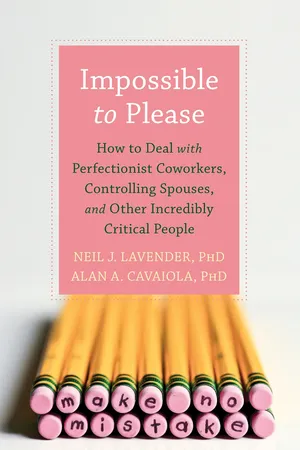
Everyone knows someone who is impossible to please, critical, judgmental, picky, and stubbornly closed-minded. These are symptoms of a disorder called obsessive-compulsive personality disorder (OCPD), but it's common for people to have subclinical levels of some or all of these qualities. Most of the time, it's best to avoid the difficult to please person, but what happens when he or she is a close family member, coworker, or even a spouse? It's still possible to maintain a positive relationship with the right tools. Impossible to Please, written by the authors of Toxic Coworkers, is a manual for dealing with these difficult people without sitting through stressful arguments, vicious insults and attacks, and passive-aggressive behavior. It empowers readers to take charge of the relationship and regain their dignity and confidence in interactions with these individuals.
This book features specific strategies that are immediately effective when conversing with critical people and explains how readers can respond to unfair blame without becoming angry or overly defensive. By setting boundaries, improving communication, and asserting themselves, readers learn to deal with the impossible to please in romantic relationships, friendships, family, and work relationships.