- English
- PDF
- Available on iOS & Android
Agoraphobia Workbook
About this book
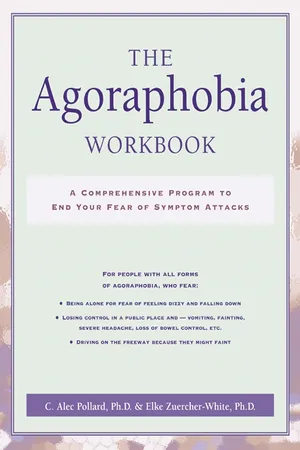
Being agoraphobic can take many forms, and most people with agoraphobia are not complete shut-ins. Instead, they may have trouble walking outside alone for fear of feeling dizzy and falling down, or be afraid of driving on the freeway because they might faint, or avoid public venues for fear of losing physical or emotional control in a crowded place. Whatever form agoraphobia takes, it is a highly treatable and surprisingly common anxiety disorder.
The Agoraphobia Workbook can help you or someone you love overcome agoraphobia in any of its forms. The book offers clear information about how the disorder develops and a practical, step-by-step treatment strategy you can use to control specific fears and symptoms. In an interactive, easy-to-follow style, the workbook takes you through exposure and desensitization exercises. By taking it step-by-step, you can work up to formerly difficult tasks like walking outside, driving, taking public transportation, and going to stores and malls. The book also includes tips on avoiding relapses, managing setbacks, and finding help and support.
Frequently asked questions
- Essential is ideal for learners and professionals who enjoy exploring a wide range of subjects. Access the Essential Library with 800,000+ trusted titles and best-sellers across business, personal growth, and the humanities. Includes unlimited reading time and Standard Read Aloud voice.
- Complete: Perfect for advanced learners and researchers needing full, unrestricted access. Unlock 1.4M+ books across hundreds of subjects, including academic and specialized titles. The Complete Plan also includes advanced features like Premium Read Aloud and Research Assistant.
Please note we cannot support devices running on iOS 13 and Android 7 or earlier. Learn more about using the app.
Information
Table of contents
- Contents
- Acknowledgments
- Introduction
- PART 1: What You Need to Know
- PART 2: What You Need to Do
- PART 3: Evaluating and Continuing Your Progress
- APPENDIX A: Why Some People Develop Panic and Phobias
- APPENDIX B: How Negative Automatic Thoughts Reflect Cognitive Traps
- APPENDIX C: Factual Information about Symptom Attacks
- APPENDIX D: The Physiology and Symptoms of Hyperventilation
- Appendix E: Specific Feared Agoraphobic Situations
- APPENDIX F: Worksheets
- References