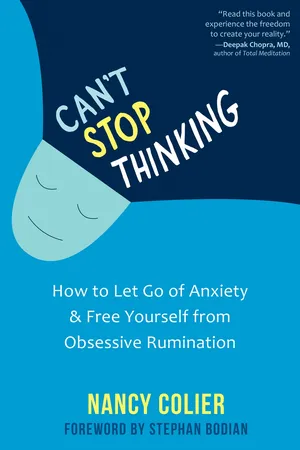
"Read this book and experience the freedom to create your reality."
—Deepak Chopra, MD, author of Total Meditation Don't believe everything your mind tells you. Are you a chronic overthinker? Do you obsess to the point of feeling anxious, hopeless, angry, or stressed out? Have you ever tried to "think your way out" of one of these negative thought spirals, only to fall in deeper? Let's face it: trying to escape your thoughts—or control them—just doesn't work, and can actually make you more miserable in the long run.So, how can you overcome your addiction to thinking? In Can't Stop Thinking, psychotherapist and spiritual counselor Nancy Colier offers the keys to breaking free from the obsessive rumination that drives stress, worry, and anxiety. Using powerful tools grounded in the ancient wisdom of mindfulness and evidence-based acceptance and commitment therapy (ACT), you'll learn how to observe and gain distance from troubling thoughts, put an end to harsh self-criticism, and manage difficult feelings like resentment and shame. If you're ready to discover a life beyond your thoughts—one of self-compassion, presence, and peace—it's time to stop thinking and start living.
eBook - PDF
About this book
Information
Publisher
New Harbinger PublicationseBook ISBN
9781684036783
Year
2021Table of contents
- Contents
- Foreword
- INTRODUCTION: Addicted to Thinking
- CHAPTER 1. Awareness: Changing Our Relationship with Thought
- PART I: Styles of Suffering
- PART II: Tools for Relief
- PART III: Living the Inner Freedom
- Acknowledgments
- Endnotes
- About the Author
Trusted by 375,005 students
Access to over 1.5 million titles for a fair monthly price.
Study more efficiently using our study tools.