A critical introduction to how the Nagasaki atomic bombing has been remembered, especially in contrast to that of Hiroshima.
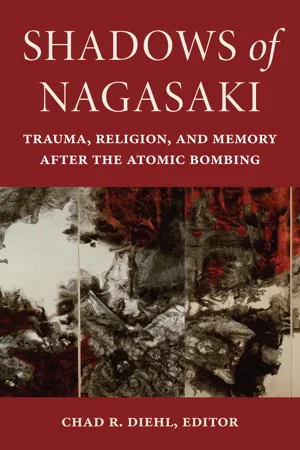
In the decades following the atomic bombing of Nagasaki on August 9, 1945, the city's residents processed their trauma and formed narratives of the destruction and reconstruction in ways that reflected their regional history and social makeup. In doing so, they created a multi-layered urban identity as an atomic-bombed city that differed markedly from Hiroshima's image. Shadows of Nagasaki traces how Nagasaki's trauma, history, and memory of the bombing manifested through some of the city's many post-atomic memoryscapes, such as literature, religious discourse, art, historical landmarks, commemorative spaces, and architecture. In addition, the book pays particular attention to how the city's history of international culture, exemplified best perhaps by the region's Christian (especially Catholic) past, informed its response to the atomic trauma and shaped its postwar urban identity. Key historical actors in the volume's chapters include writers, Japanese- Catholic leaders, atomic-bombing survivors (known as hibakusha), municipal officials, American occupation personnel, peace activists, artists, and architects. The story of how these diverse groups of people processed and participated in the discourse surrounding the legacies of Nagasaki's bombing shows how regional history, culture, and politics—rather than national ones—become the most influential factors shaping narratives of destruction and reconstruction after mass trauma. In turn, and especially in the case of urban destruction, new identities emerge and old ones are rekindled, not to serve national politics or social interests but to bolster narratives that reflect local circumstances.
- 368 pages
- English
- ePUB (mobile friendly)
- Available on iOS & Android
eBook - ePub
About this book
Information
Publisher
Fordham University PressYear
2024Print ISBN
9781531504960
9781531504953
Edition
1eBook ISBN
9781531504977
Table of contents
- Cover
- Title Page
- Copyright
- Dedication
- Contents
- Note on Japanese Names
- Introduction. Imagining Nagasaki: Religion and History in Postatomic Memoryscapes
- Part I: Catholic Responses
- Part II: Literature and Testimony
- Part III: Sites of Memory
- Part IV: Reflections
- Acknowledgments
- List of Contributors
- Index
Trusted by 375,005 students
Access to over 1.5 million titles for a fair monthly price.
Study more efficiently using our study tools.
Frequently asked questions
Yes, you can cancel anytime from the Subscription tab in your account settings on the Perlego website. Your subscription will stay active until the end of your current billing period. Learn how to cancel your subscription
No, books cannot be downloaded as external files, such as PDFs, for use outside of Perlego. However, you can download books within the Perlego app for offline reading on mobile or tablet. Learn how to download books offline
Perlego offers two plans: Essential and Complete
- Essential is ideal for learners and professionals who enjoy exploring a wide range of subjects. Access the Essential Library with 800,000+ trusted titles and best-sellers across business, personal growth, and the humanities. Includes unlimited reading time and Standard Read Aloud voice.
- Complete: Perfect for advanced learners and researchers needing full, unrestricted access. Unlock 1.5M+ books across hundreds of subjects, including academic and specialized titles. The Complete Plan also includes advanced features like Premium Read Aloud and Research Assistant.
We are an online textbook subscription service, where you can get access to an entire online library for less than the price of a single book per month. With over 1.5 million books across 990+ topics, we’ve got you covered! Learn about our mission
Look out for the read-aloud symbol on your next book to see if you can listen to it. The read-aloud tool reads text aloud for you, highlighting the text as it is being read. You can pause it, speed it up and slow it down. Learn more about Read Aloud
Yes! You can use the Perlego app on both iOS and Android devices to read anytime, anywhere — even offline. Perfect for commutes or when you’re on the go.
Please note we cannot support devices running on iOS 13 and Android 7 or earlier. Learn more about using the app
Please note we cannot support devices running on iOS 13 and Android 7 or earlier. Learn more about using the app
Yes, you can access Shadows of Nagasaki by Chad R. Diehl in PDF and/or ePUB format, as well as other popular books in History & Japanese History. We have over 1.5 million books available in our catalogue for you to explore.