- 328 pages
- English
- ePUB (mobile friendly)
- Available on iOS & Android
Antimalarial Medicinal Plants
About this book
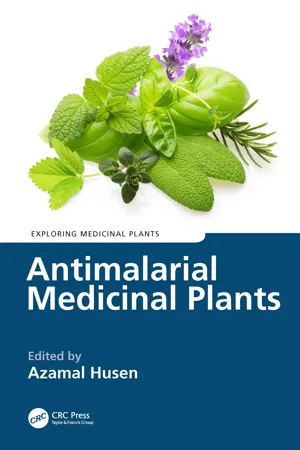
Malaria continues to affect a large population of the world, especially in third world countries. The spread of drug-resistant parasites demonstrates the need for antimalarial agents with various modes of action. The search for remedies derived from medicinal plants for the treatment of malaria is reliant on accurate ethnobotanical and ethnopharmacological information obtained from traditional medical practitioners. Antimalarial Medicinal Plants provides information on bioactive compounds and therapeutic potentials of several antimalarial plant species found around the globe. This book evaluates these plant species with respect to their biology, diversity, distribution, and pharmacological values.
A volume in the Exploring Medicinal Plants series, this book highlights trends, technologies, processes, and services important to and necessary for efficient production, use, and understanding of medicinal qualities of antimalarial plants. It critically examines claims made by traditional medical practitioners with scientific validations for safe herbal drug formulation. It is a reference work for researchers of herbal medicine, traditional healers, pharmacists, and students associated with plant sciences and economic botany.
Frequently asked questions
- Essential is ideal for learners and professionals who enjoy exploring a wide range of subjects. Access the Essential Library with 800,000+ trusted titles and best-sellers across business, personal growth, and the humanities. Includes unlimited reading time and Standard Read Aloud voice.
- Complete: Perfect for advanced learners and researchers needing full, unrestricted access. Unlock 1.4M+ books across hundreds of subjects, including academic and specialized titles. The Complete Plan also includes advanced features like Premium Read Aloud and Research Assistant.
Please note we cannot support devices running on iOS 13 and Android 7 or earlier. Learn more about using the app.
Information
Table of contents
- Cover
- Half Title
- Series
- Title
- Copyright
- Contents
- Preface
- About the Editor
- List of Contributors
- Chapter 1 Diversity and Geographic Distribution of Some Antimalarial Plant Species
- Chapter 2 Biology and Genetic Improvement of Antimalarial Plant Species
- Chapter 3 Plant Tissue Culture Practices for Antimalarial Agents
- Chapter 4 Sustainable Techniques for the Harvest and Conservation of Antimalarial Plant Species
- Chapter 5 Toxic Compounds Associated with Some Antimalarial Plant Species
- Chapter 6 Plant-Based Secondary Compounds and Nutrients as Therapeutic Agents in the Management of Malaria Infection
- Chapter 7 Antioxidants from Antimalarial Plants and Their Applications
- Chapter 8 Traditional Claims and Scientific Validations of the Antimalarial Plant Species
- Chapter 9 Antimalarial Response, Traditional and Other Potential Uses of Aristolochia Genera
- Chapter 10 Antimalarial Response, Traditional and Other Potential Uses of Aspidosperma Genera
- Chapter 11 Antimalarial Response, Traditional and Other Potential Uses of Cinchona Genera
- Chapter 12 Antimalarial Response, Traditional and Other Potential Uses of Croton Genera
- Chapter 13 Antimalarial Response, Traditional and Other Potential Uses of Cryptolepis Genera
- Chapter 14 Antimalarial Response, Traditional and Other Potential Uses of Momordica Genera
- Chapter 15 Antimalarial Response, Traditional and Other Potential Uses of Piper Genera
- Chapter 16 Antimalarial Response, Traditional and Other Potential Uses of the Genus Senna
- Chapter 17 Antimalarial Response, Traditional and Other Potential Uses of Solanum Genus
- Chapter 18 Antimalarial Response, Traditional and Other Potential Uses of Stachytarpheta Genera
- Chapter 19 Antimalarial Response, Traditional and Other Potential Uses of Tabebuia Genera
- Chapter 20 Antimalarial Response, Traditional and Other Potential Uses of Swertia Genus
- Index