An NPR Book of the Year
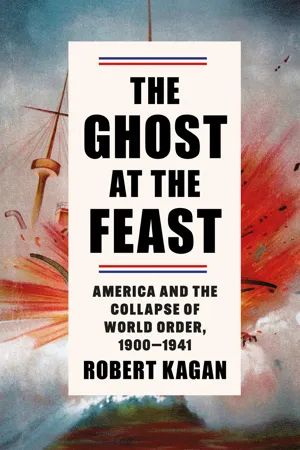
At the dawn of the twentieth century, the United States was one of the world's richest, most populous, most technologically advanced nations. It was also a nation divided along numerous fault lines, with conflicting aspirations and concerns pulling it in different directions. And it was a nation unsure about the role it wanted to play in the world, if any. Americans were the beneficiaries of a global order they had no responsibility for maintaining.
Many preferred to avoid being drawn into what seemed an ever more competitive, conflictual, and militarized international environment. However, many also were eager to see the United States taking a share of international responsibility, working with others to preserve peace and advance civilization. The story of American foreign policy in the first four decades of the twentieth century is about the effort to do both - "to adjust the nation to its new position without sacrificing the principles developed in the past," as one contemporary put it.
This would prove a difficult task. The collapse of British naval power, combined with the rise of Germany and Japan, suddenly placed the United States in a pivotal position. American military power helped defeat Germany in the First World War, and the peace that followed was significantly shaped by a U.S. president. But Americans recoiled from their deep involvement in world affairs, and for the next two decades, they sat by as fascism and tyranny spread unchecked, ultimately causing the liberal world order to fall apart. America's resulting intervention in the Second World War marked the beginning of a new era, for the United States and for the world.
Brilliant and insightful,
The Ghost at the Feast shows both the perils of American withdrawal from the world and the price of international responsibility.
- 688 pages
- English
- ePUB (mobile friendly)
- Available on iOS & Android
eBook - ePub
About this book
Information
Table of contents
- Cover
- Title
- Copyright
- Contents
- Maps
- Introduction
- 1. A Tale of Two Wars
- 2. Empire Without “Imperialism”; Imperialism Without “Empire”
- 3. Collapse of the Nineteenth-Century World Order
- 4. The European War and American Neutrality
- 5. Schrechlichkeit and the Submarine War
- 6. “He Kept Us Out of War”
- 7. The Path to War
- 8. America Declares War
- 9. America and the “War to End All Wars”
- 10. The Great War Ends
- 11. America and the European Peace
- 12. Wilson and the League Fight
- 13. A Return to “Normalcy”?
- 14. The Collapse of Europe and the Rise of Hitler
- 15. Toward a New Order in Asia
- 16. The Manchurian Crisis
- 17. The Fascist Challenge
- 18. Franklin D. Roosevelt: Isolationist
- 19. The United States and Appeasement
- 20. Kristallnacht and Its Effect on American Policy
- 21. Blitzkrieg and America’s “Great Debate”
- 22. Accelerating Toward War
- 23. The United States Enters the War
- Conclusion
- Acknowledgments
- Notes
- Bibliography
- Index
Trusted by 375,005 students
Access to over 1.5 million titles for a fair monthly price.
Study more efficiently using our study tools.
Frequently asked questions
Yes, you can cancel anytime from the Subscription tab in your account settings on the Perlego website. Your subscription will stay active until the end of your current billing period. Learn how to cancel your subscription
No, books cannot be downloaded as external files, such as PDFs, for use outside of Perlego. However, you can download books within the Perlego app for offline reading on mobile or tablet. Learn how to download books offline
Perlego offers two plans: Essential and Complete
- Essential is ideal for learners and professionals who enjoy exploring a wide range of subjects. Access the Essential Library with 800,000+ trusted titles and best-sellers across business, personal growth, and the humanities. Includes unlimited reading time and Standard Read Aloud voice.
- Complete: Perfect for advanced learners and researchers needing full, unrestricted access. Unlock 1.5M+ books across hundreds of subjects, including academic and specialized titles. The Complete Plan also includes advanced features like Premium Read Aloud and Research Assistant.
We are an online textbook subscription service, where you can get access to an entire online library for less than the price of a single book per month. With over 1.5 million books across 990+ topics, we’ve got you covered! Learn about our mission
Look out for the read-aloud symbol on your next book to see if you can listen to it. The read-aloud tool reads text aloud for you, highlighting the text as it is being read. You can pause it, speed it up and slow it down. Learn more about Read Aloud
Yes! You can use the Perlego app on both iOS and Android devices to read anytime, anywhere — even offline. Perfect for commutes or when you’re on the go.
Please note we cannot support devices running on iOS 13 and Android 7 or earlier. Learn more about using the app
Please note we cannot support devices running on iOS 13 and Android 7 or earlier. Learn more about using the app
Yes, you can access The Ghost at the Feast by Robert Kagan in PDF and/or ePUB format, as well as other popular books in History & North American History. We have over 1.5 million books available in our catalogue for you to explore.