- 128 pages
- English
- ePUB (mobile friendly)
- Available on iOS & Android
eBook - ePub
Leatherwork and Tanning
About this book
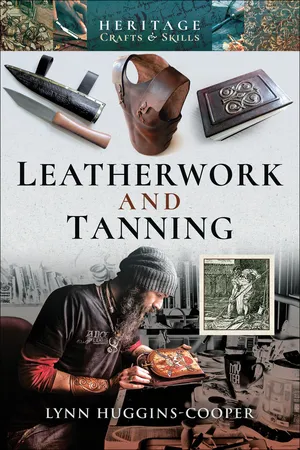
This book offers a whistle-stop guide to the history of leathercraft and tanning. The story begins in prehistory when people discovered, perhaps by chance, that skins exposed to smoke or accidentally soaked in autumnal puddles lasted longer. Skins were a valuable resource, used for everything from clothing to shelter, blankets and vessels. The book looks at evidence that shows us how tanning and leather continued to be of prime importance across the globe throughout history, in economic as well as functional terms.The second part of the book brings us up to date, via interviews with modern day leather crafting artisans. These leather crafters generously allowed the author access to their studios and discussed the way they use and adapt traditional methods, techniques and tools for the twenty first century. Photos of their craft, and their working environment offers a unique window into the world of leathercraft.Finally, if you are inspired to try your hand at this fascinating and most ancient of crafts, the book also has a resources section. It includes a valuable list of suppliers of leather, dyes, tools and tanning materials, as well as information about training courses, useful websites and more everything you need to get started.
Information
Print ISBN
9781526724489
Table of contents
- Cover
- Title
- Copyright
- Contents
- Introduction to Heritage Crafts
- Chapter 1: Ancient Leatherwork
- Chapter 2: Medieval Leathercraft
- Chapter 3: Tudor and Stuart Leathercraft
- Chapter 4: Georgian Era Leathercraft
- Chapter 5: Victorian Era Leathercraft
- Chapter 6: Twentieth Century Leathercraft
- Chapter 7: Modern Leathercraft
- Chapter 8: Artisan Interviews
- Chapter 9: Leathercrafting Methods and Materials
- Suppliers, Training Courses and Books
- Plate section
Trusted by 375,005 students
Access to over 1.5 million titles for a fair monthly price.
Study more efficiently using our study tools.