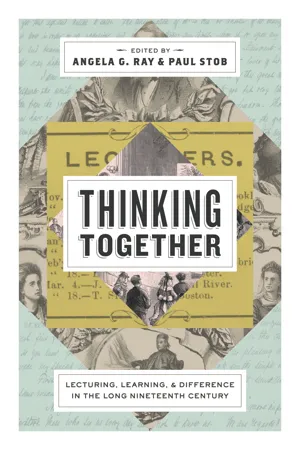
Thinking Together
Lecturing, Learning, and Difference in the Long Nineteenth Century
- English
- PDF
- Available on iOS & Android
Thinking Together
Lecturing, Learning, and Difference in the Long Nineteenth Century
About this book
Changes to the landscape of higher education in the United States over the past decades have urged scholars grappling with issues of privilege, inequality, and social immobility to think differently about how we learn and deliberate. Thinking Together is a multidisciplinary conversation about how people approached similar questions of learning and difference in the nineteenth century.
In the open air, in homes, in public halls, and even in prisons, people pondered recurring issues: justice, equality, careers, entertainment, war and peace, life and death, heaven and hell, the role of education, and the nature of humanity itself. Paying special attention to the dynamics of race and gender in intellectual settings, the contributors to this volume consider how myriad groups and individualsâmany of whom lived on the margins of society and had limited access to formal educationâdeveloped and deployed knowledge useful for public participation and public advocacy around these concerns. Essays examine examples such as the women and men who engaged lecture culture during the Civil War; Irish immigrants who gathered to assess their relationship to the politics and society of the New World; African American women and men who used music and theater to challenge the white gaze; and settler-colonists in Liberia who created forums for envisioning a new existence in Africa and their relationship to a U.S. homeland. Taken together, this interdisciplinary exploration shows how learning functioned not only as an instrument for public action but also as a way to forge meaningful ties with others and to affirm the value of an intellectual life.
By highlighting people, places, and purposes that diversified public discourse, Thinking Together offers scholars across the humanities new insights and perspectives on how difference enhances the human project of thinking together.
Frequently asked questions
- Essential is ideal for learners and professionals who enjoy exploring a wide range of subjects. Access the Essential Library with 800,000+ trusted titles and best-sellers across business, personal growth, and the humanities. Includes unlimited reading time and Standard Read Aloud voice.
- Complete: Perfect for advanced learners and researchers needing full, unrestricted access. Unlock 1.4M+ books across hundreds of subjects, including academic and specialized titles. The Complete Plan also includes advanced features like Premium Read Aloud and Research Assistant.
Please note we cannot support devices running on iOS 13 and Android 7 or earlier. Learn more about using the app.
Information
Table of contents
- COVER front
- Series Page
- Copyright Page
- Table of Contents
- Introduction
- Notes to Introduction
- Chapter 1: The Portable Lyceum in the Civil War
- Notes to Chapter 1
- Chapter 2: Womenâs Entrepreneurial Lecturing in the Early National Period
- Notes to Chapter 2
- Chapter 3: Mobilizing Irish Americain the Antebellum Lecture Hall
- Notes to Chapter 3
- Chapter 4: Authentic Imitation or Perverse Original? Learning About Race From Americaâs Popular Platforms
- Notes to Chapter 4
- Chapter 5: A Lyceum Diaspora: Hilary Teage and a Liberian Civic Identity
- Notes to Chapter 5
- Chapter 6: Secret Knowledge, Public Stage: Joseph Smithâs King Follett Discourse
- Notes to Chapter 6
- Chapter 7: The âPerfect Delightâ of Dramatic Reading: Gertrude Kellogg and the PostâCivil War Lyceum
- Notes to Chapter 7
- Chapter 8: Talking Music: Amy Fay and the Origins of the Lecture Recital
- Notes to Chapter 8
- Chapter 9: Hinduism for the West: Swami Viveka Nandaâs Pluralism at the Worldâs Parliament of Religions
- Notes to Chapter 9
- Conclusion: Placing Platform Culture in Nineteenth-Century American Life
- Notes to Conclusion
- Notes
- Contributors
- Index