Understanding and Managing Vision Deficits
A Guide for Occupational Therapists
- 416 pages
- English
- ePUB (mobile friendly)
- Available on iOS & Android
About this book
The new fourth edition of Understanding and Managing Vision Deficits: A Guide for Occupational Therapists provides practitioners not only with a comprehensive understanding of vision and how vision problems can impact on the practice of occupational therapy, but also invaluable guidance on how to effectively manage clients with these issues.
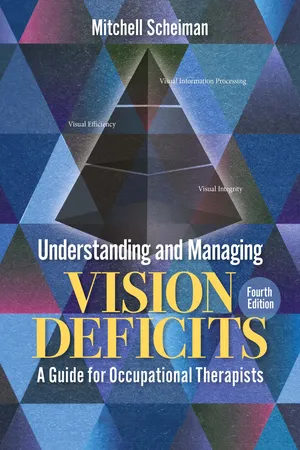
The book presents a three-part model of vision to inform readers' understanding of the issues, and management across a range of eye conditions:
- Visual integrity: Includes visual acuity (clarity), the optics of the eye, and eye health.
- Visual efficiency skills: Includes focusing, eye teaming, and eye movements.
- Visual information processing skills: Includes the ability to analyze, interpret, and respond to visual information.
Covering key topics such as vision problems related to acquired brain injury and learning disorders among children with special educational needs, the new edition has been thoroughly updated to the latest findings in vision research, while there are also new chapters on using an interprofessional collaborative approach to client care, and how remediation can be integrated into occupational therapy principles to create occupation-based remedial vision rehabilitation.
A unique collaboration between the professions of occupational therapy and optometry together, and including a glossary of key terms and a sample vision screening report form, this is a key text for health care professionals to provide the ultimate in patient care.
Frequently asked questions
- Essential is ideal for learners and professionals who enjoy exploring a wide range of subjects. Access the Essential Library with 800,000+ trusted titles and best-sellers across business, personal growth, and the humanities. Includes unlimited reading time and Standard Read Aloud voice.
- Complete: Perfect for advanced learners and researchers needing full, unrestricted access. Unlock 1.4M+ books across hundreds of subjects, including academic and specialized titles. The Complete Plan also includes advanced features like Premium Read Aloud and Research Assistant.
Please note we cannot support devices running on iOS 13 and Android 7 or earlier. Learn more about using the app.
Information
Table of contents
- Cover
- Half Title
- Title Page
- Copyright Page
- Table of Contents
- About the Author
- Contributing Authors
- Preface to the Fourth Edition
- Preface to the Third Edition
- Preface to the Second Edition
- Preface to the First Edition
- Chapter One Background Information
- Chapter Two Review of Basic Anatomy, Physiology, and Development of the Visual System
- Chapter Three Three Component Model of Vision, Part One: Visual Integrity
- Chapter Four Three Component Model of Vision, Part Two: Visual Efficiency Skills
- Chapter Five Three Component Model of Vision, Part Three: Visual Information Processing Skills
- Chapter Six Screening for Visual Acuity, Visual Efficiency, and Visual Information Processing Problems
- Chapter Seven Management of Refractive, Visual Efficiency, and Visual Information Processing Disorders
- Chapter Eight Managing Visual Problems in the Pediatric Population
- Chapter Nine Visual Problems Associated With Acquired Brain Injury
- Chapter Ten Visual Rehabilitation for Patients With Brain Injury
- Chapter Eleven Visual and Ocular Disorders in Children With Disabilities
- Chapter Twelve Management of Vision Disorders in Children With Disabilities
- Chapter Thirteen Using an Interprofessional Collaborative Approach for the Successful Care of the Person
- Chapter Fourteen OT Management of Eye Movement and Vision Information Processing Disorders: Occupation-Based Remedial Vision Rehabilitation
- Chapter Fifteen The Inter-Relationship Model
- Glossary of Key Terms
- Appendix A: Resources
- Appendix B: Vision Screening Report Form
- Index