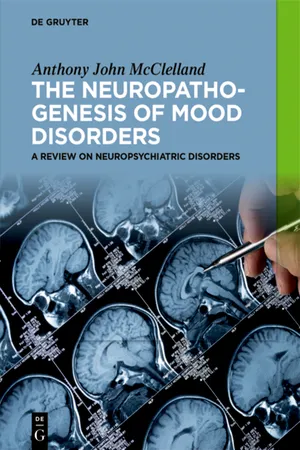
Neurology does not include study of the limbic system as this is regarded as more relevant to psychiatry. Paradoxically, psychiatrists receive no education on the anatomy, physiology or neuropathology of the limbic system either during their specialist training programs internationally. Their focus is purely on the diagnosis and treatment of mental illness. Thus, they are unique among the medical specialities in the 21st century. The morbidity and mortality of the many millions of patients with mood disorders has remained unchanged for multiple decades, as opposed to the progressive advances made in all other medical specialities. This is a travesty and a tragedy for a medical specialist discipline. Accordingly, using advances in immunology, radiology and my own personal insights, and after considerable research, I have discovered the complex neuropathogenesis of mood disorders and how to substantially improve the treatment regimen in order to substantially improve patient outcomes. A detailed, comprehensive description of the anatomy, physiology, the neuropathology of the limbic system and the underlying etiology of mood disorders are described in this book. It is likely that a team approach using a psychiatrist and an immunologist will be required for patients with bipolar 2 and treatment resistant depression as the use of biological agents are complex and require considerable experience.
eBook - ePub
The Neuropathogenesis of Mood Disorders
A Review on Neuropsychiatric Disorders
- 136 pages
- English
- ePUB (mobile friendly)
- Available on iOS & Android
eBook - ePub
The Neuropathogenesis of Mood Disorders
A Review on Neuropsychiatric Disorders
About this book
Information
Topic
MedicineSubtopic
Psychiatry & Mental HealthTable of contents
- Title Page
- Copyright
- Contents
- Introduction
- Chapter 1 The Unusual Approach of Psychiatric Specialist Training in Relationship to All Other Specialist Disciplines
- Chapter 2 The Current Inadequacies of Psychiatry as an Evolving Specialty in the Twenty-First Century
- Chapter 3 A Brief Overview of the Anatomy of the Brain
- Chapter 4 A Detailed Description of the Anatomy of the Limbic System and Its Connections
- Chapter 5 Diencephalon
- Chapter 6 The Hypothalamus
- Chapter 7 The Gross Anatomy of the Brain
- Chapter 8 More Comprehensive Discussion of the Neuropathophysiology of the Limbic System
- Chapter 9 Cytokines and Other Proinflammatory Agents
- Chapter 10 Treatment of the Chronic Inflammatory State of Mood Disorders
- Chapter 11 Risks and Complications of TNF-Alpha Inhibitors
- Chapter 12 IL-6 and Other Proinflammatory Cytokines and Biochemical Agents Are Involved in the Autoimmune Inflammatory Response
- Chapter 13 Nonbiological Therapeutic Options
- Chapter 14 Drug Combinations with MTX in Rheumatoid Arthritis
- Chapter 15 Crohn’s Disease and Ulcerative Colitis
- Chapter 16 Description of Multiple Other Immunosuppressive Drugs
- Chapter 17 Hydroxychloroqine
- Chapter 18 Rituximab
- Chapter 19 IL-6 Inhibitors
- Chapter 20 Azathioprine
- Chapter 21 Cyclophosphamide
- Chapter 22 Abatacept
- Chapter 23 JAK Inhibitors
- Chapter 24 Other Agents
- Chapter 25 Chelators
- Chapter 26 Glucocorticoids
- Chapter 27 The Pathophysiology of Mood Disorders
- Chapter 28 The Monoaminergic System
- Chapter 29 Biochemical Differences Between Depressed Patients and Healthy Controls
- Chapter 30 Subcortical Limbic Brain Regions
- Chapter 31 The Hypothalamus and the Impact of Mood Disorders
- Chapter 32 The Relevance of Inflammation
- Chapter 33 Perinatal and Postpartum Depression
- Chapter 34 Radiological Imaging in Mood Disorders
- Chapter 35 The Economic Burden of Mood Disorders
- Chapter 36 Overview of the Neuropathogenesis of Mood Disorders
- Chapter 37 The Mood Disorders
- Chapter 38 Psychiatric Specialist Training Time Warp
- Chapter 39 Consequences of the Above
- Index
Trusted by 375,005 students
Access to over 1.5 million titles for a fair monthly price.
Study more efficiently using our study tools.
Frequently asked questions
Yes, you can cancel anytime from the Subscription tab in your account settings on the Perlego website. Your subscription will stay active until the end of your current billing period. Learn how to cancel your subscription
No, books cannot be downloaded as external files, such as PDFs, for use outside of Perlego. However, you can download books within the Perlego app for offline reading on mobile or tablet. Learn how to download books offline
Perlego offers two plans: Essential and Complete
- Essential is ideal for learners and professionals who enjoy exploring a wide range of subjects. Access the Essential Library with 800,000+ trusted titles and best-sellers across business, personal growth, and the humanities. Includes unlimited reading time and Standard Read Aloud voice.
- Complete: Perfect for advanced learners and researchers needing full, unrestricted access. Unlock 1.5M+ books across hundreds of subjects, including academic and specialized titles. The Complete Plan also includes advanced features like Premium Read Aloud and Research Assistant.
We are an online textbook subscription service, where you can get access to an entire online library for less than the price of a single book per month. With over 1.5 million books across 990+ topics, we’ve got you covered! Learn about our mission
Look out for the read-aloud symbol on your next book to see if you can listen to it. The read-aloud tool reads text aloud for you, highlighting the text as it is being read. You can pause it, speed it up and slow it down. Learn more about Read Aloud
Yes! You can use the Perlego app on both iOS and Android devices to read anytime, anywhere — even offline. Perfect for commutes or when you’re on the go.
Please note we cannot support devices running on iOS 13 and Android 7 or earlier. Learn more about using the app
Please note we cannot support devices running on iOS 13 and Android 7 or earlier. Learn more about using the app
Yes, you can access The Neuropathogenesis of Mood Disorders by Anthony John McClelland in PDF and/or ePUB format, as well as other popular books in Medicine & Psychiatry & Mental Health. We have over 1.5 million books available in our catalogue for you to explore.