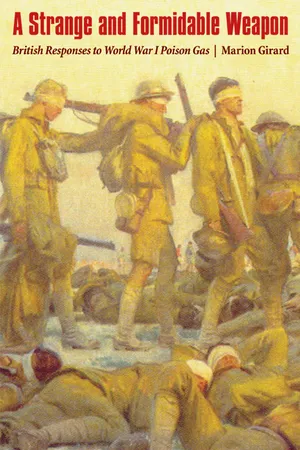
A Strange and Formidable Weapon
British Responses to World War I Poison Gas
- 294 pages
- English
- PDF
- Available on iOS & Android
About this book
The advent of poison gas in World War I shocked Britons at all levels of society, yet by the end of the conflict their nation was a leader in chemical warfare. Although never used on the home front, poison gas affected almost every segment of British society physically, mentally, or emotionally, proving to be an armament of total war. Through cartoons, military records, novels, treaties, and other sources, Marion Girard examines the varied ways different sectors of British society viewed chemical warfare, from the industrialists who promoted their toxic weapons while maintaining private control of production, to the politicians who used gas while balancing the need for victory with the risk of developing a reputation for barbarity. Although most Britons considered gas a vile weapon and a symptom of the enemy's inhumanity, many eventually condoned its use. The public debates about the future of gas extended to the interwar years, and evidence reveals that the taboo against poison gas was far from inevitable. A Strange and Formidable Weapon uncovers the complicated history of this weapon of total war and illustrates the widening involvement of society in warfare.
Frequently asked questions
- Essential is ideal for learners and professionals who enjoy exploring a wide range of subjects. Access the Essential Library with 800,000+ trusted titles and best-sellers across business, personal growth, and the humanities. Includes unlimited reading time and Standard Read Aloud voice.
- Complete: Perfect for advanced learners and researchers needing full, unrestricted access. Unlock 1.4M+ books across hundreds of subjects, including academic and specialized titles. The Complete Plan also includes advanced features like Premium Read Aloud and Research Assistant.
Please note we cannot support devices running on iOS 13 and Android 7 or earlier. Learn more about using the app.
Information
Table of contents
- Contents
- List of Illustrations
- Acknowledgments
- Introduction
- 1. The Political Challenge: Descent to Atrocities?
- 2. The Army’s Experience: New Weapons, New Soldiers
- 3. The Scientific Divide: Chemists versus Physicians
- 4. Whose Business Is It?: Dilemmas in the Gas Industry
- 5. Gas as a Symbol: Visual Images of Chemical Weapons in the Popular Press
- 6. The Reestablishment of the Gas Taboo and the Public Debate: Will Gas Destroy the World?
- Epilogue
- Abbreviations
- Notes
- Bibliography
- Index