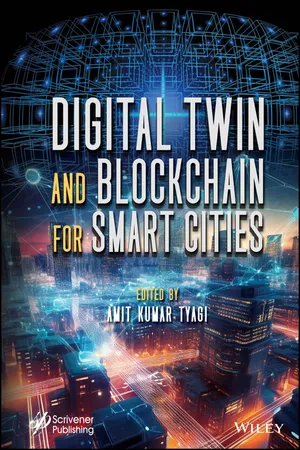
The book uniquely explores the fundamentals of blockchain and digital twin technologies and their uses in smart cities.
In the previous decade, many governments explored artificial intelligence, digital twin, and blockchain, and their roles in smart cities. This book discusses the convergence of two transformative technologies, digital twin and blockchain, to address urban challenges and propel the development of smarter, more sustainable cities. This convergence empowers cities to create real-time replicas of urban environments (digital twins) and secure, transparent data management (blockchain) to improve city planning, management, and civic services. In this application, the concept of a digital twin involves creating a virtual, data-driven replica of a city or specific urban systems, such as transportation, energy, or infrastructure. This digital twin mirrors the real world, gathering data from various sensors, IoT devices, and other sources to provide a holistic view of the city's operations.
Furthermore, blockchain technology offers a decentralized and tamper-resistant ledger for securely storing and managing data. In the context of smart cities, blockchain can ensure data integrity, privacy, and transparency, enabling trust and collaboration among various stakeholders. This book covers many important topics, including real-time city modeling; data security and the trustworthy storage of sensitive urban data; transparent governance to facilitate accountable governance and decision-making processes in smart cities; improved city services; disaster resilience (by providing insights into vulnerabilities and efficient resource allocation during crises); sustainable urban planning that optimizes resource allocation, reduces energy consumption, and minimizes environmental impact, which fosters sustainable development; citizen engagement; and much more.
This book will not only provide information about more efficient, resilient, and sustainable urban environments, but it also empowers citizens to be active participants in shaping the future of their cities. By converging these technologies, cities can overcome existing challenges, encourage innovation, and create more livable, connected, and responsive urban spaces.
Audience
This book has a wide audience in computer science, artificial intelligence, and information technology as well as engineers in a variety of industrial manufacturing industries. It will also appeal to economists and government/city policymakers working on smart cities, the circular economy, clean tech investors, urban decision-makers, and environmental professionals.