The book that inspired the stories of
Gladiator &
Gladiator
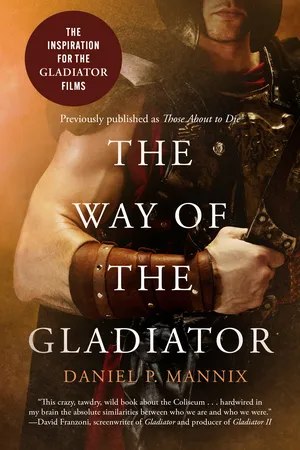
II: Step into the ring with this classic, in-depth account of the ancient Romans' obsession with the bloody and brutal games.
"[
The Way of the Gladiator is] this crazy, tawdry, wild book about the Coliseum. . . . It hardwired in my brain the absolute similarities between who we
are and who we
were." —David Franzoni, Academy Award–nominated screenwriter of
Gladiator and producer of
Gladiator II
Originally published under the title Those About to Die
.
"If you can imagine a superior American sports writer suddenly being transported back in time to cover the ancient Roman games, you will have some idea of the flavor and zest of
The Way of the Gladiator," said the
Los Angeles Times about Daniel P. Mannix's century-by-century—and nearly moment-by-moment—narrative of the Roman Empire's national institution. Putting the games in the context of Rome's rise and dramatic fall, Mannix captures all the history, planning, and savage pageantry that went into creating the first spectator sports.
The games began in 238 BC as nearly county fair–like entertainment, with trick riding, acrobats, trained animals, chariot racing, and athletic events. The contests then evolved into slave fights thanks to wealthy patricians Marcus and Decimus Brutus, who wanted to give their father an unforgettable funeral by reviving an old tradition. What the brothers wrought, Rome devoured, demanding even greater violence to satisfy the bloodlust of the crowd. Architectural wonders in themselves, massive arenas like Circus Maximus and the Colosseum were built, able to host sea battle reenactments on actual water. Successful gladiators found fame, fortune—and freedom.
But as Rome began to fall in the fifth century, so did the games, devolving into nothing more than pointless massacres. In the end, millions of humans and animals were sacrificed in barbaric displays. What were once ceremonies given in honor of gods met an inglorious fate, yet they still captivate—in book and in film—the imagination of people today.
- 212 pages
- English
- ePUB (mobile friendly)
- Available on iOS & Android
eBook - ePub
About this book
Information
Subtopic
Italian HistoryIndex
HistoryTable of contents
- Cover
- Title Page
- Foreword
- I
- II
- III
- IV
- V
- VI
- VII
- VIII
- IX
- X
- XI
- XII
- XIII
- XIV
- Author’s Note
- Bibliography
- About the Author
- Copyright
Trusted by 375,005 students
Access to over 1.5 million titles for a fair monthly price.
Study more efficiently using our study tools.
Frequently asked questions
Yes, you can cancel anytime from the Subscription tab in your account settings on the Perlego website. Your subscription will stay active until the end of your current billing period. Learn how to cancel your subscription
No, books cannot be downloaded as external files, such as PDFs, for use outside of Perlego. However, you can download books within the Perlego app for offline reading on mobile or tablet. Learn how to download books offline
Perlego offers two plans: Essential and Complete
- Essential is ideal for learners and professionals who enjoy exploring a wide range of subjects. Access the Essential Library with 800,000+ trusted titles and best-sellers across business, personal growth, and the humanities. Includes unlimited reading time and Standard Read Aloud voice.
- Complete: Perfect for advanced learners and researchers needing full, unrestricted access. Unlock 1.5M+ books across hundreds of subjects, including academic and specialized titles. The Complete Plan also includes advanced features like Premium Read Aloud and Research Assistant.
We are an online textbook subscription service, where you can get access to an entire online library for less than the price of a single book per month. With over 1.5 million books across 990+ topics, we’ve got you covered! Learn about our mission
Look out for the read-aloud symbol on your next book to see if you can listen to it. The read-aloud tool reads text aloud for you, highlighting the text as it is being read. You can pause it, speed it up and slow it down. Learn more about Read Aloud
Yes! You can use the Perlego app on both iOS and Android devices to read anytime, anywhere — even offline. Perfect for commutes or when you’re on the go.
Please note we cannot support devices running on iOS 13 and Android 7 or earlier. Learn more about using the app
Please note we cannot support devices running on iOS 13 and Android 7 or earlier. Learn more about using the app
Yes, you can access The Way of the Gladiator by Daniel P. Mannix in PDF and/or ePUB format, as well as other popular books in History & Italian History. We have over 1.5 million books available in our catalogue for you to explore.