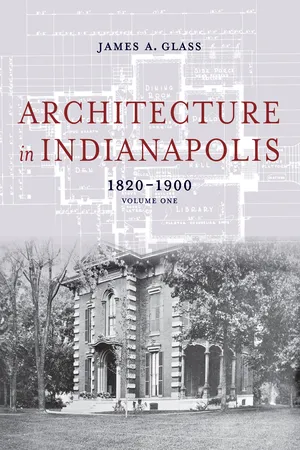
As a planned community, Indianapolis boasted finished frame and brick buildings from its beginning. Architects and builders drew on Federal, Greek Revival, Italianate, French Second Empire, Gothic, Romanesque, and Italian Renaissance styles for commercial, industrial, public, and religious buildings and for residences.
In Architecture in Indianapolis: 1820–1900, preservationist and architectural historian Dr. James Glass explores the rich variety of architecture that appeared during the city's first 80 years, to 1900. Glass explains how economic forces shaped building cycles, such as the Canal Era, the advent of railroads, the natural gas boom, and repeated recessions and recoveries. He describes 243 buildings that illustrate the styles that architects and builders incorporated into the designs that they devised in each era between 1820 and 1900. This book also documents the loss of distinctive 19th century architecture that has occurred in Indianapolis. It includes 373 photographs and drawings that depict the buildings described and locator maps that show where concentrations of buildings were constructed.
Architecture in Indianapolis: 1820–1900 provides the first history of 19th-century architecture in the city and will serve as an indispensable reference for decades to come.