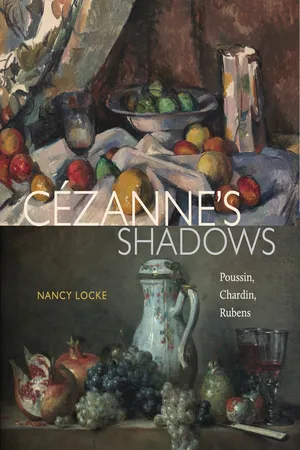
Modernism has often been described as a rejection of the art of the past, but Cézanne's Shadows makes an eloquent case for precisely the opposite artistic practice.
In this book, Nancy Locke argues that the idea of a modernist forgetting would never have taken hold if the modernist painters themselves, and Cézanne in particular, had not wrestled so fiercely with the work of their predecessors. Cézanne routinely interrupted his work with a model to go back to the Louvre or to consult sketches and studies he did after the old masters. Exploring the importance of Cézanne's involvement with the art of the past in essays devoted to Poussin, Chardin, and Rubens, Locke argues that Cézanne's art cannot be understood without an investigation into what he made of these earlier models and how they continued to haunt even his mature work.
Cézanne's Shadows offers an elegant new model for understanding the relationship between modernist painting and the creative tradition it often feigns to reject. This study of artistic ambitions and an analysis of nineteenth-century art writing will be especially valuable to scholars of modernism and European art history.