- 230 pages
- English
- ePUB (mobile friendly)
- Available on iOS & Android
eBook - ePub
About this book
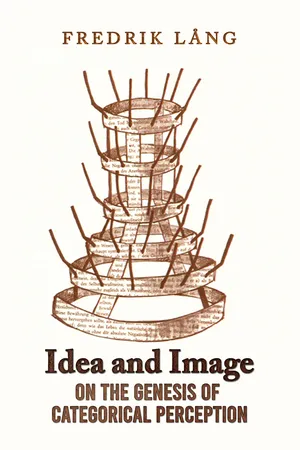
What does art tell us about man's place in history? In Thought and Image, award-winning author and philosopher Fredrik Lång takes the reader on a two-thousand-year journey spanning the worlds of art and philosophy, from ancient Greece into the modern day. Thought and Image explores the ways in which artistic expression is linked to the way of life and manner of thought of people throughout the centuries. "Art, like knowledge, is an interpretation of a contemporary existence, executed in the concepts that thinking provides at the time. Every picture is worth a thousand words and every significant work of art contains a statement and is a confirmation of the general values of its time." Lång journeys slowly through the winding gallery of images and concepts that man has built up over the millennia, analysing the gaze of Giotto and the technical metaphors of Duchamp. The book ends with a challenging question: What is the significance of the insights gained for the understanding of our own time?
Information
Subtopic
World HistoryIndex
HistoryTable of contents
- Idea and Image
- About the Author
- Copyright Information ©
- Preface
- 1. Introduction
- 2. The All-Seeing Eye
- 3 Nominalism, Individualism And Love Characteristics Of A Major and Profound Change
- 4. A New Relation to Nature
- 5. The Instrumental Perspective
- 6. Denied Instrumentalism
- Bibliography
- Endnotes
Trusted by 375,005 students
Access to over 1.5 million titles for a fair monthly price.
Study more efficiently using our study tools.
Frequently asked questions
Yes, you can cancel anytime from the Subscription tab in your account settings on the Perlego website. Your subscription will stay active until the end of your current billing period. Learn how to cancel your subscription
No, books cannot be downloaded as external files, such as PDFs, for use outside of Perlego. However, you can download books within the Perlego app for offline reading on mobile or tablet. Learn how to download books offline
Perlego offers two plans: Essential and Complete
- Essential is ideal for learners and professionals who enjoy exploring a wide range of subjects. Access the Essential Library with 800,000+ trusted titles and best-sellers across business, personal growth, and the humanities. Includes unlimited reading time and Standard Read Aloud voice.
- Complete: Perfect for advanced learners and researchers needing full, unrestricted access. Unlock 1.5M+ books across hundreds of subjects, including academic and specialized titles. The Complete Plan also includes advanced features like Premium Read Aloud and Research Assistant.
We are an online textbook subscription service, where you can get access to an entire online library for less than the price of a single book per month. With over 1.5 million books across 990+ topics, we’ve got you covered! Learn about our mission
Look out for the read-aloud symbol on your next book to see if you can listen to it. The read-aloud tool reads text aloud for you, highlighting the text as it is being read. You can pause it, speed it up and slow it down. Learn more about Read Aloud
Yes! You can use the Perlego app on both iOS and Android devices to read anytime, anywhere — even offline. Perfect for commutes or when you’re on the go.
Please note we cannot support devices running on iOS 13 and Android 7 or earlier. Learn more about using the app
Please note we cannot support devices running on iOS 13 and Android 7 or earlier. Learn more about using the app
Yes, you can access Idea and Image by Fredrik Lång in PDF and/or ePUB format, as well as other popular books in History & World History. We have over 1.5 million books available in our catalogue for you to explore.