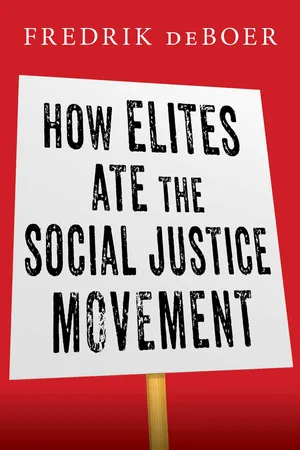
An eye-opening exploration of American policy reform, or lack thereof, in the wake of the murder of George Floyd and the Black Lives Matter movement and how the country can do better in the future from Fredrik deBoer, “one of the sharpest and funniest writers on the internet” (The New York Times).
In 2020, while the Covid-19 pandemic raged, the United States was hit by a ripple of political discontent the likes of which had not been seen since the 1960s. The spark was the viral video of the horrific police murder of an unarmed Black man in Minneapolis. The killings of George Floyd galvanized a nation already reeling from Covid and a toxic political cycle. Tens of thousands poured into the streets to protest. Major corporations and large nonprofit groups—institutions that are usually resolutely apolitical—raced to join in. The fervor for racial justice intersected with the already simmering demands for change from the #MeToo movement and for economic justice from Gen Z. The entire country suddenly seemed to be roaring for change in one voice.
Then nothing much happened.
In How Elites Ate the Social Justice Movement, Fredrik deBoer explores why these passionate movements failed and how they could succeed in the future. In the digital age, social movements flare up but then lose steam through a lack of tangible goals, the inherent moderating effects of our established institutions and political parties, and the lack of any real grassroots movement in contemporary America. Hidden beneath the rhetoric of the oppressed and symbolism of the downtrodden lies and the inconvenient fact that those are doing the organizing, messaging, protesting, and campaigning are predominantly drawn from this country’s more upwardly mobile educated classes. Poses are more important than policies.
deBoer lays out an alternative vision for how society’s winners can contribute to social justice movements without taking them over, and how activists and their organizations can become more resistant to the influence of elites, nonprofits, corporations, and political parties. Only by organizing around class rather than empty gestures can we begin the hard work of changing minds and driving policy.
- 246 pages
- English
- ePUB (mobile friendly)
- Available on iOS & Android
eBook - ePub
How Elites Ate the Social Justice Movement
About this book
Information
Table of contents
- Cover
- Title Page
- Dedication
- Introduction
- Chapter 1: Whatever Happened to 2020?
- Chapter 2: BPMCLM: Black Lives Matter and the Inevitability of Elite Capture
- Chapter 3: My Protest, Your Riot
- Chapter 4: The Nonprofit Industrial Complex
- Chapter 5: #MemeToo
- Chapter 6: Meet the Goodies: Why Are Liberals the Way They Are?
- Chapter 7: Why Is Class First?
- Chapter 8: To Fight for Everyone
- Acknowledgments
- About the Author
- Notes
- Index
- Copyright
Trusted by 375,005 students
Access to over 1.5 million titles for a fair monthly price.
Study more efficiently using our study tools.
Frequently asked questions
Yes, you can cancel anytime from the Subscription tab in your account settings on the Perlego website. Your subscription will stay active until the end of your current billing period. Learn how to cancel your subscription
No, books cannot be downloaded as external files, such as PDFs, for use outside of Perlego. However, you can download books within the Perlego app for offline reading on mobile or tablet. Learn how to download books offline
Perlego offers two plans: Essential and Complete
- Essential is ideal for learners and professionals who enjoy exploring a wide range of subjects. Access the Essential Library with 800,000+ trusted titles and best-sellers across business, personal growth, and the humanities. Includes unlimited reading time and Standard Read Aloud voice.
- Complete: Perfect for advanced learners and researchers needing full, unrestricted access. Unlock 1.5M+ books across hundreds of subjects, including academic and specialized titles. The Complete Plan also includes advanced features like Premium Read Aloud and Research Assistant.
We are an online textbook subscription service, where you can get access to an entire online library for less than the price of a single book per month. With over 1.5 million books across 990+ topics, we’ve got you covered! Learn about our mission
Look out for the read-aloud symbol on your next book to see if you can listen to it. The read-aloud tool reads text aloud for you, highlighting the text as it is being read. You can pause it, speed it up and slow it down. Learn more about Read Aloud
Yes! You can use the Perlego app on both iOS and Android devices to read anytime, anywhere — even offline. Perfect for commutes or when you’re on the go.
Please note we cannot support devices running on iOS 13 and Android 7 or earlier. Learn more about using the app
Please note we cannot support devices running on iOS 13 and Android 7 or earlier. Learn more about using the app
Yes, you can access How Elites Ate the Social Justice Movement by Fredrik deBoer in PDF and/or ePUB format, as well as other popular books in Politics & International Relations & North American History. We have over 1.5 million books available in our catalogue for you to explore.