- 216 pages
- English
- ePUB (mobile friendly)
- Available on iOS & Android
eBook - ePub
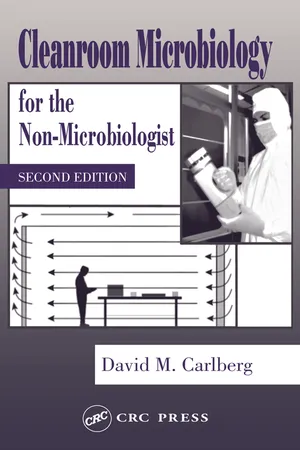
Cleanroom Microbiology for the Non-Microbiologist
About this book
Written for the professional who has an immediate need for the information but has little or no training in the subject, Cleanroom Microbiology for the Non-Microbiologist, Second Edition introduces principles of microbiology. It explains the consequences of microbiological contamination, what contamination is all about, how microorganisms grow, and
Information
Table of contents
- Cover
- Half Title
- Title Page
- Copyright Page
- Dedication
- Preface To The Second Edition
- Preface To The First Edition
- Acknowledgments
- The Author
- Table of Contents
- 1 The Scope of Microbiology
- I. Introduction
- II. Cells
- III. Binomial Nomenclature
- IV. Morphology
- V. Specific Microbial Groups
- A. Bacteria
- 1. The Gram Stain
- 2. External Features of Bacterial Cells
- 3. The Bacterial Interior
- 4. Bacterial Genetics
- B. Fungi
- 1. Molds
- 2. Yeasts
- C. Algae
- D. Protozoa
- E. Viruses
- 1. The Viral Infection Cycle
- 2. Retroviruses
- 3. Oncoviruses
- 4. Viruses and Gene Therapy
- F. Subviral Particles
- 1. Viroids
- 2. Satellite RNA
- 3. Prions
- VI. Taxonomy of Microorganisms
- VII. Microscopy
- A. Light Microscopy
- 1. Staining
- 2. Types of Light Microscopes
- B. Electron Microscopy
- VIII. Summary
- 2 Growth of Microorganisms
- I. Introduction
- A. Scientific Notation
- II. Growth of Bacteria
- A. Nutritional Requirements
- B. Environmental Requirements
- 1. Temperature
- 2. Atmosphere
- 3. pH
- C. Binary Fission and the Bacterial Growth Curve
- 1. Microbe Math
- 2. Characteristics of Bacterial Populations
- 3. The Growth Curve
- D. Continuous Growth
- E. Determining Bacterial Populations in Cultures
- 1. The Viable Plate Count
- 2. Filtration Methods
- 3. Total Cell Counts
- 4. Instrumental Methods
- F. Microorganisms as Tools
- III. Growing Other Microorganisms: Fungi, Protozoa, Algae,and Viruses
- A. Fungi
- B. Protozoa and Algae
- C. Viruses
- 1. Counting Viruses
- IV. Aseptic Technique
- V. Safety Issues
- VI. Summary
- 3 Controlling Growth and Activities of Microorganisms
- I. Introduction
- II. Definitions
- III. Physical Methods of Control
- A. The Kinetics of Microbial Death
- B. Heat
- 1. Moist Heat
- 2. Dry Heat
- 3. Sterilizing Large Loads
- C. Low Temperatures
- D. Radiation
- 1. Ionizing Radiation
- 2. Nonionizing Radiation
- E. Filtration
- 1. Depth Filters
- 2. Membrane Filters
- 3. Mechanisms of Filtration
- 4. Validation of Filtration Sterilization
- IV. Ensuring Sterility
- A. Overkill Method
- B. Bioburden Method
- C. Validation of Sterilization Processes
- D. Maintaining Sterility
- V. Chemical Methods of Control
- A. Definitions
- B. Factors Influencing Antimicrobial Chemical Agents
- C. Disinfectants
- 1. Characteristics of Specific Agents
- 2. Selection of Disinfectants
- 3. Validation of Disinfectants
- 4. Rotation of Disinfectants
- D. Sterilants
- 1. Characteristics of Specific Agents
- E. Antibiotics
- VI. Control of Microorganisms in High-Purity Water Systems
- A. The Need for Pure Water
- B. Water Purification Methods
- C. Biofilms
- VII. Summary
- 4 Cleanroom Facilities and Personnel Controls
- I. Introduction
- II. Certified Cleanrooms
- III. Bioclean Facilities — Viable vs. Nonviable Particles
- IV. Clean Facilities — General Considerations
- V. Unidirectional Air Flow
- VI. HEPA and ULPA Filters
- VII. Aseptic Fill Areas
- VIII. Barriers, Clean Zones, and Isolators
- A. Biological Safety Cabinets
- 1. Class I BSCs
- 2. Class II BSCs
- 3. Class III BSCs
- 4. Proper BSC Operation
- 5. BSC Certification
- B. Isolators
- C. Clean Benches
- IX. Biosafety Levels
- A. BSL4 Facilities
- B. Positive-Pressure Personnel Suits
- X. Cleanroom Garments
- A. Correct Gowning Procedures
- B. Sterile Gowning
- XI. Personnel Practices and Training
- XII. Personal Hygiene
- XIII. General Personnel Practices
- XIV. Summary
- 5 Detection and Enumeration of Microorganisms in the Cleanroom
- I. Introduction
- II. Overview of Microbiological Environmental Monitoring
- A. Validation
- B. Monitoring Techniques.
- 1. General Considerations
- 2. Sampling Sites
- 3. Frequency of Sampling
- 4. Transporting Microbiological Samples
- III. Monitoring of Air
- A. Air Samplers
- 1. The Andersen Sampler
- 2. The Slit Sampler
- 3. Portable Samplers
- 4. Liquid Impingers
- 5. Sampler Efficiencies
- IV. Fallout Methods
- V. Surface Monitoring
- VI. Touch Plates and Other Personnel Monitoring
- VII. Microbiological Assessment of Liquids
- VIII. Microbiological Assessment of Solids and Semisolids
- IX. Monitoring for Specific Microorganisms
- A. Bacteria
- 1. Bacterial Nutrition and Choice of Growth Media
- B. Fungi
- 1. Fungal Nutrition and Choice of Growth Media
- X. Rapid Methods of Identification
- XI. Testing for Bacteriostasis and Fungistasis
- XII. Detection of Biofilms
- XIII. Sterile Media Fill Tests
- XIV. Alert and Action Levels
- XV. The Sterility Suite
- XVI. Disposal of Cultures
- XVII. Summary
- References
- Index
Trusted by 375,005 students
Access to over 1.5 million titles for a fair monthly price.
Study more efficiently using our study tools.
Frequently asked questions
Yes, you can cancel anytime from the Subscription tab in your account settings on the Perlego website. Your subscription will stay active until the end of your current billing period. Learn how to cancel your subscription
No, books cannot be downloaded as external files, such as PDFs, for use outside of Perlego. However, you can download books within the Perlego app for offline reading on mobile or tablet. Learn how to download books offline
Perlego offers two plans: Essential and Complete
- Essential is ideal for learners and professionals who enjoy exploring a wide range of subjects. Access the Essential Library with 800,000+ trusted titles and best-sellers across business, personal growth, and the humanities. Includes unlimited reading time and Standard Read Aloud voice.
- Complete: Perfect for advanced learners and researchers needing full, unrestricted access. Unlock 1.5M+ books across hundreds of subjects, including academic and specialized titles. The Complete Plan also includes advanced features like Premium Read Aloud and Research Assistant.
We are an online textbook subscription service, where you can get access to an entire online library for less than the price of a single book per month. With over 1.5 million books across 990+ topics, we’ve got you covered! Learn about our mission
Look out for the read-aloud symbol on your next book to see if you can listen to it. The read-aloud tool reads text aloud for you, highlighting the text as it is being read. You can pause it, speed it up and slow it down. Learn more about Read Aloud
Yes! You can use the Perlego app on both iOS and Android devices to read anytime, anywhere — even offline. Perfect for commutes or when you’re on the go.
Please note we cannot support devices running on iOS 13 and Android 7 or earlier. Learn more about using the app
Please note we cannot support devices running on iOS 13 and Android 7 or earlier. Learn more about using the app
Yes, you can access Cleanroom Microbiology for the Non-Microbiologist by David M. Carlberg in PDF and/or ePUB format, as well as other popular books in Biological Sciences & Biology. We have over 1.5 million books available in our catalogue for you to explore.