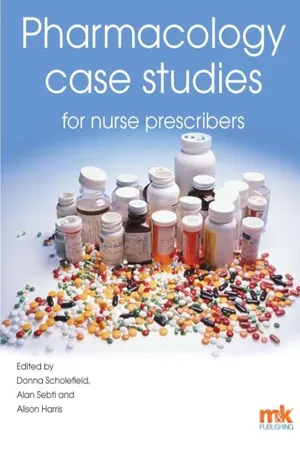
Nurse prescribers are now practising within every discipline of nursing and midwifery, both in the community and the hospital setting. This much-needed book is aimed particularly at students on a non-medical prescribing (NMP) course as well as those nurses who are studying for their community practitioner non-medical prescribing qualification as part of the specialist practice programme. The book is also a useful resource for nursing students and registered nurses who administer and/or prescribe medicines. The authors offer a basic introduction to pharmacological concepts, embedded in specific conditions, through case studies and self-assessment questions. By utilising a case study approach, they enable the reader to link pharmacological concepts with clinical practice. Many of the conditions presented will be seen across all healthcare settings. In addition, the comprehensive glossary and list of abbreviations will enable students to understand some of the more technical terms used in the British National Formulary (BNF) and other prescribing sources. Reading this book, and carrying out the numerous self-assessment activities, will give the reader an appreciation of the value of having a sound pharmacological knowledge base in order to deliver safe practice, effective prescribing and improved patient care.
- English
- ePUB (mobile friendly)
- Available on iOS & Android
eBook - ePub
About this book
Information
Edition
0Table of contents
- Cover Page
- Title Page
- Copyright
- Contents
- Acknowledgements
- List of contributors
- List of reviewers
- Introduction
- 1. How the body affects drugs
- 2. How drugs affect the body
- 3. Types of adverse drug reactions and interactions
- 4. Understanding and using the British National Formulary
- 5. Adherence
- 6. Pharmacological case studies: Children
- 7. Pharmacological case studies: Stable angina
- 8. Pharmacological case studies: Hypertension
- 9. Pharmacological case studies: Heart failure
- 10. Pharmacological case studies: Chronic obstructive pulmonary disease (COPD)
- 11. Pharmacological case studies: Neurological problems
- 12. Pharmacological case studies: Gastrointestinal disorders
- 13. Pharmacological case studies: Urinary incontinence in adults
- 14. Pharmacological case studies: Diabetes
- 15. Pharmacological case studies: Mental health problems
- 16. Pharmacological case studies: Eye problems
- 17. Pharmacological case studies: Complex health needs and polypharmacy
- 18. Pharmacological case studies: Palliative care
- 19. The challenges of non-medical prescribing
- Glossary
- List of abbreviations
- Index
Trusted by 375,005 students
Access to over 1.5 million titles for a fair monthly price.
Study more efficiently using our study tools.