- English
- ePUB (mobile friendly)
- Available on iOS & Android
About this book
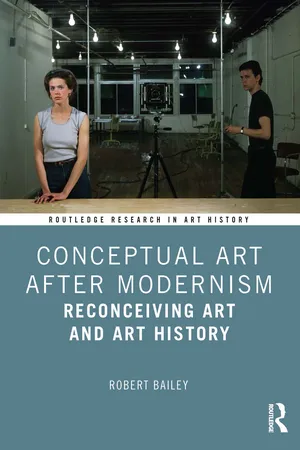
This study provides a new interpretation of art after modernism by foregrounding the importance of conceptual thinking as a pervasive force for change in art and art history since 1950.
Robert Bailey shows how distinctions between art and art history gave way as conceptual thinking provided artists and art historians with a common means to reassess what art could be and do in the world. Bailey assesses the results of artful and scholarly inquiries combining creative activity with intellectual rigor to proffer new approaches to a variety of social and environmental concerns, ranging from questions about human identity—including race, class, gender, and sexuality—to activist efforts to redress everything from abortion access to migrants' rights, to climate change. This book provides both a historical overview of these developments and close analyses of key works and texts, spanning 1950 to the present and encompassing broad geographic scope with special attention paid to Indigenous art.
The book will be of interest to scholars working in art history and contemporary art.
Frequently asked questions
- Essential is ideal for learners and professionals who enjoy exploring a wide range of subjects. Access the Essential Library with 800,000+ trusted titles and best-sellers across business, personal growth, and the humanities. Includes unlimited reading time and Standard Read Aloud voice.
- Complete: Perfect for advanced learners and researchers needing full, unrestricted access. Unlock 1.4M+ books across hundreds of subjects, including academic and specialized titles. The Complete Plan also includes advanced features like Premium Read Aloud and Research Assistant.
Please note we cannot support devices running on iOS 13 and Android 7 or earlier. Learn more about using the app.
Information
Table of contents
- Cover
- Half Title
- Series Page
- Title Page
- Copyright Page
- Dedication
- Table of Contents
- List of Figures
- Introduction: A Reconceiving Concept
- Part 1 Toward Conceptuality
- Part 2 Encountering Conceptions
- Part 3 Reconceived Practices
- Conclusion: Inconceivable Politics
- Index