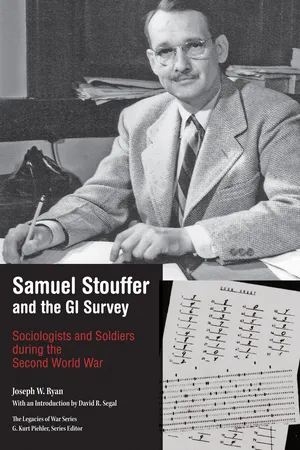
Samuel Stouffer, a little-known sociologist from Sac City, Iowa, is likely not a name World War II historians associate with other stalwart men of the war, such as Eisenhower, Patton, or MacArthur. Yet Stouffer, in his role as head of the Army Information and Education Division’s Research Branch, spearheaded an effort to understand the citizen-soldier, his reasons for fighting, and his overall Army experience. Using empirical methods of inquiry to transform general assumptions about leadership and soldiering into a sociological understanding of a draftee Army, Stouffer perhaps did more for the everyday soldier than any general officer could have hoped to accomplish.
Stouffer and his colleagues surveyed more than a half-million American GIs during World War II, asking questions about everything from promotions and rations to combat motivation and beliefs about the enemy. Soldiers’ answers often demonstrated that their opinions differed greatly from what their senior leaders thought soldier opinions were, or should be. Stouffer and his team of sociologists published monthly reports entitled “What the Soldier Thinks,” and after the war compiled the Research Branch’s exhaustive data into an indispensible study popularly referred to as The American Soldier. General George C. Marshall was one of the first to recognize the value of Stouffer’s work, referring to The American Soldier as “the first quantitative studies of the . . . mental and emotional life of the soldier.” Marshall also recognized the considerable value of The American Soldier beyond the military. Stouffer’s wartime work influenced multiple facets of policy, including demobilization and the GI Bill. Post-war, Stouffer’s techniques in survey research set the state of the art in the civilian world as well.
Both a biography of Samuel Stouffer and a study of the Research Branch, Samuel Stouffer and the GI Survey illuminates the role that sociology played in understanding the American draftee Army of the Second World War. Joseph W. Ryan tracks Stouffer’s career as he guided the Army leadership toward a more accurate knowledge of their citizen soldiers, while simultaneously establishing the parameters of modern survey research. David R. Segal’s introduction places Stouffer among the elite sociologists of his day and discusses his lasting impact on the field. Stouffer and his team changed how Americans think about war and how citizen-soldiers were treated during wartime. Samuel Stouffer and the GI Survey brings a contemporary perspective to these significant contributions.
Stouffer and his colleagues surveyed more than a half-million American GIs during World War II, asking questions about everything from promotions and rations to combat motivation and beliefs about the enemy. Soldiers’ answers often demonstrated that their opinions differed greatly from what their senior leaders thought soldier opinions were, or should be. Stouffer and his team of sociologists published monthly reports entitled “What the Soldier Thinks,” and after the war compiled the Research Branch’s exhaustive data into an indispensible study popularly referred to as The American Soldier. General George C. Marshall was one of the first to recognize the value of Stouffer’s work, referring to The American Soldier as “the first quantitative studies of the . . . mental and emotional life of the soldier.” Marshall also recognized the considerable value of The American Soldier beyond the military. Stouffer’s wartime work influenced multiple facets of policy, including demobilization and the GI Bill. Post-war, Stouffer’s techniques in survey research set the state of the art in the civilian world as well.
Both a biography of Samuel Stouffer and a study of the Research Branch, Samuel Stouffer and the GI Survey illuminates the role that sociology played in understanding the American draftee Army of the Second World War. Joseph W. Ryan tracks Stouffer’s career as he guided the Army leadership toward a more accurate knowledge of their citizen soldiers, while simultaneously establishing the parameters of modern survey research. David R. Segal’s introduction places Stouffer among the elite sociologists of his day and discusses his lasting impact on the field. Stouffer and his team changed how Americans think about war and how citizen-soldiers were treated during wartime. Samuel Stouffer and the GI Survey brings a contemporary perspective to these significant contributions.