- English
- ePUB (mobile friendly)
- Available on iOS & Android
eBook - ePub
About this book
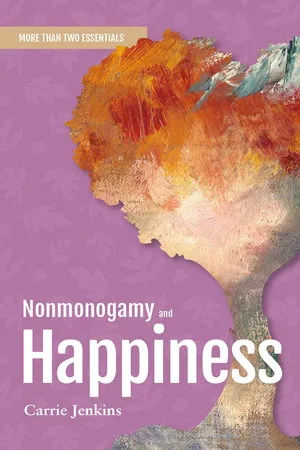
The love story we're all familiar with ends with " … and they lived happily ever after." But how often do we hear a nonmonogamous love story with that ending? In all kinds of contexts, nonmonogamous happiness is erased. From the ubiquitous "friend who tried it once and it didn't end well" to Dan Savage's long-term jokes about never being invited to a polyamorous third wedding anniversary, we are repeatedly assured that nonmonogamy leads to misery.
In "real" love, we are taught to expect the opposite: to expect happiness. When we want to ask if someone's relationship is going well, we ask if they are "happy with" their partner. We might even ask whether their partner makes them happy. But what does love have to do with happiness? Doesn't love have space to accommodate the full range of emotional experience?
Carrie Jenkins thinks it does, or at least it can. She draws connections between the expectation that love will make us happy and the undue focus on positive emotions to the exclusion of "negative" ones. She argues that love—monogamous or otherwise—might better aim at being eudaimonic than at being happy, and that we have a better chance of achieving this if we are able to make relationship choices free from the prejudices and distortions that lead to an unduly rosy view of monogamy and an unduly miserable picture of the alternatives.
Information
Publisher
Thornapple PresseBook ISBN
9781990869174
Year
2023Table of contents
- Cover
- Title Page
- Copyright
- Dedication
- Contents
- Acknowledgements
- Introduction
- What’s the Point?
- Manifesting Ideology
- Who’s Afraid of the “Negative” Emotions?
- A Series of Fascinating Transitions
- Notes
- About the Author
Trusted by 375,005 students
Access to over 1.5 million titles for a fair monthly price.
Study more efficiently using our study tools.