- English
- ePUB (mobile friendly)
- Available on iOS & Android
About this book
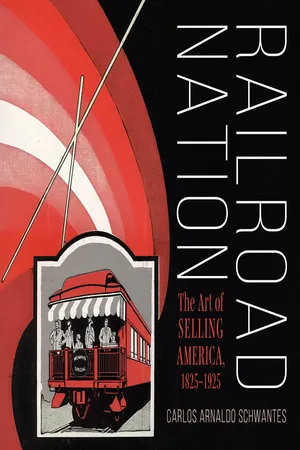
From passenger tickets, wall calendars, and advertising posters to train orders and bills of lading, railroads have left a colorful paper trail across America. In Railroad Nation, historian Carlos Arnaldo Schwantes examines a fascinating array of these materials, showcasing the railroad industry's incredible variety of eye-catching illustrations to enliven their timetables and promotional brochures.
Schwantes traces the evolution of railroad commercial art from drab black-and-white broadsides and text-only advertisements that the early railroads placed in local newspapers to the riotous mélange of color graphics in the early twentieth century, when the visual appeal of public timetables and their thousands of different brochures enticed settlers to create farms, ranches, and towns alongside newly laid tracks.
Railroad Nation offers readers an unparalleled look at the ephemera of the railroad industry, highlighting the vibrant history of railroading in America through its rich tapestry of visual materials.
Frequently asked questions
- Essential is ideal for learners and professionals who enjoy exploring a wide range of subjects. Access the Essential Library with 800,000+ trusted titles and best-sellers across business, personal growth, and the humanities. Includes unlimited reading time and Standard Read Aloud voice.
- Complete: Perfect for advanced learners and researchers needing full, unrestricted access. Unlock 1.4M+ books across hundreds of subjects, including academic and specialized titles. The Complete Plan also includes advanced features like Premium Read Aloud and Research Assistant.
Please note we cannot support devices running on iOS 13 and Android 7 or earlier. Learn more about using the app.
Information
Table of contents
- Cover
- Half-Title Page
- Title Page
- Copyright
- Dedication
- Contents
- Preface and Acknowledgments
- Introduction: Railroad Imprints
- Section I: Railroad Time and Space
- Section II: Railroad Commercial Art
- Conclusion: Putting Things in Perspective
- Notes
- Index
- About the Author