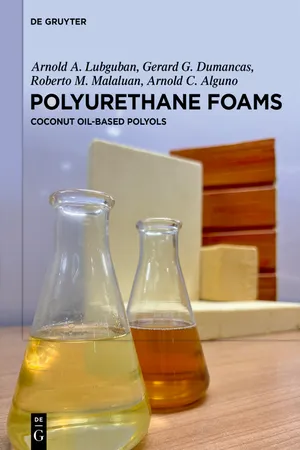
As global priorities shift towards sustainable resources, there is a growing interest in alternatives to petroleum-based raw materials for industrial polyurethane (PU) foam production. Polyurethane foams (PUFs), produced from the reaction between a polyol (a polymer with multiple hydroxyl groups) and a diisocyanate, are widely used for their versatility. They range from flexible foams, like those found in mattresses or furniture, to rigid foams used for home insulation. The market for PU foams is anticipated to grow due to rising demand for comfort. Historically, petroleum-based polyols have been favored for their availability and versatility. However, as petroleum supplies dwindle, with oil reserves projected to be exhausted by around 2052, the pressing need for sustainable alternatives is clear to sustain the PU industry. Bio-based substitutes, such as polyols derived from palm, soybean, castor, and sunflower oils, have been extensively researched to replace the petroleum-based polyol feedstock. This book focuses on applying coconut oil-derived polyols in polyurethane foam production, offering a detailed examination of their potential benefits and associated difficulties. The introductory chapter outlines the critical need for greener alternatives and emphasizes the significant role of coconut oil as a substitute for petroleum-based polyols. Subsequent chapters delve into the chemistry and synthesis of coconut oil-derived polyols and polyurethanes, providing insights into their properties and contributions to polyurethane formulations. This book further provides an overview of how coconut oil's high saturation impacts the polyol production process and explores methods to overcome these challenges. It bridges the gap between raw material science and practical applications using coconut oil in polymer studies. It provides valuable information for researchers and industry professionals aiming to innovate with sustainable polymer materials.
eBook - ePub
Polyurethane Foams
Coconut Oil-Based Polyols
- English
- ePUB (mobile friendly)
- Available on iOS & Android
eBook - ePub
Polyurethane Foams
Coconut Oil-Based Polyols
About this book
Information
Topic
Physical SciencesTable of contents
- Title Page
- Copyright
- Contents
- Editors
- Chapter 1 Polyurethane Foams
- Chapter 2 Polyol Chemistry and Synthesis
- Chapter 3 The Foaming Process and Its Characteristics
- Chapter 4 Rigid Polyurethane Foams
- Chapter 5 Flexible Polyurethane Foams
- Chapter 6 Future Trends and Opportunities
- Index
Trusted by 375,005 students
Access to over 1.5 million titles for a fair monthly price.
Study more efficiently using our study tools.
Frequently asked questions
Yes, you can cancel anytime from the Subscription tab in your account settings on the Perlego website. Your subscription will stay active until the end of your current billing period. Learn how to cancel your subscription
No, books cannot be downloaded as external files, such as PDFs, for use outside of Perlego. However, you can download books within the Perlego app for offline reading on mobile or tablet. Learn how to download books offline
Perlego offers two plans: Essential and Complete
- Essential is ideal for learners and professionals who enjoy exploring a wide range of subjects. Access the Essential Library with 800,000+ trusted titles and best-sellers across business, personal growth, and the humanities. Includes unlimited reading time and Standard Read Aloud voice.
- Complete: Perfect for advanced learners and researchers needing full, unrestricted access. Unlock 1.5M+ books across hundreds of subjects, including academic and specialized titles. The Complete Plan also includes advanced features like Premium Read Aloud and Research Assistant.
We are an online textbook subscription service, where you can get access to an entire online library for less than the price of a single book per month. With over 1.5 million books across 990+ topics, we’ve got you covered! Learn about our mission
Look out for the read-aloud symbol on your next book to see if you can listen to it. The read-aloud tool reads text aloud for you, highlighting the text as it is being read. You can pause it, speed it up and slow it down. Learn more about Read Aloud
Yes! You can use the Perlego app on both iOS and Android devices to read anytime, anywhere — even offline. Perfect for commutes or when you’re on the go.
Please note we cannot support devices running on iOS 13 and Android 7 or earlier. Learn more about using the app
Please note we cannot support devices running on iOS 13 and Android 7 or earlier. Learn more about using the app
Yes, you can access Polyurethane Foams by Arnold A. Lubguban,Gerard G. Dumancas,Roberto M. Malaluan,Arnold C. Alguno in PDF and/or ePUB format, as well as other popular books in Physical Sciences & Chemical & Biochemical Engineering. We have over 1.5 million books available in our catalogue for you to explore.