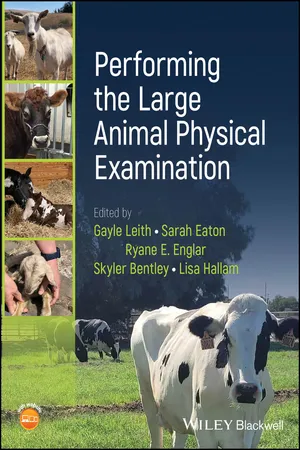
Easy-to-follow guide to performing physical examinations on horses and ruminants, with a comprehensive collection of color photographs demonstrating important concepts and procedural techniques.
Featuring hundreds of full-color images demonstrating the observation and hands-on clinical skills described, Performing the Large Animal Physical Examination offers a step-by-step guide to all aspects of assessing the health and wellbeing of equine patients and ruminants. Cattle, sheep, and goats are emphasized, with vital commentary about camelids included when applicable.
Each section begins with information on observing, approaching, and safely handling patients, then discusses how to systematically evaluate each body system. A companion website features video clips demonstrating key concepts.
Performing the Large Animal Physical Examination includes information on:
- Equine and ruminant behavior, including feeding, social, herd, and separation behaviors, sleep and rest disturbances, other stereotypies
- The distance examination, observation, and efficient methods to approach and restrain patients, with emphasis on flight zones and point of balance, safety of personnel, and animal welfare
- Big picture considerations with respect to the patient's body, coat, and skin, including coat color and markings, weight and height estimations, and forms of patient identification
- Evaluation of the head (eyes, ears, nose, and throat) as well as the cardiovascular, respiratory, lymphatic, gastrointestinal, reproductive, musculoskeletal, and nervous systems, plus considerations specific to the lameness exam
- Basic clinical procedures and common clinical conditions specific to each body system in horses, small and large ruminants
Performing the Large Animal Physical Examination is an essential resource for students and other veterinary team members to develop comfort and confidence observing, approaching, handling, and examining equine and ruminant patients, as well as for experienced practitioners who may wish to refine their skills and clinical acumen.