- English
- ePUB (mobile friendly)
- Available on iOS & Android
About this book
"A fluid, elegant rendition." â Washington Post
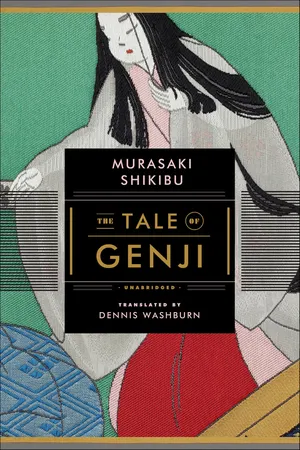
Murasaki Shikibu, born into the middle ranks of the aristocracy during the Heian period (794â1185 CE), wrote The Tale of Genjiâwidely considered the world's first novelâduring the early years of the eleventh century. Expansive, compelling, and sophisticated in its representation of ethical concerns and aesthetic ideals, Murasaki's tale came to occupy a central place in Japan's remarkable history of artistic achievement and is now recognized as a masterpiece of world literature.
The Tale of Genji is presented here in a flowing new translation for contemporary readers, who will discover in its depiction of the culture of the imperial court the rich complexity of human experience that simultaneously resonates with and challenges their own. Washburn sets off interior monologues with italics for fluid reading, embeds some annotations for accessibility and clarity, and renders the poetry into triplets to create prosodic analogues of the original.
Frequently asked questions
- Essential is ideal for learners and professionals who enjoy exploring a wide range of subjects. Access the Essential Library with 800,000+ trusted titles and best-sellers across business, personal growth, and the humanities. Includes unlimited reading time and Standard Read Aloud voice.
- Complete: Perfect for advanced learners and researchers needing full, unrestricted access. Unlock 1.4M+ books across hundreds of subjects, including academic and specialized titles. The Complete Plan also includes advanced features like Premium Read Aloud and Research Assistant.
Please note we cannot support devices running on iOS 13 and Android 7 or earlier. Learn more about using the app.
Information
Table of contents
- Cover
- Title
- Contens
- Introduction
- I. Kiritsubo: The Lady of the Paulownia-Courtyard Chambers
- II. Hahakigi: Broom Cypress
- III. Utsusemi: A Molted Cicada Shell
- IV. Yƫgao: The Lady of the Evening Faces
- V. Wakamurasaki: Little Purple Gromwell
- VI. Suetsumuhana: The Safflower
- VII. Momiji no ga: An Imperial Celebration of Autumn Foliage
- VIII. Hana no en: A Banquet Celebrating Cherry Blossoms
- IX. Aoi: Leaves of Wild Ginger
- X. Sakaki: A Branch of Sacred Evergreen
- XI. Hanachirusato: The Lady at the Villa of Scattering Orange Blossoms
- XII. Suma: Exile to Suma
- XIII. Akashi: The Lady at Akashi
- XIV. Miotsukushi: Channel Markers
- XV. Yomogiu: A Ruined Villa of Tangled Gardens
- XVI. Sekiya: The Barrier Gate
- XVII. E-awase: A Contest of Illustrations
- XVIII. Matsukaze: Wind in the Pines
- XIX. Usugumo: A Thin Veil of Clouds
- XX. Asagao: Bellflowers
- XXI. Otome: Maidens of the Dance
- XXII. Tamakazura: A Lovely Garland
- XXIII. Hatsune: First Song of Spring
- XXIV. KochĆ: Butterflies
- XXV. Hotaru: Fireflies
- XXVI. Tokonatsu: Wild Pinks
- XXVII. Kagaribi: Cresset Fires
- XXVIII. Nowaki: An Autumn Tempest
- XXIX. Miyuki: An Imperial Excursion
- XXX. Fujibakama: Mistflowers
- XXXI. Makibashira: A Beloved Pillar of Cypress
- XXXII. Umegae: A Branch of Plum
- XXXIII. Fuji no uraba: Shoots of Wisteria Leaves
- XXXIV. Wakana: Early Spring Greens: Part 1
- XXXV. Wakana: Early Spring Greens: Part 2
- XXXVI. Kashiwagi: The Oak Tree
- XXXVII. Yokobue: The Transverse Flute
- XXXVIII. Suzumushi: Bell Crickets
- XXXIX. Yƫgiri: Evening Mist
- XL. Minori: Rites of the Sacred Law
- XLI. Maboroshi: Spirit Summoner
- [Translatorâs Note]
- XLII. Niou miya: The Fragrant Prince
- XLIII. KĆbai: Red Plum
- XLIV. Takekawa: Bamboo River
- XLV. Hashihime: The Divine Princess at Uji Bridge
- XLVI. Shiigamoto: At the Foot of the Oak Tree
- XLVII. Agemaki: A Bowknot Tied in Maidenâs Loops
- XLVIII. Sawarabi: Early Fiddlehead Greens
- XLIX. Yadoriki: Trees Encoiled in Vines of Ivy
- L. Azumaya: A Hut in the Eastern Provinces
- LI. Ukifune: A Boat Cast Adrift
- LII. KagerĆ: Ephemerids
- LIII. Tenarai: Practicing Calligraphy
- LIV. Yume no ukihashi: A Floating Bridge in a Dream
- [Translatorâs Note]
- Also by Dennis Washburn
- Praise for Dennis Washburnâs The Tale of Genji
- Copyright