Sustainable Thinking explores how values and sustainability can reshape the way design management is practised and applied. The book discusses how designers can combine innovative creative thinking with analytical problem-solving skills to produce outputs that are business ready and ethically driven. Examples from a wide range of practitioners who work within the field of sustainable design are examined through case studies, and engaging activities suggest ways for students and practitioners to explore introducing sustainable thinking into their work.
- 192 pages
- English
- ePUB (mobile friendly)
- Available on iOS & Android
eBook - ePub
Sustainable Thinking
About this book
Information
CHAPTER 03
Design Creating Change
Design that deserves to exist
Communicating values
Challenges in the developing world
Connecting to raw materials
Case study
Magno
Magno
When good design goes wrong
Tools for growing a business and predicting success
Activity
Product designers: child’s toy
Product designers: child’s toy
Case study
Metalli Lindberg
Metalli Lindberg
Activity
Communications/advertising designers
Communications/advertising designers
When used responsibly and in the correct context, design can act as a powerful conduit for change. Physical enhancements or improvements, such as those developed by product designers or materials engineers, can literally alter the built landscape. Communication designers may use devices such as metaphor or analogy to connect audiences with messages designed to alter their thinking or improve their understanding of a social or environmental issue.
Even though practical and production-related issues often take centre stage in conversations about environmentally preferable products, a seismic shift in values will be required to achieve a balance between the needs of people and the environment. This transformation can be encouraged by thoughtful and sometimes persuasive public service announcements, location-specific interventions and the development of design solutions and policies that inspire more responsible consumption.
Design that deserves to exist
Practitioners looking to engage in values-driven design and to create sustainable outputs need to be concerned about more than fulfilling a client’s objectives. As suggested elsewhere in this text, they have to ask whether or not the outputs they make deserve to exist in the first place. There are numerous examples of wasteful and unneeded design. Communication design deliverables may be immediately thrown away because mailing lists are over ambitious and include groups who will never use a product or support an organization. In such cases, the design may be effective, but it clearly does not deserve to exist in such a large quantity. Ensuring that design outputs target the correct audience and aren’t overproduced can go a long way to increase efficiency. Similarly, designers can work with clients and stakeholders to create a robust audience profile, which can be used to evaluate whether outcomes need to be produced physically or exist in digital form instead.
Many items created by industrial designers have increased users’ standard of living and made life easier and more enjoyable, but there are also a tremendous number of products that serve little purpose or duplicate the function of an existing product. Swiffer is one such example. To date, millions of people have been convinced that their brooms and mops are inadequate. Swiffer (wet and dry versions available), a device with removable parts that need to be replaced and that requires a special solution or proprietary pads, provides multitude of revenue sources for its parent company, Procter and Gamble. Clearly no one ‘needs’ a Swiffer. Mops (using cotton) and brooms (using straw or corn fibres) have been made of mostly natural materials in the past and are still sold, but perceived convenience and the use of persuasive advertising makes the Swiffer attractive to consumers.
On-the-ground and discipline-specific realities including end-of-life issues and externalities need to be considered in order to ensure that success is defined by ethical and environmental goals as well as by monetary gain. Fortunately, entrepreneurs in a range of sectors are working to create consumer products that minimize the harmful environmental and social effects of production.
Beyond Skin
Natalie Dean created the UK-based brand Beyond Skin because she found it nearly impossible to find high-fashion, cruelty-free footwear. The company uses eco-friendly and recycled fabrics to produce a variety of styles of women’s shoes. A clever tagline, ‘genuinely not leather’ is a word play on the marketing for leather shoes used by traditional footwear companies. Beyond Skin’s products appeal to people who are concerned about animal cruelty and the environmental ramifications of footwear production but still want to wear fashionable shoes.
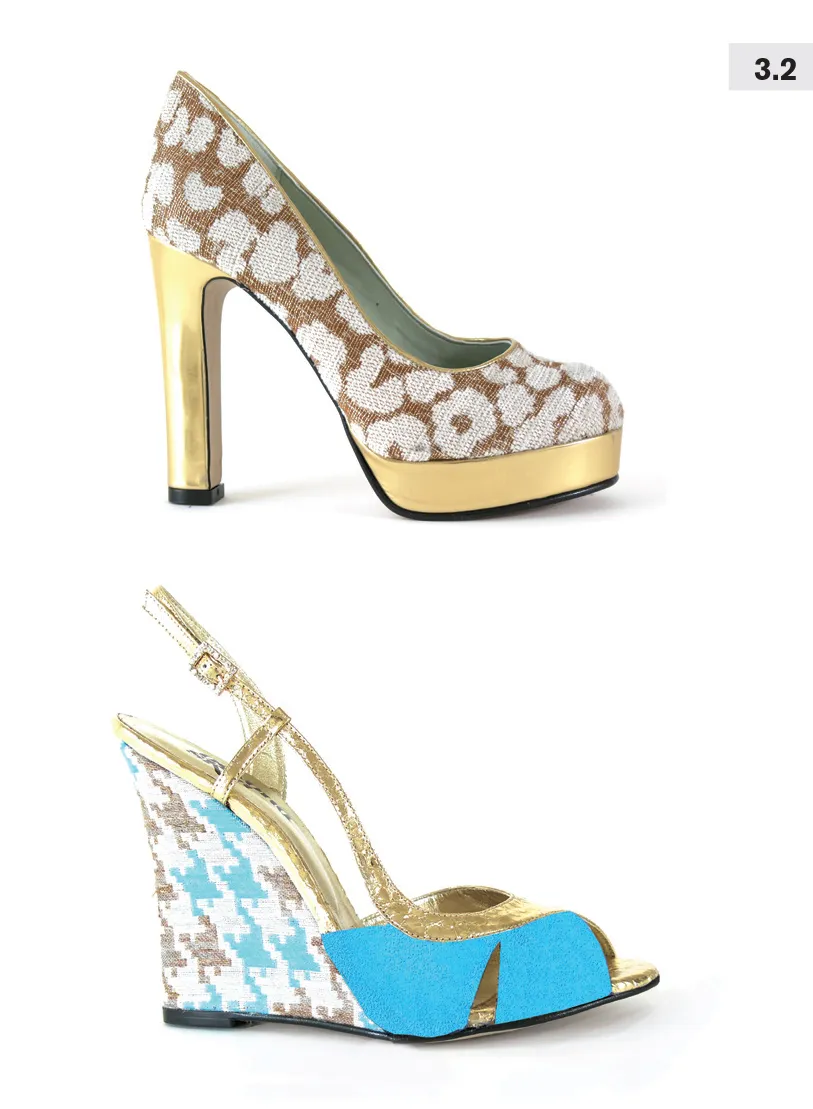
3.2 Beyond Skin
Beyond Skin’s designs are as stylish as they are ethically sound. Handmade in a family-run company, they have a cruelty free philosophy, in terms of not only animals, but humans and the environment as well.

3.3 People Tree
People Tree is a pioneer in fair trade and environmentally sustainable fashion. The business was founded by Safia and James Minney to provide customers with desirable fashion, whilst working to improve the lives and environment of the artisans and farmers in developing countries who work to make the products.
People Tree
People Tree is a human-centred purveyor of clothing and homewear. The company, based in the UK, focuses on improving the lives and environment of the artisans and farmers who produce its products, while also providing customers with high-quality clothing and consumer goods. People Tree fills a special niche by partnering with Fair Trade producers in developing countries to promote economic independence for workers. The success of companies like People Tree and Beyond Skin highlights how ethically driven brands can find a loyal customer based while serving a specific cause.
People Tree’s mission
•To support producer partners’ efforts towards economic independence and control over their environment and to challenge the power structures that undermine their rights to a livelihood.
•To protect the environment and use natural resources sustainably throughout our trading and to promote environmentally responsible lifestyles and initiatives to create new models to promote sustainability.
•To supply customers with good quality products, with friendly and efficient service and build awareness to empower consumers and producers.
•To participate in fair trade and environmentally sustainable solutions.
•To provide a supportive environment for all stakeholders and to promote dialogue and understanding between them.
•To set an example to business and the government of a fair trade model of business based on partnership, people-centred values and sustainability.

3.4 Flow kitchen
Netherlands based Studio Gorm’s sustainable ‘flow kitchen’ targets waste, water and energy. Kitchen scraps, newspaper and paper scraps can be composted with the built in vermicomposter and the hanging dish rack drips water directly onto the edible plants grown below. The evaporative cooling fridge box keeps food cool through evapotranspiration and is ideal for storing vegetables, fruit, eggs, cheese and butter.
How can values-driven work fit into a design practice or company?
•Exclusive: Ethically or environmentally based work can be the sole purview of a designer or company. In these instances the designer or studio will usually be identified as a ‘green’ or ‘sustainable’ business.
•Partial: A design studio or company may engage in socially or environmentally conscious work as part of their overall client base without necessarily being identified as such. In these cases, a mission or vision statement may outline the firm’s commitment to the environment and to social causes.
•Side projects or pro bono work: Not all designers work in situations where they are able to produce environmentally or ethically based projects as part of their job. In these situations, designers may choose to partner with non-profits or community organizations and take on side projects where their work is used for the greater good.
•Personal self-authored works: Personal or self-authored work offers designers the opportunity to explore the themes and realities of socially and environmentally conscious design without the interference of cost issues or client stipulations. This type of work can be used as a testing g...
Table of contents
- Cover
- Title Page
- Contents
- Introduction
- 01 The Basics of Sustainability and Design
- 02 Strategies
- 03 Design Creating Change
- 04 Design Making Change
- 05 Envisioning Sustainable Systems
- 06 Implementing Sustainable Practices
- Conclusion
- Glossary
- Bibliography
- Online resources
- Index
- Picture credits
- Acknowledgements
- eCopyright
Trusted by 375,005 students
Access to over 1.5 million titles for a fair monthly price.
Study more efficiently using our study tools.
Frequently asked questions
Yes, you can cancel anytime from the Subscription tab in your account settings on the Perlego website. Your subscription will stay active until the end of your current billing period. Learn how to cancel your subscription
No, books cannot be downloaded as external files, such as PDFs, for use outside of Perlego. However, you can download books within the Perlego app for offline reading on mobile or tablet. Learn how to download books offline
Perlego offers two plans: Essential and Complete
- Essential is ideal for learners and professionals who enjoy exploring a wide range of subjects. Access the Essential Library with 800,000+ trusted titles and best-sellers across business, personal growth, and the humanities. Includes unlimited reading time and Standard Read Aloud voice.
- Complete: Perfect for advanced learners and researchers needing full, unrestricted access. Unlock 1.5M+ books across hundreds of subjects, including academic and specialized titles. The Complete Plan also includes advanced features like Premium Read Aloud and Research Assistant.
We are an online textbook subscription service, where you can get access to an entire online library for less than the price of a single book per month. With over 1.5 million books across 990+ topics, we’ve got you covered! Learn about our mission
Look out for the read-aloud symbol on your next book to see if you can listen to it. The read-aloud tool reads text aloud for you, highlighting the text as it is being read. You can pause it, speed it up and slow it down. Learn more about Read Aloud
Yes! You can use the Perlego app on both iOS and Android devices to read anytime, anywhere — even offline. Perfect for commutes or when you’re on the go.
Please note we cannot support devices running on iOS 13 and Android 7 or earlier. Learn more about using the app
Please note we cannot support devices running on iOS 13 and Android 7 or earlier. Learn more about using the app
Yes, you can access Sustainable Thinking by Aaris Sherin in PDF and/or ePUB format, as well as other popular books in Design & Fashion Design. We have over 1.5 million books available in our catalogue for you to explore.