This textbook is endorsed by OCR and supports the specifications for AS and A-Level Classical Civilisation (first teaching September 2017). It covers all three options for Component 11: World of the Hero (Homer's Iliad, Homer's Odyssey and Virgil's Aeneid).
Why does the Trojan War continue to fascinate us? What makes Odysseus a hero? What links can be drawn between the Aeneid and today's global politics?
This book guides AS and A-Level students to a greater understanding of the epics of Homer and Virgil, setting the poems in their cultural context and drawing on the scholarship of leading academics to explore the poetry, characters and underlying philosophies. The colour illustrations, from the Cyclops on a Greek pot to a photograph of protesting Yadizi women, reflect the universal impact and continuing relevance of these classical epics.
The ideal preparation for the final examinations, all content is presented by an expert and experienced teacher in a clear and accessible narrative. Ancient literary sources are described and analysed. Helpful student features include study questions, quotations from contemporary scholars, further reading, and boxes focusing in on key people, events and terms. Practice questions and exam guidance prepare students for assessment.
A Companion Website is available at www.bloomsbury.com/class-civ-as-a-level.
Trusted by 375,005 students
Access to over 1 million titles for a fair monthly price.
•literary context in which the Iliad and the Odyssey were created and handed down, including:
•oral tradition and context
•transmission of the text
•whether they were the work of one or more poets
This section is common to both the Iliad and the Odyssey. It discusses the Mycenaean context and explores many of the questions that are still being asked about the composition of the epics, such as:
•who composed them
•when they might have been written down
•how they were recited or performed.
LITERARY CONTEXT
An analysis of language in the epics tells us that the poems were composed by a Greek who lived in Ionia (the west coast of modern Turkey), probably in about 725–700 BC. Tradition calls this composer Homer, though nothing is known about him. Scholars still argue as to whether the same person was responsible for both epics, or indeed whether there was one composer or many. Several places claim to be the birthplace of Homer, and because Demodocus, the bard in Book 8 of the Odyssey, is blind, there is a tradition that Homer was blind. Blindness is often associated with divine inspiration: what the bard sings, he must have received from the gods.
The epics are composed in dactylic hexameters. Each line of a hexameter has six feet. Each foot can be made up of one long and two short vowel sounds, or two long vowel sounds. This allows the poet to vary the pace.
dactylic hexameter – the metre in which the Homeric poems are composed
EXPLORE FURTHER
These two excellent introductions are good places to start your wider reading:
Barbara Graziosi, Homer (OUP, 2016), Part 1 The Poet, pp. 7–56
Ahuvia Kahane, Homer: A Guide for the Perplexed (Bloomsbury, 2012), Chapters 1–5
For an overview of the ancient world in the Homeric period, see:
Robin Osborne, Greece in the Making 1200–479 BC (Routledge, 2009) Chapter 5, ‘The World of Hesiod and of Homer’.
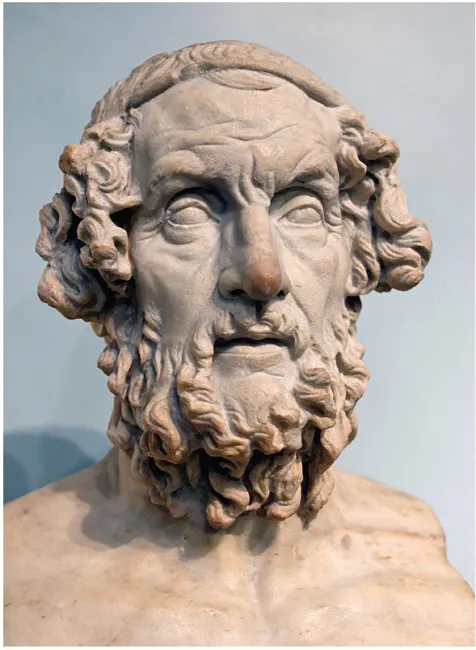
FIGURE 2 This Roman copy of a lost Greek bust of Homer reminds us of the popularity of Homer throughout the ancient world.
CONTEXT
The poems are set during the Trojan War. Excavations at Hisarlik, thought to be the site of Troy, show that the city was indeed destroyed by fire in about 1200 BC. However, this cannot be taken as evidence that the war as described by Homer took place.
Until about the same date, a culture flourished which was based on rich palace centres. The best known of these centres is Mycenae, which in the Homeric poems is the home of Agamemnon. This time is known as the Mycenaean period. The excavations of the archaeologist Schliemann in the late nineteenth century have given much evidence of the wealth of the Mycenaeans, though much controversy surrounds Schliemann’s finds.
The composer of the Homeric epics will not have seen the evidence that we know from museums, but must have been aware through stories, of a distant past when there were rich palaces, ornate bronze weapons and golden treasures.
The setting of the epics broadly in the Bronze Age Mycenaean period is not in doubt, but still debated is the date when the poems we know as Homer’s came into being. There is the added complication that not all scholars would say that the poems did ‘come into being’ at a particular date, arguing that they were developed over time by different poets.
Bronze Age – the period from about 3000 BC when bronze was introduced and came to be used widely.
Mycenaean period – the last phase of the Bronze Age, from about 1600–1100, centred on palace societies such as that in Mycenae
There is no definitive evidence in the texts which allows a date of composition to be established.
Although the setting is the Bronze Age, there are references to materials and practices which belong to Homer’s own times: iron is mentioned as well as bronze, bodies are cremated, not buried, and warriors carry two spears, not one. For example, iron axes are a prize in the funeral games (Iliad 23, 851) and used in the bow challenge (Odyssey 19); cooling iron is used in a simile (Odyssey 9, 393) and Mentes (Athene in disguise) is carrying iron cargo (Odyssey 1, 184); iron is used as a metaphor (Iliad 4, 510, Iliad 22, 357, Odyssey 5, 191).
EXPLORE FURTHER
For more information on Mycenaean culture, see:
John Chadwick, The Mycenaean World (CUP, 1976)
K A and Diana Wardle The Mycenaean World (Bloomsbury, 2013)
Mycenaean collections online at the British Museum and the Greek National Archaeological Museum
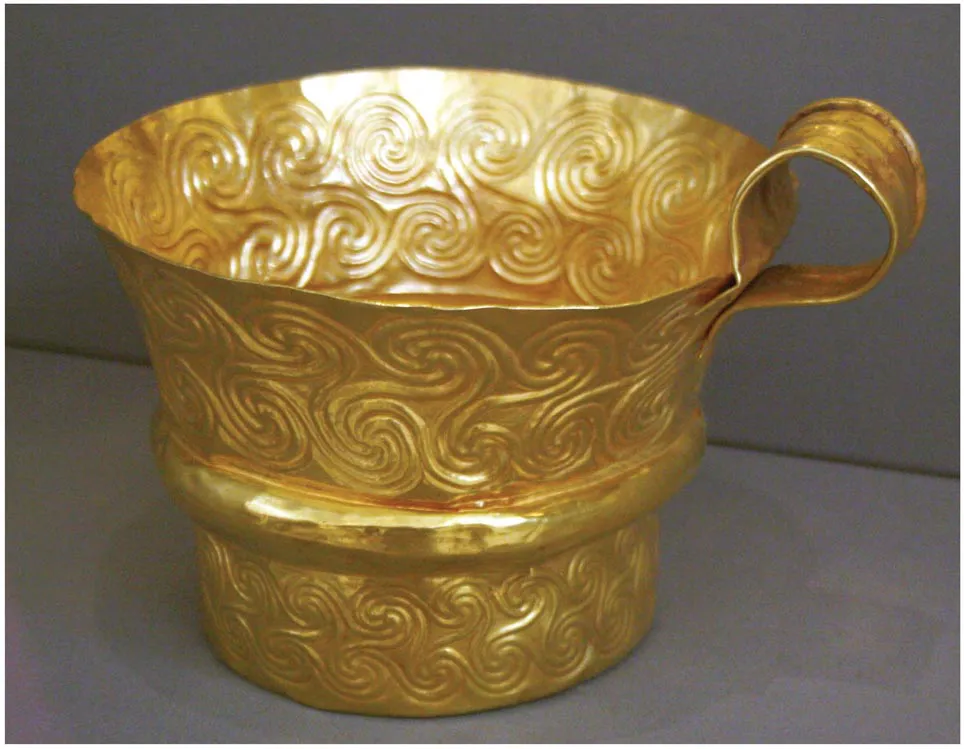
FIGURE 3 A gold cup from Grave Circle A in Mycenae. Did Circe in Book 10 of the Odyssey serve her honeyed wine in a cup like this? Would a cup like this have been found in Achilles’ tent?
S & C
For an explanation suitable for the non-Greek reader of the challenge of fitting words into the dactylic hexameter, ...
Table of contents
Cover
Half Title
Also Available from Bloomsbury
Title Page
Contents
Introduction
How to Use this Book
A Note on the Three Epics
PART 1 HOMER
Composition of the Epics
The Iliad
1.1 Literary Techniques and Composition
1.2 The Heroic World: Characterisation and Themes
1.3 The Social, Cultural and Religious Context
The Odyssey
2.1 Literary Techniques and Composition
2.2 The Heroic World: Characterisation and Themes
2.3 The Social, Cultural and Religious Context
PART 2 VIRGIL
The Aeneid
3.1 Literary Techniques and Composition
3.2 The Heroic World: Characterisation and Themes
3.3 The Social, Cultural and Religious Context
3.4 Historical and Political Background
What to Expect in the AS Exam for The World of the Hero
What to Expect in the A Level Exam for The World of the Hero
Glossary
Sources of Illustrations
Sources of Quotations
Index
Copyright
Frequently asked questions
Yes, you can cancel anytime from the Subscription tab in your account settings on the Perlego website. Your subscription will stay active until the end of your current billing period. Learn how to cancel your subscription
No, books cannot be downloaded as external files, such as PDFs, for use outside of Perlego. However, you can download books within the Perlego app for offline reading on mobile or tablet. Learn how to download books offline
Perlego offers two plans: Essential and Complete
Essential is ideal for learners and professionals who enjoy exploring a wide range of subjects. Access the Essential Library with 800,000+ trusted titles and best-sellers across business, personal growth, and the humanities. Includes unlimited reading time and Standard Read Aloud voice.
Complete: Perfect for advanced learners and researchers needing full, unrestricted access. Unlock 1.4M+ books across hundreds of subjects, including academic and specialized titles. The Complete Plan also includes advanced features like Premium Read Aloud and Research Assistant.
Both plans are available with monthly, semester, or annual billing cycles.
We are an online textbook subscription service, where you can get access to an entire online library for less than the price of a single book per month. With over 1 million books across 990+ topics, we’ve got you covered! Learn about our mission
Look out for the read-aloud symbol on your next book to see if you can listen to it. The read-aloud tool reads text aloud for you, highlighting the text as it is being read. You can pause it, speed it up and slow it down. Learn more about Read Aloud
Yes! You can use the Perlego app on both iOS and Android devices to read anytime, anywhere — even offline. Perfect for commutes or when you’re on the go. Please note we cannot support devices running on iOS 13 and Android 7 or earlier. Learn more about using the app
Yes, you can access OCR Classical Civilisation AS and A Level Component 11 by Sally Knights in PDF and/or ePUB format, as well as other popular books in Art & History of Ancient Art. We have over one million books available in our catalogue for you to explore.