1
Shared Book-Reading Research and Content Learning
THE PURPOSE OF THIS CHAPTER IS to establish the importance of interactive shared book reading as a tool for developing preschool children’s oral language and comprehension abilities. We will summarize what we know about the most effective book-reading practices from the last 25 years of research and the purpose of shared book reading within the context of language development and content learning. The approach we introduce here was implemented with children from high-poverty settings in Project Words of Oral Reading and Language Development (WORLD). We will further describe Project WORLD in subsequent chapters.
KEY IDEAS | The key ideas discussed in this chapter are as follows:
1. Gaps in children’s language and world knowledge begin early and are evident in preschool.
2. Teachers can read and talk about books with children in ways that boost children’s oral language abilities and conceptual knowledge.
3. Shared book reading is more effective when an adult listens to oral responses in book conversations and, in response to children’s understanding, extends children’s language and learning through a discussion with feedback and confirmation.
4. Building networks of knowledge and connected vocabulary concepts establishes a foundation for future academic learning and text comprehension.
Shared book reading is a process of talking about books that occurs between an adult and a child or children when reading or looking at books (What Works Clearinghouse [WWC], 2006). Also known as read-alouds, book sharing, and storybook reading, it is the primary instructional approach to promoting young children’s vocabulary acquisition (Ezell & Justice, 2005; Hargrave & Sénéchal, 2000; Whitehurst & Lonigan, 1998), and it is a method that lends itself to the development of content-related vocabulary and knowledge (e.g., science, social studies; Gonzalez, Pollard-Durodola, Taylor, Simmons, Davis, & Simmons, 2011; Neuman & Dwyer, 2011; Pollard-Durodola et al., 2011). In the following excerpt from a shared book-reading dialogue, Ms. Thomas uses the informational text Amazing Water (Berger, 1996) as a springboard for a science discussion with a small group of preschool children. An informational text is a type of book that conveys facts and usually is written by an expert (Duke, 2003). It differs from a storybook, which is a type of text that usually has a character (e.g., person, animal) who resolves a problem through a sequence of events (plot; Mantzicopoulus & Patrick, 2011). Ms. Thomas has selected the informational text Amazing Water because it can be used to teach important concepts about water.
In this lesson, Ms. Thomas organizes book-reading content by a science theme (nature) and topic (water) that allow her to explicitly teach three new words (i.e., liquid, frozen, and solid) from Amazing Water that are related to important concepts that children will be learning that week. In this discussion, children learn about what water can do. They learn that water is a liquid, that a liquid can freeze, and that something frozen, such as ice, is a solid. When appropriate, Ms. Thomas also extends children’s understandings of the science terms liquid, frozen, and solid beyond their application to water (e.g., solid objects in a classroom, other types of liquid).
This interactive discussion occurs before reading Amazing Water to expand children’s knowledge of concepts and words to which they may not be exposed in daily life (Neuman & Roskos, 2007). In shared book-reading lessons, content-related book discussions can take place before, while, or after reading a selected text. In this scenario, Ms. Thomas explicitly previews important vocabulary concepts prior to reading Amazing Water so that children are better prepared to comprehend the content of the book as it is read.
In addition to extending their word and world knowledge, Ms. Thomas’s goal is to extend the children’s oral language abilities by encouraging them to use these science-related vocabulary words to talk about connected life experiences. Such language, word, and world knowledge extensions allow children to acquire new information and participate in academic discussions. These connections and extensions are especially important for children from low-income communities who enter school with vocabulary and knowledge gaps that place them at risk of comprehension difficulties.
Instructional Science Vignette: What Can Water Do?
DISCUSSION BEFORE READING AMAZING WATER
Ms. Thomas: This week, we’re going to read books that teach us about nature. Nature consists of things that are not made by people, such as water, air, and sunlight. Look at this picture about nature. Let’s name and talk about the parts of nature that you see in these pictures. [Children identify and talk about the sun, icicles, snow-covered trees, and swirling water.]
In our new book, we’ll listen for three new words. These new words will help us learn about water and what water can do. Let’s practice them before reading the book.
TEACHING STRATEGY: Use a visual to depict a vocabulary concept.
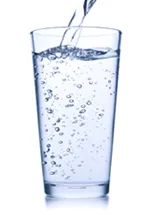
[She holds an 8½ × 11 picture/concept card of a glass filled with water.]
Ms. Thomas: Look at this picture. Our first new word is liquid. A liquid is something such as water or juice. In this picture, water is a liquid. It is wet. What is this, everyone?
Children: Liquid!
Ms. Thomas: Let’s point to the liquid in this picture. [Everyone points.]
TEACHING STRATEGY: Extend children’s conceptual knowledge.
Ms. Thomas: Besides water, there are many other types of liquids. There is liquid paint, soup, and detergent for washing our clothes. And look at this liquid glue. Benjamin, I see that you want to say something! What is your favorite liquid and why?
Child: Juice.
Ms. Thomas: I like juice, too. Say, “My favorite liquid is juice.”
Child: My favorite liquid is juice.
Ms. Thomas: Okay, why do you like juice?
Child: It’s cold and sweet.
Ms. Thomas: That’s a good explanation. You like juice because it is cold and sweet!
Can you think of a liquid that we use to soften our skin? What type of liquid is in this bottle?
Child: That’s lotion.
Ms. Thomas: Yes, the liquid in this bottle is a lotion.
TEACHING STRATEGY: Use a visual to depict a vocabulary concept.
[She points to a picture/concept card of icicles on a tree.]
Here’s our second new word. Look at this picture. Did you know this is frozen water? Everyone say, “It’s frozen water.” [Children repeat.]
If something is frozen, it is hard and cold. Ice is something that is frozen, or hard and cold. In this picture, the water on the branch is frozen, or cold and hard. Everyone, what is this?
Children: Frozen.
Ms. Thomas: What are some things you know that are frozen?
Child: Popsicles!
Ms. Thomas: Yes, Popsicles are frozen. Let’s say that together: Popsicles are frozen. [Children repeat.] What are some other examples of frozen water?
Child: The lake in the park.
Ms. Thomas: Yes, the lake in the park is frozen this morning. In fact, there were geese sitting on the frozen lake this morning.
Child: Water frozen on the sidewalk.
Ms. Thomas: Yes, there is frozen water on the sidewalk. What do we call frozen water? [There is a discussion about the ice on the sidewalk.]
Ms. Thomas: We have one more new word to learn that we will listen for in our book.
TEACHING STRATEGY: Use a visual to depict a vocabulary concept.
[She holds a picture/concept card showing a brick wall.]
Ms. Thomas: This is a solid. A solid is something hard, such as wood or rocks. In this picture, the bricks are solid. They are hard. What is this, everyone?
Children: Solid.
Ms. Thomas: When water is frozen, it is a solid, so it feels hard. Besides frozen water, there are many other examples of solid objects. What do you see in this room that is a solid? [Silence. The silence indicates that some children may need clarification or further explanation to understand the concept of solid.]
Child: Rocks.
Ms. Thomas: Yes, the rocks on the science table are solid.
TEACHING STRATEGY: Scaffold with an explanation.
They are solid because they feel hard when you touch them. What else in the room is a solid?
TEACHING STRATEGY: Scaffold with additional examples.
I see maps on the walls that are solids, and I see lights on the ceiling that are solids. If I touched them, they would feel hard. What else in the room is a solid?
Child: The table.
Child: The little sticks in the bird’s nest.
Child: Coats and caps.
TEACHING STRATEGY: Model appropriate language use and more complex sentence structures.
Ms. Thomas: Yes, the wooden table and the wooden chairs are also solids. Good observing that the bird’s nest on the science table is made of small sticks or twigs that are solid. You are right, Jeremy! The coats and caps hanging by the door are also solid.
Today, in our new book, we will listen for three words: liquid, frozen, and solid. This week, we are learning about water and what water can do. We will learn that water is a liquid that can freeze and become a solid.
After previewing the three science-related words (i.e., liquid, frozen, and solid) and connected concepts (e.g., “Water is a liquid that can freeze and harden into a solid when the temperature is cold”) before reading the book, Ms. Thomas is ready to read Amazing Water. While reading this informational text, she stops on specific pages to point to a picture and talk about the target word and connected science concepts that are depicted in the book. This teaching strategy ensures multiple opportunities to extend knowledge while expanding children’s language abilities in the context of a book discussion.
Instructional Science Vignette: What Can Water Do?
DISCUSSION WHILE READING AMAZING WATER
Ms. Thomas: The title of our new book is Amazing Water. Melvin Berger is the author who wrote the book, and Robyn Lash is the photographer who took the pictures. As I read, you will listen to learn about water and our magic words: liquid, frozen, and solid.
[She reads the first few pages of the book and stops to point to a picture of children swimming and children standing in the rain.]
TEACHING STRATEGY: Stop and briefly talk about vocabulary ...