- 176 pages
- English
- ePUB (mobile friendly)
- Available on iOS & Android
eBook - ePub
Freemasonry For Beginners
About this book
Many people have heard of Freemasonry but few have any idea what it is what it does or why it exists. Freemasonry is not a religion but rather a spiritual self-help society whose declared purpose is to help members become better citizens and it has a strong track record of doing just that since it began in Scotland in the 15th century.Freemasonry For Beginners explores the objectives and teaching methods of Freemasonry and describes its influence on society in the past present and future. It recounts the origins of the movement in Scotland and its spread to North America and the rest of the world. Not least of all it shows how Masonic teachings have helped so many members over the centuries learn the skills to become leaders in society science and the arts.
Information
Topic
Scienze socialiSubtopic
Sociologia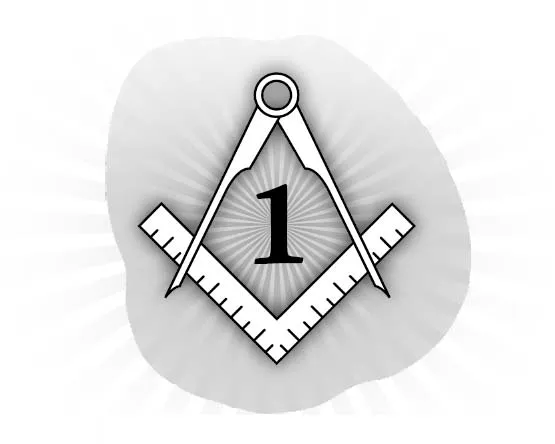
THE ORIGINS OF FREEMASONRY
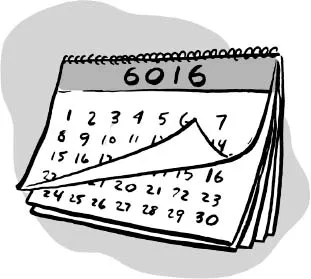
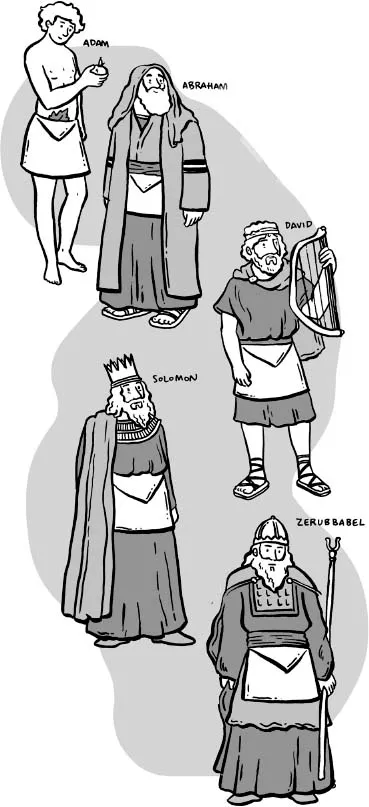
FREEMASONRY HAS TWO SEPARATE HISTORIES. It has a ritual history that begins in the Masonic Year of Light, or Anno Lucis (A.L.). According to ritual myths, Freemasonry began with Adam, was passed down the lines of the patriarchs to the builders of Solomon's Temple, and continued down to the present day. The Masonic calendar begins in the year 4000 B.C.E., said to be the year Adam was created, and is known as the year 1 A.L. The Masonic calendar is 4,000 years longer than the Christian calendar of Anno Domini (A.D.) In other words, the year 2016 A.D. (or C.E.) is 6016 A.L. in the Masonic Calendar.
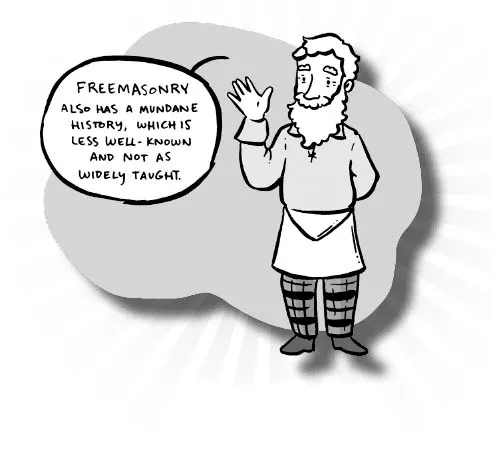
It begins with the names, date, and place where the masters of the first Free-masonic Lodge began to use the ritual history as a teaching aid to help them and their members develop an understanding of themselves and the world in which they lived. It proceeds to tell the story of how Freemasonry was spread and by whom.
The teaching method of Freemasonry is based on a simple idea. It is generally easier to grasp a concept if the facts are explained to you as a memorable story and then you then act out the story to help learn its lessons. Thus, the teaching principle adopted by the first Freemasons is summarized in the adage,
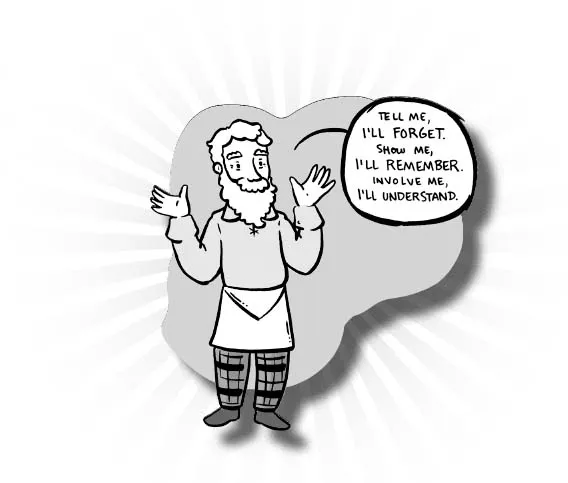
Freemasonry involves members in its stories so they can understand the deep morals contained in them and appreciate the meaning of ancient symbols that predate written language.
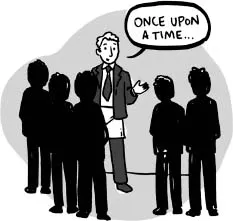
The first Freemasons stumbled upon two powerful concepts. The first was that symbols can convey feelings and insights that are beyond the ability of language to capture but that may contain Truth. The second was that a story tells far more than a list of facts does. But what is the extra information that a story conveys?
When we tell a story about someone, we relate a series of episodes from their life that describes how they developed as a person in response to things that happened to them. What separates a story from a list of events is all the connections we instinctively feel between the sequence of events. If we believe there is a purpose to life, then we will search for connections between actions and their consequences.
A Peculiar System of Morality
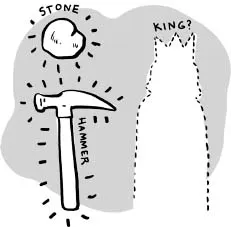
Freemasonry describes itself in ritual as “a peculiar system of morality, veiled in allegory, and illustrated by symbols.” It began when a small group of illiterate individuals recognized that there were two types of things in the world. There were things like stones or hammers that could be explained completely by listing their properties. For a stone, these included such attributes as its roughness, its smoothness, and its squareness or crookedness when used as a building block. For a hammer, weight and balance helped a working Mason to visualize or describe it. But there were also things—such as kings, temples, and symbols—that could be explained only by telling their stories. For this second type of thing, a simple description was not enough. For example, you had to hear a story to explain why Solomon wanted to build a temple, why a temple would need two pillars at its entrance, and why the center of a perfect circle is a magical point.
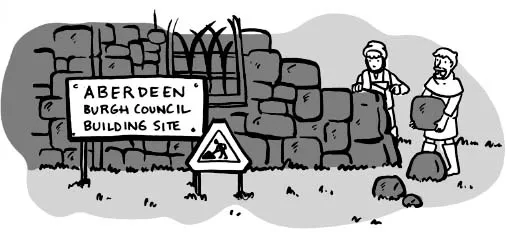
By good fortune, we know the names two of the individuals who had this insight. They were David Menzies and Matthew Wright, members of a lodge of working stonemasons who, by their study of symbols and stories, first devised the processes of Freemasonry. Their actions were recorded in the minutes of the Burgh Council of Aberdeen, and their insights survive in a wonderful drawing of the symbols they used for teaching. Menzies and Wright recognized that people, symbols, and cultures are not simply things, but are processes that unfold over time. Although they wouldn't have explained it that way, they certainly saw that there are only two types of things—objects and processes. Objects don't change, but processes do. Moreover, processes can change objects.
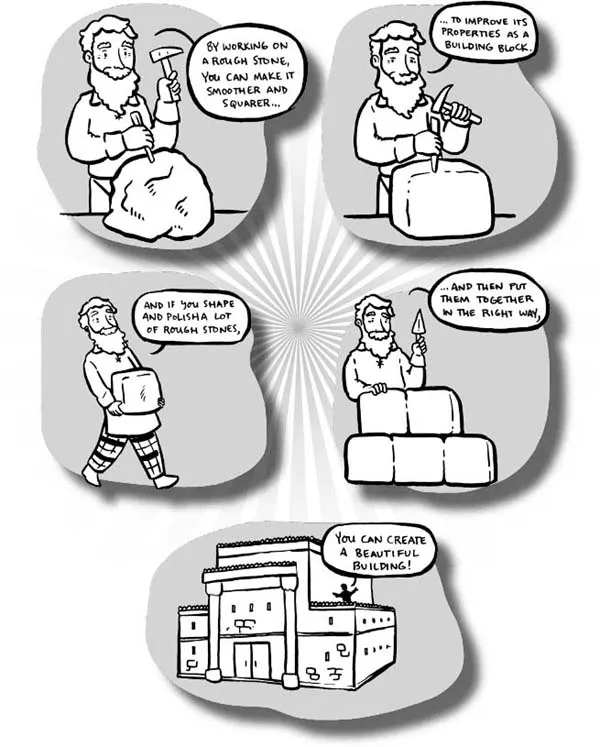
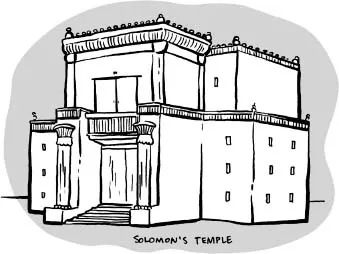
If you want to change yourself and understand the world in which you live, then you must do more than simply learn facts. You must search for a way of changing and improving yourself. The analogy Menzies and Wright used was that of the most beautiful building in the ancient world, King Solomon's Temple. It was created by shaping many rough stones into highly polished parts of a graceful and beautiful structure.
Here's a little story about how they came to be in this position.
The First Recorded Lodge
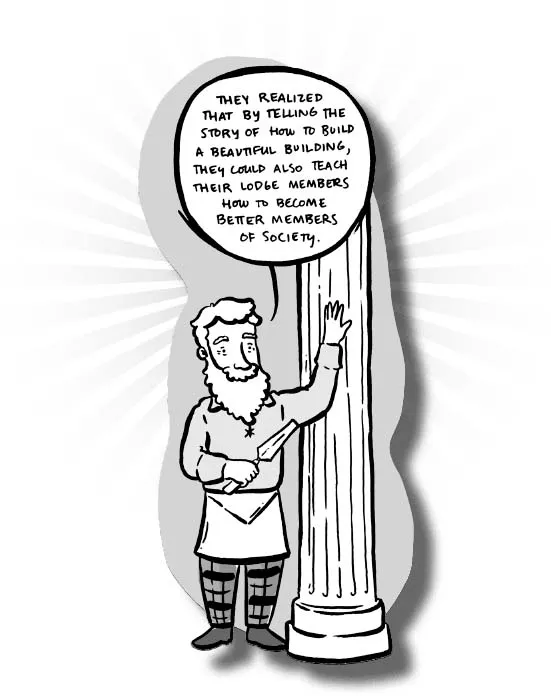
The first written reference to a lodge of Masons appears in the records of the Aberdeen Burgh Council on June 27, 1483. According to the entry, the council decided that David Menzies, the master of church work, would be appointed master of the Masons of the Lodge. A later notation in the Aberdeen Burgh Council minutes, from 1493, says that Alexander Stuart, then the Master of the Lodge, was also elected to serve as an Alderman on the council. His Masonic training, it seemed, was helping make him a more effective member of society. The lodge taught prospective members the methods of self-improvement used by the lodge, and they went on to become important members of Aberdeen society.
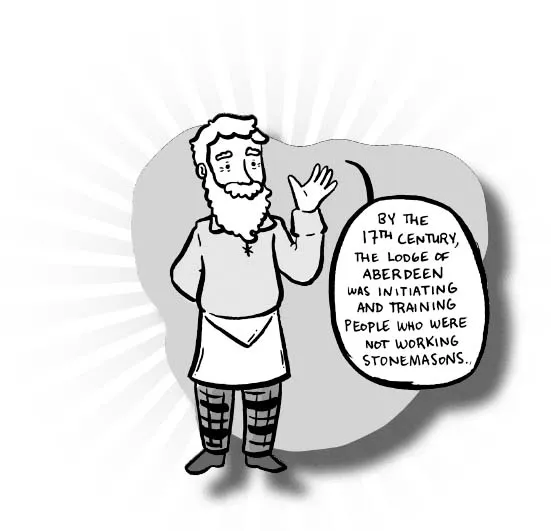
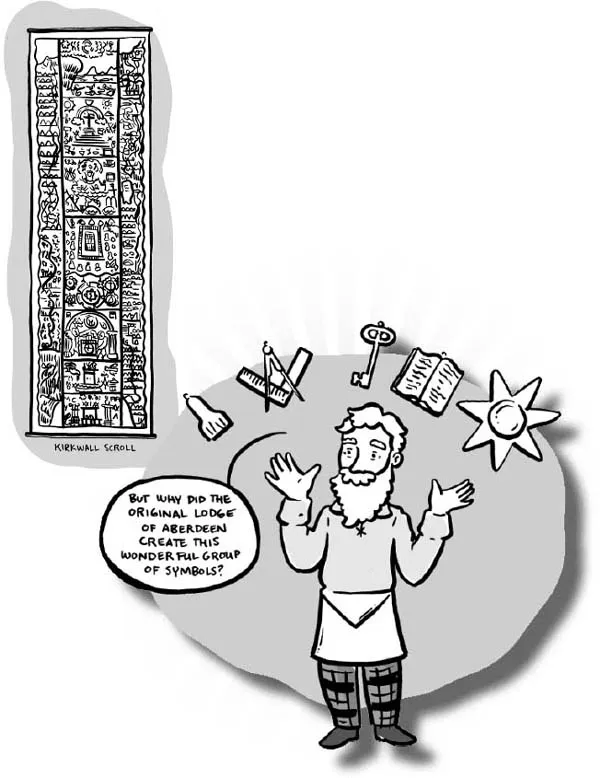
The Lodge of Aberdeen created drawings of the ancient symbols still employed in Masonic teaching today. The symbols were depicted on a decorated canvas carpet, known as a floorcloth. It was laid in the center of the lodge so the Masons could walk a ritual path of pilgrimage through the symbols. This was a powerful way of studying them. The original floorcloth moved to Orkney in 1786, when William Graham gifted it to Lodge Kirkwall Kilwinning. (Graham's merchant father had acquired it while trading in Aberdeen.) According to carbon dating, the central panel of the cloth dates to 1430–1530; the outer sections date to 1780–1840, the period in which it was given to the Kirkwall Lodge.
To answer that question, we have to go even farther back in time. In 1411, a powerful Scottish noble decided to build an alternative religious center to rival the Abbey of the Holyrood. The Abbey of the Holyrood was said to house a fragment of the True Cross that had been brought to Scotland by Queen Margaret, the ...
Table of contents
- Cover Page
- Title Page
- Copyright
- Contents
- Foreword
- INTRODUCTION
- 1: THE ORIGINS OF FREEMASONRY
- 2: THE ORGANIZATION OF FREEMASONRY
- 3: THE RITUALS OF FREEMASONRY
- 4: THE SYMBOLS OF FREEMASONRY
- 5: FREEMASONRY AND RELIGION
- 6: SCOTTISH ROOTS
- 7: THE FIRST GRAND LODGES
- 8: THE SPREAD OF FREEMASONRY
- 9: THE GROWTH OF FRATERNALISM IN THE UNITED STATES AND BEYOND
- FURTHER READING
- About the Author
- About the Illustrator
Trusted by 375,005 students
Access to over 1.5 million titles for a fair monthly price.
Study more efficiently using our study tools.
Frequently asked questions
Yes, you can cancel anytime from the Subscription tab in your account settings on the Perlego website. Your subscription will stay active until the end of your current billing period. Learn how to cancel your subscription
No, books cannot be downloaded as external files, such as PDFs, for use outside of Perlego. However, you can download books within the Perlego app for offline reading on mobile or tablet. Learn how to download books offline
Perlego offers two plans: Essential and Complete
- Essential is ideal for learners and professionals who enjoy exploring a wide range of subjects. Access the Essential Library with 800,000+ trusted titles and best-sellers across business, personal growth, and the humanities. Includes unlimited reading time and Standard Read Aloud voice.
- Complete: Perfect for advanced learners and researchers needing full, unrestricted access. Unlock 1.5M+ books across hundreds of subjects, including academic and specialized titles. The Complete Plan also includes advanced features like Premium Read Aloud and Research Assistant.
We are an online textbook subscription service, where you can get access to an entire online library for less than the price of a single book per month. With over 1.5 million books across 990+ topics, we’ve got you covered! Learn about our mission
Look out for the read-aloud symbol on your next book to see if you can listen to it. The read-aloud tool reads text aloud for you, highlighting the text as it is being read. You can pause it, speed it up and slow it down. Learn more about Read Aloud
Yes! You can use the Perlego app on both iOS and Android devices to read anytime, anywhere — even offline. Perfect for commutes or when you’re on the go.
Please note we cannot support devices running on iOS 13 and Android 7 or earlier. Learn more about using the app
Please note we cannot support devices running on iOS 13 and Android 7 or earlier. Learn more about using the app
Yes, you can access Freemasonry For Beginners by Robert Lomas,Sarah Becan in PDF and/or ePUB format, as well as other popular books in Scienze sociali & Sociologia. We have over 1.5 million books available in our catalogue for you to explore.