- 192 pages
- English
- ePUB (mobile friendly)
- Available on iOS & Android
eBook - ePub
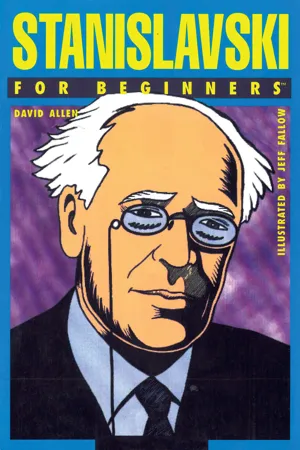
Stanislavski For Beginners
About this book
Stanislavski was the first person to develop a cogent and practical system of acting. Throughout his life he sought the answers to such fundamental questions as: "What is great acting?" and "How can you find inspiration in every performance?" Stanislavski remains the most important influence on actor training today and yet many of his ideas are little known or even misunderstood.Stanislavski For Beginners charts the development of the Stanislavski system. It includes a clear exposition of the key elements of the system and explores his Method of Physical Actions which he worked on in the years before his death and which he called "the result of my whole life's work."
Information
Act VI: The “System” Triumphant
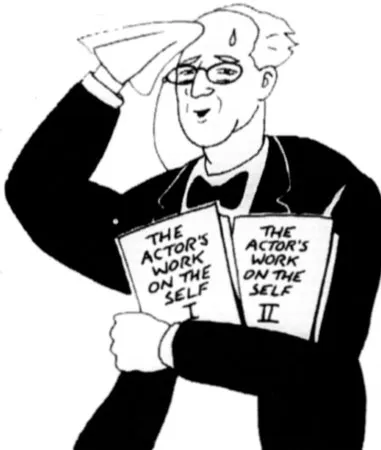
The books appeared with a 14-year gap between them in the States - and a 17-year gap in the Soviet Union. This has had very unfortunate consequences. The first volume, inevitably, made more impact. There has even been an assumption that it is the “system.” But it is only part of it. The second volume, focusing on physical work, has received comparatively little attention. Partly as a result some people have even assumed, quite erroneously, that the “system” is only concerned with the actor's internal technique, to the neglect of physical work.
The ideas are presented in the form of a fictional “diary” written by a young student, Kostya, who is studying acting with the director, Tortsov. Stanislavski chose this format because he did not want to use a “dry, scientific language”; instead, he wanted the book to be accessible to actors, and to work through concrete anecdotes and practical examples.
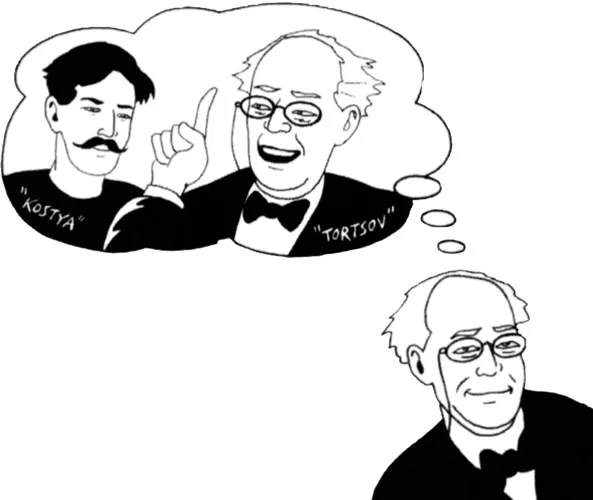
Both Kostya and Tortsov are loosely based on Stanislavski himself. Kostya represents Stanislavski in his youth - naïve and keen to learn. Tortsov represents the mature Stanislavski - the experienced director, teacher, and actor.
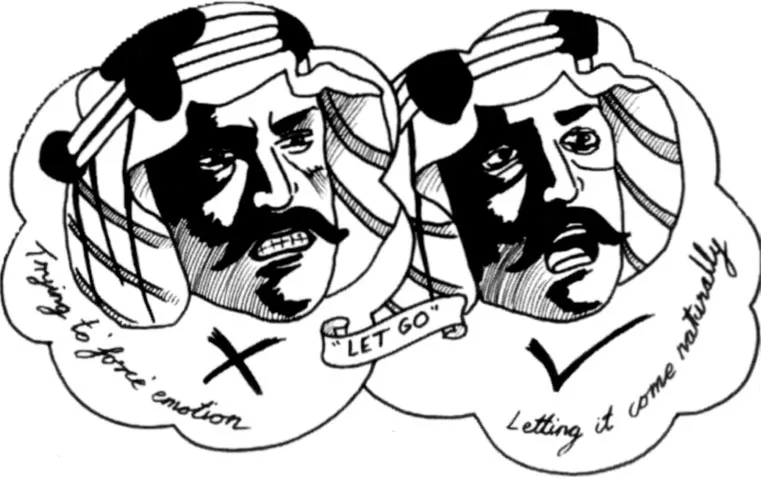
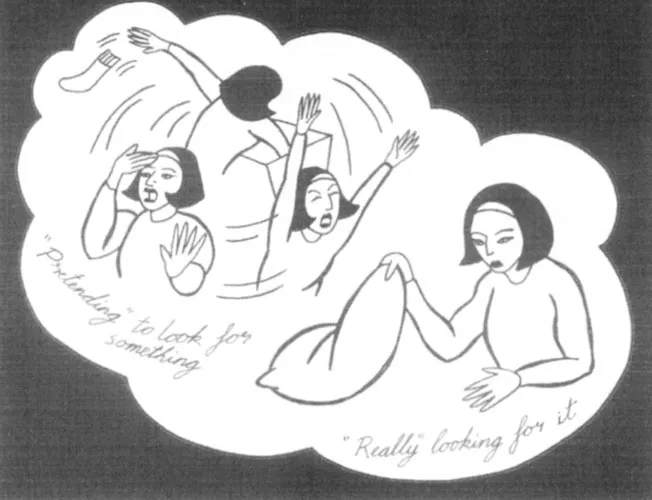

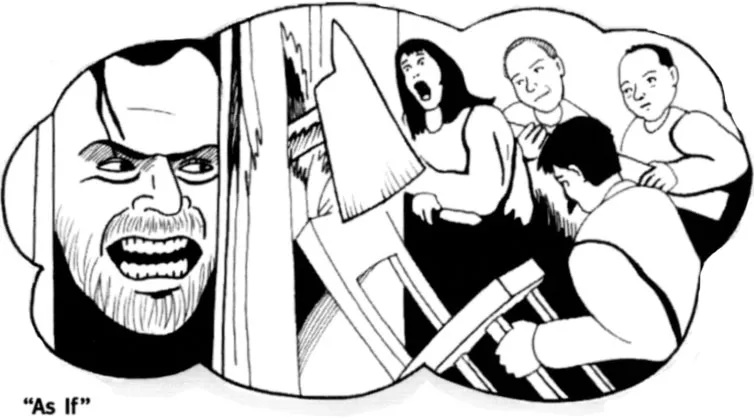
In working on a role, you should ask yourself: what would I do if I was in this situation? This helps to put you in the character's shoes: “as if acts as a lever, lifting us from the plane of reality, into the world where it is possible to create” - the world of imagination. “As if” does not ask you to believe something is real. Everyone knows it isn't. You simply act as if you were in these circumstances.
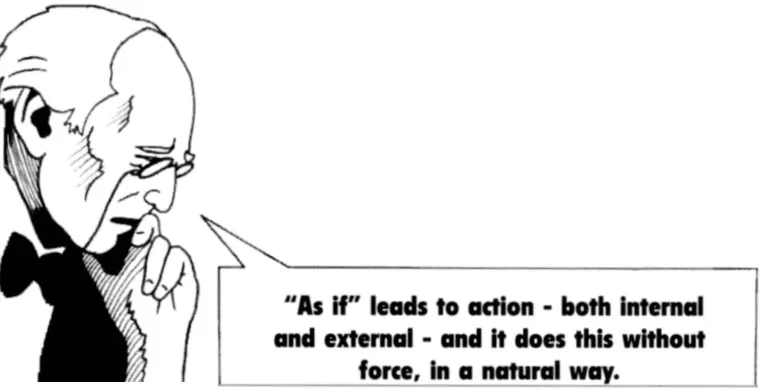
Tortsov's students do an improvisation. They are gathered on a stage set representing someone's apartment. They are asked to imagine that a man who used to live in the apartment became violently insane, and he was put in hospital; but now, Tortsov asks, “if he escaped, and he was standing outside that door, what would you do?” The students act as if this was real. They become absorbed in the problem, and begin to look for ways to defend themselves. They barricade the door with tables and chairs. They begin to experience a sense of danger and fear.
Given Circumstances
The Great Russian writer, Aleksandr Pushkin, declared:
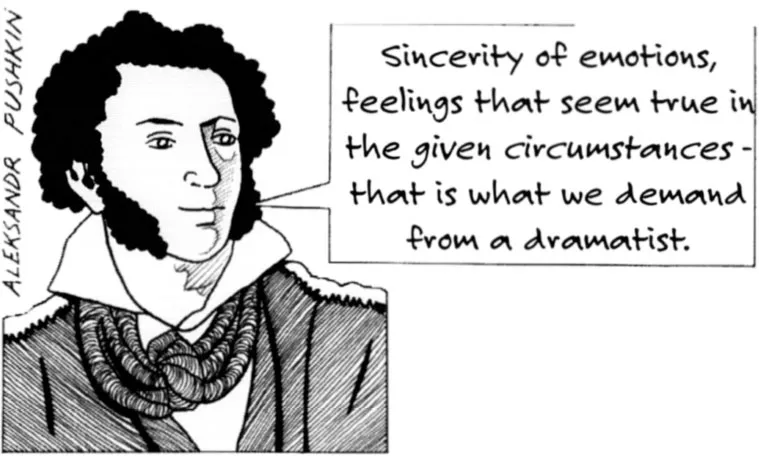
Table of contents
- Cover Page
- Title Page
- Copyright
- Contents
- ACT I: Youth
- Act II: The Society of Art and Literature
- Act III: The Moscow Art Theatre
- Act IV: First Thoughts on the “System”
- Act V: Stanislavski and the State
- Act VI: The “System” Triumphant
- Act VII: The Last Act
- Recommended Reading
- Index
Trusted by 375,005 students
Access to over 1.5 million titles for a fair monthly price.
Study more efficiently using our study tools.
Frequently asked questions
Yes, you can cancel anytime from the Subscription tab in your account settings on the Perlego website. Your subscription will stay active until the end of your current billing period. Learn how to cancel your subscription
No, books cannot be downloaded as external files, such as PDFs, for use outside of Perlego. However, you can download books within the Perlego app for offline reading on mobile or tablet. Learn how to download books offline
Perlego offers two plans: Essential and Complete
- Essential is ideal for learners and professionals who enjoy exploring a wide range of subjects. Access the Essential Library with 800,000+ trusted titles and best-sellers across business, personal growth, and the humanities. Includes unlimited reading time and Standard Read Aloud voice.
- Complete: Perfect for advanced learners and researchers needing full, unrestricted access. Unlock 1.5M+ books across hundreds of subjects, including academic and specialized titles. The Complete Plan also includes advanced features like Premium Read Aloud and Research Assistant.
We are an online textbook subscription service, where you can get access to an entire online library for less than the price of a single book per month. With over 1.5 million books across 990+ topics, we’ve got you covered! Learn about our mission
Look out for the read-aloud symbol on your next book to see if you can listen to it. The read-aloud tool reads text aloud for you, highlighting the text as it is being read. You can pause it, speed it up and slow it down. Learn more about Read Aloud
Yes! You can use the Perlego app on both iOS and Android devices to read anytime, anywhere — even offline. Perfect for commutes or when you’re on the go.
Please note we cannot support devices running on iOS 13 and Android 7 or earlier. Learn more about using the app
Please note we cannot support devices running on iOS 13 and Android 7 or earlier. Learn more about using the app
Yes, you can access Stanislavski For Beginners by David Allen,Jeff Fallow in PDF and/or ePUB format, as well as other popular books in Mezzi di comunicazione e arti performative & Scenotecnica e scenografia teatrale. We have over 1.5 million books available in our catalogue for you to explore.