- 160 pages
- English
- ePUB (mobile friendly)
- Available on iOS & Android
eBook - ePub
Mcluhan For Beginners
About this book
Marshall McLuhan was one of the most brilliant and original thinkers of the 20th century. He was so far ahead of his time that he predicted the future and offered a critique of human behavior in a media saturated world that is perhaps more valuable in today's Internet age than it was in his own time.McLuhan pioneered the study of Media unified Art and Science and warned us about the perils of a televised computerized famous-for-15-minutes social media world. A world where we would live in each other's faces and become so alike so isolated so anonymous that violence would become a scream of identity a way of saying "I am not invisible." McLuhan tried to teach us to guard against these dehumanizing debasing effects of technology and a thousand other things but we got reality television anyway.The centennial celebration of McLuhan's life and the re-release of his books has led to a surge of new interest in his thinking and teachings. McLuhan For Beginners provides an essential introduction that is clear comprehensive and easy to remember. It is full of wise and witty art by Susan Willmarth that is a perfect match to W. Terrence Gordon's writing. McLuhan envisioned the media generated Global Village before it existed and no one since McLuhan has described its allure and pitfalls better.
Information
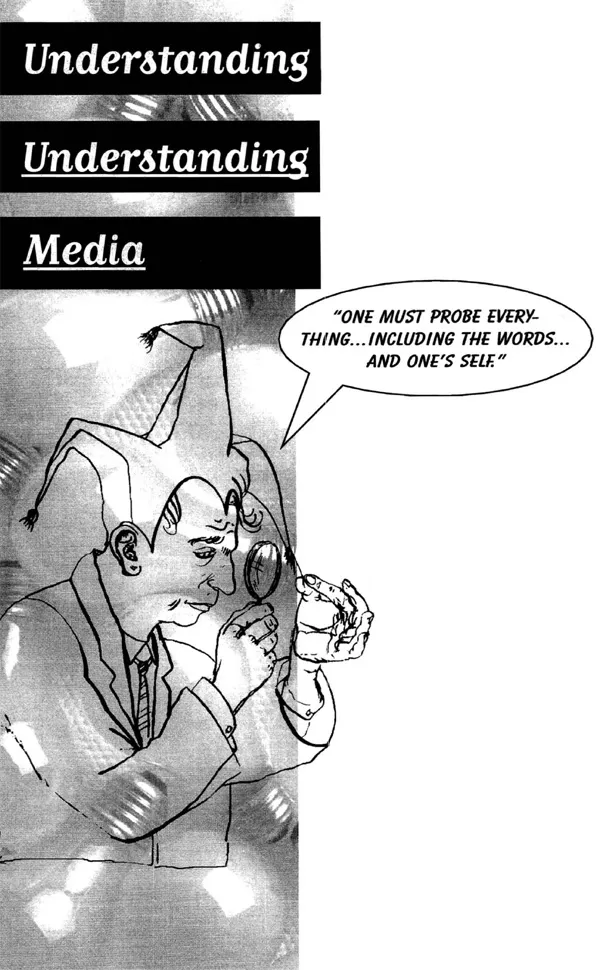

If that approach makes academics nervous, it is certainly one that every artist is comfortable with.
McLuhan’s method? It’s all in the fingers:
“Most of my work in the media is like that of a safecracker. In the beginning I don’t know what’s inside. I just set myself down in front of the problem and begin to work. I grope, I probe, I listen, I test—until the tumblers fall and I’m in.” (From the Introduction to Gerald Stearn’s McLuhan Hot and Cool)
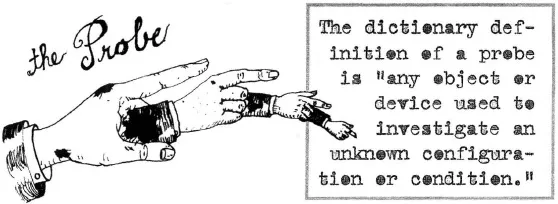

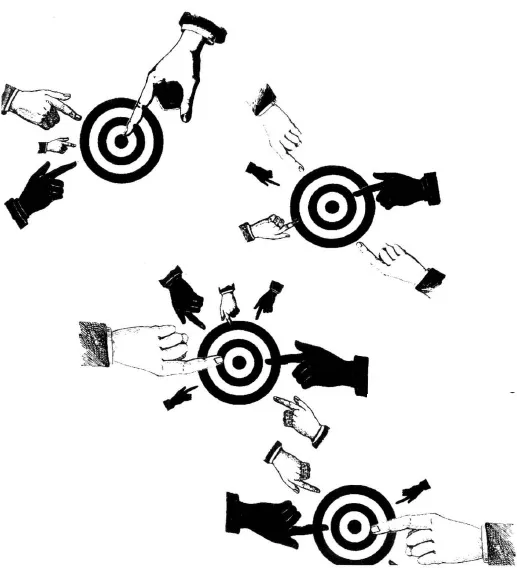
To many academics of McLuhan’s era, his concept of probes remains one of the most irritating aspects of his method. Faith in the power of the probe allowed McLuhan to take stabs at a wide range of topics, from the serious to the ridiculous, without necessarily committing himself to conclusions or testing his hypotheses scientifically—a habit that infuriated his critics and detractors.
TWO “PROBING” QUESTIONS

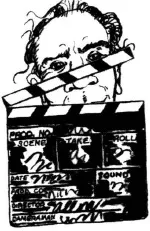
QUESTION: Why do you think McLuhan was displeased with the change he was asked to make in the form of this quip in his cameo as himself in “Annie Hall”?
Answer: In the film, McLuhan’s question is turned into a statement and is no longer a disabling tactic against an aggressive opponent. As a question, it forces an opponent to stop and think, because it is unexpected—a probe! As a statement, it loses this force and undermines the authority that McLuhan represents in the scene.
Canadian artist Alan Flint shapes words out of wood, brick, cardboard, plastic, plaster, etc. In a field he dug out the word WOUND in giant letters to symbolize the effect of human systems on the earth.
QUESTION: Is this an example of the medium being the message?
Answer: Yes. For McLuhan, language is technology and words are artifacts. Flint’s WOUND is part of the technology of language executed in a way that reminds us that the technology of digging wounds the earth. Flint weds his words to different technologies but in every case reminds us of the link between the word’s meaning and the technology used in spelling it out. He also reminds us that words are artifacts and forces us to reflect on the medium and the message by forcing them together in new ways. (This is an example of an artist making probes out of clichés, a process that is explained in detail on page 107.)
And, boy, did he ever! Wired notes that while McLuhan was a political conservative and a devout Catholi...
Table of contents
- Coverpage
- Copyright
- Contents
- Titlepage
- Acknowledgments
- Marshall McWHO?
- What Is So Special About Marshall McLuhan?
- McLuhan’s Point Of View
- Stepping Into McLuhan’s Bio
- THE MECHANICAL BRIDE
- EXPLORATIONS & Idea Consultants
- Exploring THE GUTENBERG GALAXY
- Understanding UNDERSTANDING MEDIA
- CULTURE IS OUR BUSINESS = Business Is Our Culture
- The Global Village
- FROM CLICHE TO ARCHETYPE
- THE MECHANICAL BRIDE: Comic Strips
- Kroker’s PANIC ENCYCLOPEDIA
- Closure: THE LAWS OF MEDIA
- Wrapping It Up
- Bibliography
- Index
Trusted by 375,005 students
Access to over 1.5 million titles for a fair monthly price.
Study more efficiently using our study tools.
Frequently asked questions
Yes, you can cancel anytime from the Subscription tab in your account settings on the Perlego website. Your subscription will stay active until the end of your current billing period. Learn how to cancel your subscription
No, books cannot be downloaded as external files, such as PDFs, for use outside of Perlego. However, you can download books within the Perlego app for offline reading on mobile or tablet. Learn how to download books offline
Perlego offers two plans: Essential and Complete
- Essential is ideal for learners and professionals who enjoy exploring a wide range of subjects. Access the Essential Library with 800,000+ trusted titles and best-sellers across business, personal growth, and the humanities. Includes unlimited reading time and Standard Read Aloud voice.
- Complete: Perfect for advanced learners and researchers needing full, unrestricted access. Unlock 1.5M+ books across hundreds of subjects, including academic and specialized titles. The Complete Plan also includes advanced features like Premium Read Aloud and Research Assistant.
We are an online textbook subscription service, where you can get access to an entire online library for less than the price of a single book per month. With over 1.5 million books across 990+ topics, we’ve got you covered! Learn about our mission
Look out for the read-aloud symbol on your next book to see if you can listen to it. The read-aloud tool reads text aloud for you, highlighting the text as it is being read. You can pause it, speed it up and slow it down. Learn more about Read Aloud
Yes! You can use the Perlego app on both iOS and Android devices to read anytime, anywhere — even offline. Perfect for commutes or when you’re on the go.
Please note we cannot support devices running on iOS 13 and Android 7 or earlier. Learn more about using the app
Please note we cannot support devices running on iOS 13 and Android 7 or earlier. Learn more about using the app
Yes, you can access Mcluhan For Beginners by W. Terrence Gordon,Susan Willmarth in PDF and/or ePUB format, as well as other popular books in Social Sciences & Media Studies. We have over 1.5 million books available in our catalogue for you to explore.