- 160 pages
- English
- ePUB (mobile friendly)
- Available on iOS & Android
eBook - ePub
Poetry For Beginners
About this book
Poetry is one of those subjects almost impossible to define as it can be so many things at once. It can be: kids whispering limericks on the playground; secret languages used by revolutionaries and spies; or the written strength of oppressed people. Poetry is how millions of people across time have used language to try to better understand love hate war religion oppression joy sorrow sex and death.Poetry is one of the oldest forms of writing in the world yet also constantly evolving. Despite its complexities poetry is probably the way most people learned how to read. Poetry For Beginners is a fun lively and accessible guide and expands one's understanding and knowledge of poetry through the ages.From ancient Greece to the present Poetry For Beginners traces the wonders of the written word and shows how it is relevant in daily life.
Information
Chapter 1: I, Too, Dislike It
I, too, dislike it: there are things that are important beyond all this fiddle.
Reading it, however, with a perfect contempt for it, one discovers that there is in
it after all, a place for the genuine.
(lines 1-5)
What Is Poetry?
Poetry is the journal of the sea animal living on land, wanting to fly in the air. Poetry is a search for syllables to shoot at the barriers of the unknown and the unknowable. Poetry is a phantom script telling how rainbows are made and why they go away.
—Carl Sandburg, from Poetry Considered
Poetry is life distilled.
—Gwendolyn Brooks
Poetry is not an expression of the party line. It's that time of night, lying in bed, thinking what you really think, making the private world public, that's what the poet does.
—Allen Ginsberg, from Ginsberg: A Biography by Gary Miles
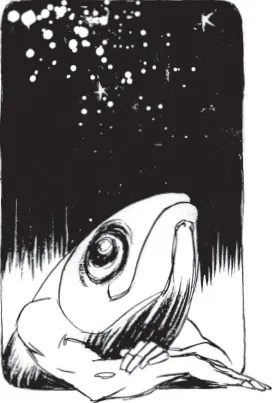
Poetry is whatever poetry can be.
Poetry can be what a young woman says when she steps up to a microphone and spills her guts, and moves the room.
Poetry can be the world, observed from a window, written down in secret.
Poetry can be whispered limericks in the back of the playground.
Or the verse a young playwright writes to immortalize his mistress, behind the back of his wife.
Or kids making up rhymes, trying to outdo each other.
Or it can be the secret language of revolutionaries and spies.
Or it can be truth spoken to power.
Or it can be, simply, a place for the genuine.
It is one of those things that can be a lot of things.
What poetry has always been is a way for millions of people across time to use language to try to better understand love, hate, war, religion, oppression, joy, sorrow, sex and death—the whole human condition.
So poetry is huge. Really, really enormous.
And it is all over the place. It is on birth announcements and on tombstones; at presidential inaugurations and high school graduations; on the radio and on the Internet. It is in textbooks and prayer books; in the Bible and the Torah and the Koran and the Tao Te Ching. Poetry is written in notebooks and journals. It is carved into the blocks of ancient tombs and written on bathroom walls.
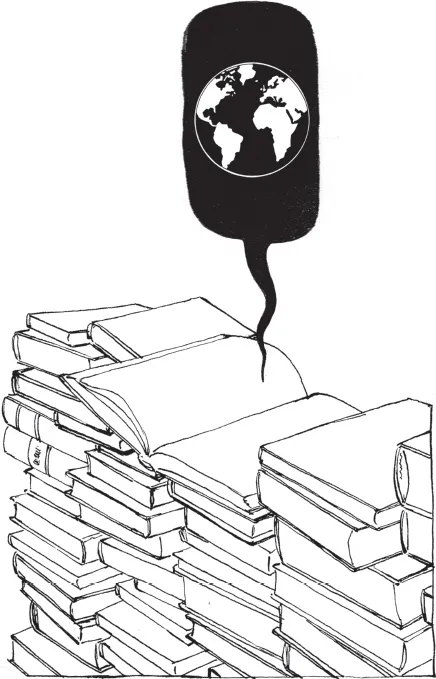
Poetry is one of the oldest forms of writing in the world, yet it is also fiercely modern and constantly evolving.
Poetry can be incredibly dense and complex, yet you probably learned to read by reading poetry.
Like many art forms, poetry is difficult to define. But let's try:
Poetry is writing that communicates intensely and intimately through and beyond language, using rhythm, sound, style and meaning.
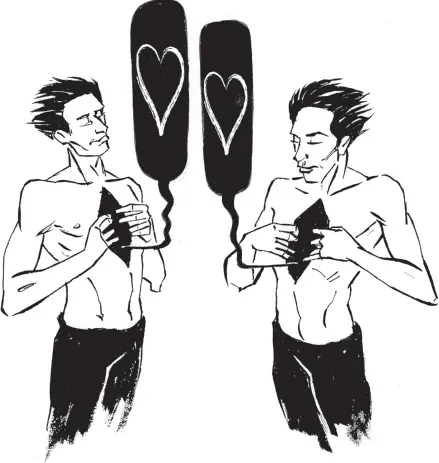
Got it?
Poetry is intense, it is intimate, it uses language but it is more than just the words. It uses the rhythms, sounds, styles and meanings of the words to communicate.
We'll spend the rest of this book explaining exactly what that definition means.
That poetry is hard to define might be why some people find poetry intimidating. Many things we think of as part of “poetry”—emotion, love, rhyme, rhythm, line breaks, imagery—exist in lots of poetry, but certainly not all.
Which means that we can't tell you what poetry is by listing a set of component parts.
So let's look at what poetry does.
“A poet's work is to name the unnameable, to point at frauds, to take sides, start arguments, shape the world, and stop it going to sleep.”
—Salman Rushdie, novelist,
Independent (London)
Independent (London)
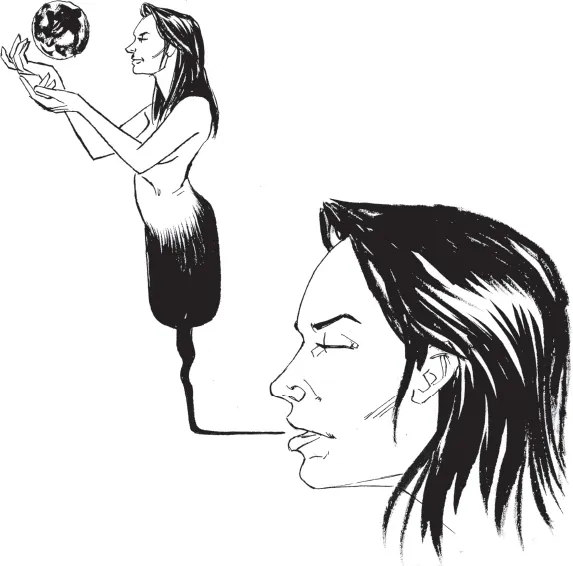
At its most basic level, poetry is a form of literature that focuses language's ability to evoke feelings, ideas, experiences, not just to transmit meaning. Poetry is writing that does more than just mean what the words themselves mean.
Because poetry can mean more than just the words as written, poets have often been on the forefront of political, cultural and intellectual change.
When you read a set of instructions, or an encyclopedia, the language you read was chosen by the author to convey a pretty precise meaning. We chose the words in the text of this book first and foremost to give you information.
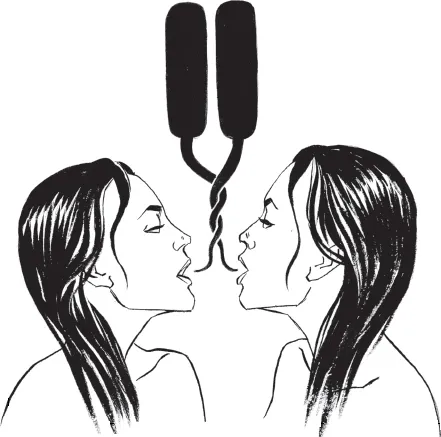
“A poem is true if it hangs together. Information points to something else. A poem points to nothing but itself.”
—E.M. Forster, novelist, from Two Cheers for Democracy (1951)
While poets also want to engage and inform, poets look at language differently. Poets consider the sounds of words, the rhythms, the way words look on a page. They consider the symbolism of language, and the multiple meanings of words. They think about how the sounds and appearance of the words may affect you (the reader), how these things may trigger memories, or emotions, or images.
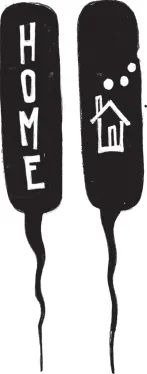
This means that not only does poetry contain the actual meaning of the words, but it contains a second meaning—it contains the meaning a reader gets from the poem.
So when you read a poem, you create the meaning of the poem. You are the one who makes the poem mean something. So for poetry to mean anything, you need to start reading it.
How Do You Read Poetry?
Try to love the questions themselves as if they were locked rooms or books written in a very foreign language.
—Rainer Maria Rilke, from Letters to a Young Poet, trans. Stephen Mitchell
Like any sort of reading, poetry gives you access to ideas and experiences. When you read poetry, you get to peek into the mind of a poet, and see whether that person's experiences have any connection with your own, whether that person's ideas have a place in your life.
At some point in time, someone started spreading the rumor that to understand poetry, to know how to read poetry the “right way” you had to have all of this super-secret special insider knowledge about both poems and poets.
But that is just a rumor. Anyone can read any poem, anytime, anywhere. There is no super-secret insider knowledge. As long as you are fluent in the language the poem is written in, you can read it. And if you aren't fluent, you can probably find the poem in translation.
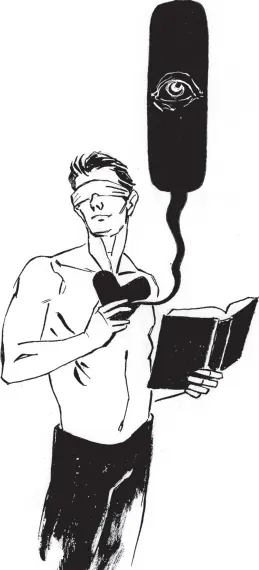
As you study poetry, you might gain information that changes the meaning you get from a poem, like what certain symbols might stand for, or which personal experiences a poet might be bringing into his or her work.
And while learning more about how a poem is created, and to what poets might be referring in their poems might make reading poetry more exciting, and give you new things to consider while reading, it doesn't make any meaning you get ...
Table of contents
- Cover Page
- Title Page
- Copyright Page
- Contents
- 1. I, Too, Dislike It
- 2. Getting at the Meaning of Poems
- 3. Seeming Free but Fettered Fast
- 4. Each Age a Lens
- 5. Imaginary Gardens with Real Toads
- Appendix
- Copyrights and Permissions
- Acknowledgments
- About the Authors and Illustrator
Trusted by 375,005 students
Access to over 1.5 million titles for a fair monthly price.
Study more efficiently using our study tools.
Frequently asked questions
Yes, you can cancel anytime from the Subscription tab in your account settings on the Perlego website. Your subscription will stay active until the end of your current billing period. Learn how to cancel your subscription
No, books cannot be downloaded as external files, such as PDFs, for use outside of Perlego. However, you can download books within the Perlego app for offline reading on mobile or tablet. Learn how to download books offline
Perlego offers two plans: Essential and Complete
- Essential is ideal for learners and professionals who enjoy exploring a wide range of subjects. Access the Essential Library with 800,000+ trusted titles and best-sellers across business, personal growth, and the humanities. Includes unlimited reading time and Standard Read Aloud voice.
- Complete: Perfect for advanced learners and researchers needing full, unrestricted access. Unlock 1.5M+ books across hundreds of subjects, including academic and specialized titles. The Complete Plan also includes advanced features like Premium Read Aloud and Research Assistant.
We are an online textbook subscription service, where you can get access to an entire online library for less than the price of a single book per month. With over 1.5 million books across 990+ topics, we’ve got you covered! Learn about our mission
Look out for the read-aloud symbol on your next book to see if you can listen to it. The read-aloud tool reads text aloud for you, highlighting the text as it is being read. You can pause it, speed it up and slow it down. Learn more about Read Aloud
Yes! You can use the Perlego app on both iOS and Android devices to read anytime, anywhere — even offline. Perfect for commutes or when you’re on the go.
Please note we cannot support devices running on iOS 13 and Android 7 or earlier. Learn more about using the app
Please note we cannot support devices running on iOS 13 and Android 7 or earlier. Learn more about using the app
Yes, you can access Poetry For Beginners by Margaret Chapman,Kathleen Welton,Reuben Negrón in PDF and/or ePUB format, as well as other popular books in Literature & American Poetry. We have over 1.5 million books available in our catalogue for you to explore.