Structural Yoga Therapy has been written for teachers and serious practitioners who want to use yoga to bring complete balance to the body. Mukunda Stiles begins by providing a comprehensive overview of the spiritual philosophy of yoga, and its many branches. He discusses everything that a beginning student needs to consider when choosing a practice, including how to find a yoga teacher. He also shares his solid understanding of anatomy and kinesiology (how specific muscles and bones react during movement) so that you can understand how each asana affects your body. Structural Yoga Therapy "TM" involves a series of 24 asanas. You'll learn "bodyreading" to determine what your posture reveals about muscular imbalances. You'll find out about joint mobility and muscle strength and learn how to work with a series of jointfreeing exercises to strengthen muscles. Once you are fully acquainted with your individual needs, Stiles teaches you how to synthesize a personalized program from the 24 Structural Yoga asanas to optimize health and healing. This valuable textbook is also useful for anyone working in physical therapy, myofascial release techniques, or other forms of massage.
- 344 pages
- English
- ePUB (mobile friendly)
- Available on iOS & Android
eBook - ePub
About this book
Information
PART ONE
Origins and Theory of Yoga Practice
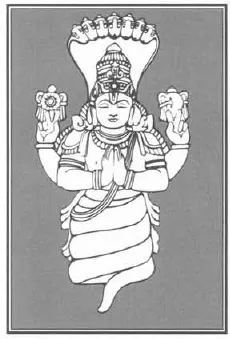
Yoga is experienced in that mind which has ceased to identify itself with us vacillating waves of perception.
—PATANJALI'S YOGA SUTRAS I, 2
INTRODUCTION
In the beginning, according to Indian mythology, the world was filled with a vast ocean and a few small islands. In this primordial sea, Matsya, a fish, was swimming near the shore of an island. He happened upon a conversation between Lord Siva and his consort, Parvati. Seeking instruction in the practice of Yoga, Parvati inquired: “I want to attain union with you. You are so attractive, so beautiful to me, and yet when I feel myself close to you, something holds me back, something keeps me from merging totally into you. My love is so strong for you, and yet something within me—what could it be?—is holding me back. I want to lose myself in you. I know you would keep me safe and respect me as your own Self. Please help me to merge more fully into you.”
So Siva began a great teaching dialogue with Parvati, saying, “Your love is so strong, so genuine. That which you seek, union with me, is not an attainment. There is nothing to do, for I am your own True Self. I am not separate from you. The way to me is through knowing your own True Self. Out of your love for me, I will reveal the secret that is Yoga—the experience of communion. Yoga is the process by which you lose all identity of yourself as a separate being and become united with your nature as both Shakti and Siva—expansive, creative energy, as well as stillness, eternal bliss. Both these qualities are within you.”
“The path to yoga is threefold,” Siva continued, “but the goal is the same. The first path is purifying the ego through loving selfless service to others, known as Karma Yoga. The second is the study of sacred texts and reflecting upon their underlying question, Who am I? This is known as Jnana Yoga, the path of wisdom. The third path is the dedication of all actions to the Divine Presence, known as Bhakti Yoga, the path of devotion.”
Hearing this teaching, Matsya the fish became more and more absorbed, and then more still. Through the stillness and these comforting words, he attained perfect posture (asana). He became light, was raised up to the surface and arched his back in the Matsyasana Fish Pose so that he could hear more clearly. Through the inspiration, he began to feel his heart open. The process of the pose began to transform him. He began to extend himself out of the water. A sublime force began to awaken within him through this spontaneous motion and he found himself effortlessly floating on the surface. As he became more still, his breathing was steadied and regulated; he became motionless in the water. He felt a transcendent life-force absorbing his mind, and yet he was not breathing. He was experiencing perfect Pranayama, in which the life-force hidden within his breath became suspended. An attraction to the inner experience held him, his steadiness increased. His mind turned within, as his senses detached from the outside world (a process called pratyahara), and he became totally absorbed, experiencing unity with everything and everyone.
As the experience deepened within him, he began to imbibe the state of samadhi, the state of absorption, and he lost all awareness of his fish nature. He experienced all objects as being composed of pure consciousness. Siva felt him merging into the same consciousness that was his essence. Feeling this oneness, he touched the fish, giving him his blessing, his initiation. The blessing of the lord instantly transformed Matsya from a fish into a human being. Siva gave him a new name—Matsyendra—Lord of the Fishes. Matsyendra came onto the land, sat, and listened to the discourse between Siva and Parvati until the instruction was full and he felt complete. As he listened to the teachings of yoga, he sat in a particular posture that twisted his spine and enabled him to remain free of physical distractions while listening attentively. This posture has been handed down in yogic lore as Matsyendrasana, the spinal twist.
From this story we learn that the essence of yoga is transformation. The great master, Sri Aurobindo, said:
The true and full object and utility of Yoga can only be accompli shed when the conscious Yoga in man becomes, like the subconscious Yoga in Nature, outwardly conterminous with life itself and we can once more, looking out both on the path and the achievement, say in a more perfect and luminous sense: “All life is Yoga.”1
Through this transformation process, the fish Matsya became the first yoga teacher, Matsyendra. This myth is corroborated in the Hatha Yoga Pradipika, a 14th-cenrury text-book on Hatha Yoga, which acknowledges that Matsyendra was the first to teach Classical Yoga practices.
1Sri Aurobindo, The Synthesis of Yoga (Pondicherry, India: Sri Aurobindo Ashram, 1984), p. 4.
Chapter 1
WHAT IS YOGA?
Everything has two fundamental aspects: the superficial—which is obvious, clear, and revealed—and the unknown—which is secret, unclear, and hidden. For example, a tree has a trunk, branches, and leaves above the ground. These draw nourishment from the light, while unseen roots draw strength in the darkness from the soil and water. In yogic philosophy, the obvious, that which is in constant motion, is called Shakti. The opposite pole of the unrevealed, that which is eternal and unchanging, is called Siva. In Chinese philosophy, the latent, dark, unexposed aspect is called yin, while yang is the patent, the bright, the exposed. The Shakti, or yang, aspect is the public part, generally called the exoteric aspect. The Siva, or yin, aspect—the inner, hidden part—is called the esoteric. Similarly, in describing human nature on the superficial psychological level, psychologist C. G. Jung noted that we have a public side that we reveal, and a private side that we keep hidden. On the transpersonal psychological level, we share common traits in our personalities. We also share transcendental traits, in that we have limited qualities of the Eternal One, omniscience, omnipotence, and omnipresence.
C. G. Jung said, “There is good reason for yoga to have many adherents. It offers not only the much-sought way, but also a philosophy of unrivalled profundity. Yoga practice is unthinkable, and would also be ineffectual, without the ideas on which it is based. It works the physical and the spiritual into one another in an extraordinarily complete way.”1
The word yoga literally means “yoking,” in the sense of the coming together of a harmonious relationship between our separate aspects. Different aspects of our perception make yoga either exoteric or esoteric. The yoga teachings regarding bringing the body, mind, and emotions into harmony, such as Hatha Yoga, are exoteric. Those teachings focused upon the outer self in harmony with the Inner Self, such as Classical Yoga, are esoteric. In exoteric-based Hatha Yoga, the practices focus on developing health to optimal physiological and psychological levels. In esoteric-based Classical Yoga, the practices focus on developing insight to know the hidden truth about one's nature.
In the yogic view of human anatomy, there are five bodies. Exoteric yoga practices strengthen the physical body (the first body), while at the same time purifying the hidden bodies. The second body is the subtle body, which makes up the emotional sense of vitality and energy. The third body is the mind, the embodied perception of thoughts and feelings. The fourth body is called the body of wisdom, the higher mind. The fifth body is composed of great joy that arises from “dispassionate nonattachment” to the experiences of the other bodies. (For more details see chapter 6.)
In the story of Matsyendra, Matsya, the fish, traveled through the five bodies as he grasped the teachings of Siva. The result was absolute one-pointedness that transformed him from a fish into a human. This allegory points to the hidden transformation available to yoga students through devoted practice. The lower nature, the fish, refers to that consciousness concerned with moving in a school, following the lead of others, as one who is held by water (emotions) and living a life based upon avoiding pain while pursuing pleasure.
Classical Yoga
Classical Yoga was first described as a systematic approach to Self-realization by Maharishi Patanjali about 200 B.C. His classical text, the Yoga Sutras, describes the nature of the mind and ways to control its restlessness. Unlike the five other classical Indian philosophical systems, Yoga is based on a process of physical and mental training culminating in the direct experience of realizing the universal Self within everyone.
Yogas chitta vritti nirodhah tada drastuh svarupe auasthanam
Yoga is experienced in that mind which has ceased to identify itself with its vacillating waves of perception.
When this happens, then the Seer is revealed resting in its own essential nature, and one realizes the true Self.2
Patanjali defines guideposts to keep the student of yoga progressing along the path. While there are numerous paths to yoga, they have a common thread that has been delineated in the Yoga Sutras. In fact, the Sutras can be taken as a guide for anyone undergoing any discipline of body, breath, emotions, mind, and spirit. The goal of yoga is to merge the mind into the True Self, and thus to be true to your Self in all thoughts, words, and deeds. Anyone proceeding any distance along this path cannot help but experience more joy and health.
Yoga is not a religion. People of all faiths practice yoga. From a yogi's point of view, everyone is doing yoga—everyone is seeking the joy found in the experience of the Self as our innate spirituality. Yet, most of the time, we do not realize that the joy we seek is experienced within, in the discovery of the Self. We erroneously believe our joy comes from objects of sensual pleasure. In completing activities, there is a momentary experience of stilling the mind, and thus we feel peace. This state of fulfillment is what the yoga practitioner seeks to gain more consistently, more permanently.
Yoga, then, is a continuous process. For serious students, it is a life's work. Yoga—as the stilling of the mind—occurs momentarily in many people without training. Often, following periods of concentration, people will report that they were performing a task (such as reading) and became perfectly still. Their breathing became nearly unnoticeable and they lost all sense of time. During these periods of active meditation, access to intuitive insights is available. We will intuitively understand how to manage ourselves in situations that formerly produced difficulties. This natural process is what Patanjali defined as yoga. It is through the study of yoga, in the context of the guidelines laid out in the Yoga Sutras, that these momentary experiences become part of daily living.
Patanjali's practical means of knowing the inner Self is known as Ashtanga Yoga, the yoga of “eight limbs.” It is also called Raja, “royal,” Yoga, the yoga of the royal path to self-realization. Raja, which also means “to radiate,” is the practice of radiating the royal light of the true Self. The mysticism of Raja Yoga, simply put, means to be radiantly happy and share that compassionate affection for all creation. The eight component limbs, found in his Yoga Sutras II, 29–III, 3, are:
- Yama—external attitudes for guiding conduct within society
- Nonviolence (ahimsa): when mastered, one creates an atmosphere in which violence ceases;
- Truthfulness (satya): when perfected, one's words and deeds exist...
Table of contents
- Cover Page
- Title Page
- Praise
- Copyright
- A Yogi's Prayer
- Contents
- List of Figures
- List of Tables
- Acknowledgments
- Introduction: The Evolution of Structural Yoga Therapy™
- PART ONE: Origins and Theory of Yoga Practice
- PART TWO: Preparation For Practice
- PART THREE: The Benefits of Yoga Practice
- PART FOUR: Anatomy and Yoga
- PART FIVE: The Practice Of Yoga Asanas
- PART SIX: Yoga for Specific Goals
- Bibliography
- Recommended Reading
- Index
- About the Author
- Mukunda
Trusted by 375,005 students
Access to over 1.5 million titles for a fair monthly price.
Study more efficiently using our study tools.
Frequently asked questions
Yes, you can cancel anytime from the Subscription tab in your account settings on the Perlego website. Your subscription will stay active until the end of your current billing period. Learn how to cancel your subscription
No, books cannot be downloaded as external files, such as PDFs, for use outside of Perlego. However, you can download books within the Perlego app for offline reading on mobile or tablet. Learn how to download books offline
Perlego offers two plans: Essential and Complete
- Essential is ideal for learners and professionals who enjoy exploring a wide range of subjects. Access the Essential Library with 800,000+ trusted titles and best-sellers across business, personal growth, and the humanities. Includes unlimited reading time and Standard Read Aloud voice.
- Complete: Perfect for advanced learners and researchers needing full, unrestricted access. Unlock 1.5M+ books across hundreds of subjects, including academic and specialized titles. The Complete Plan also includes advanced features like Premium Read Aloud and Research Assistant.
We are an online textbook subscription service, where you can get access to an entire online library for less than the price of a single book per month. With over 1.5 million books across 990+ topics, we’ve got you covered! Learn about our mission
Look out for the read-aloud symbol on your next book to see if you can listen to it. The read-aloud tool reads text aloud for you, highlighting the text as it is being read. You can pause it, speed it up and slow it down. Learn more about Read Aloud
Yes! You can use the Perlego app on both iOS and Android devices to read anytime, anywhere — even offline. Perfect for commutes or when you’re on the go.
Please note we cannot support devices running on iOS 13 and Android 7 or earlier. Learn more about using the app
Please note we cannot support devices running on iOS 13 and Android 7 or earlier. Learn more about using the app
Yes, you can access Structural Yoga Therapy by Mukunda Stiles in PDF and/or ePUB format, as well as other popular books in Sciences biologiques & Sciences du sport et de l'exercice. We have over 1.5 million books available in our catalogue for you to explore.