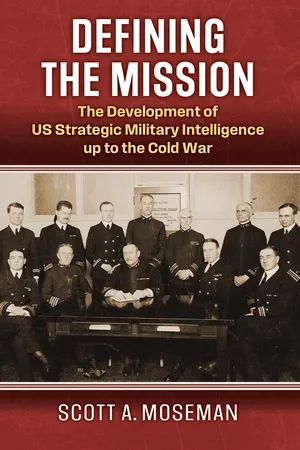
The untold history of how strategic military intelligence organizations responded and adapted to the pressures and influence of the US military, government, and public to define themselves and their mission.
From 1882 to 1947—the year the CIA was established—strategic military intelligence organizations struggled to define their missions. The American public, government and military leaders, and intelligence professionals all had competing ideas of what military intelligence should be and do. The quest of strategic military intelligence organizations to define themselves and their mission was directly influenced by the trends of a growing American military and maturing American society in the late-nineteenth and early-twentieth centuries. This dynamic and insightful facet of intelligence history, however, has remained largely in the shadows. How did government leaders and American society define strategic military intelligence organizations? How did these organizations describe themselves in their service to the US military and the American public as they evolved from a four-man office in 1882 to a multi-organizational operation with a staff of thousands by the 1940s?
In Defining the Mission, Scott Moseman examines how US strategic military intelligence organizations have adapted to several external and internal factors in finding their raison d’être. Focusing on the Office of Naval Intelligence and the Military Intelligence Division, Moseman explores themes including the growth of the American military, internationalism versus isolationism, the increasing complexity of the government, military professionalism, Hamiltonian versus Jeffersonian ideals, military progressivism, and domestic security. Exploring the contours of the dynamic relationships between strategic military intelligence organizations and government, military, and society, Moseman shows how the mission and work of military intelligence reflects the very society it serves.