China's BRI in Southeast Asia present empirical research that analyzes the dynamics and implications of the Belt and Roads Initiative (BRI) for the countries of Southeast Asia. While much has been written about the BRI from a geopolitical and macro-economic perspective, the studies in this volume focus on how its economic development affects socioeconomic and cultural realities at the micro-level of everyday life in local communities.
While the BRI's development of infrastructure such as railways, special economic zones, and ports creates opportunities for ASEAN countries in trade, engineering, agribusiness, and finance, it also poses serious and fundamental challenges to local communities, state sovereignty, the global economic order, and international legal frameworks.
The authors contend that the BRI should be examined through various perspectives, and use ethnographic methods to foreground the voices and experiences of local people to better understand the socioeconomic, political, and institutional effects of the BRI on the ground.
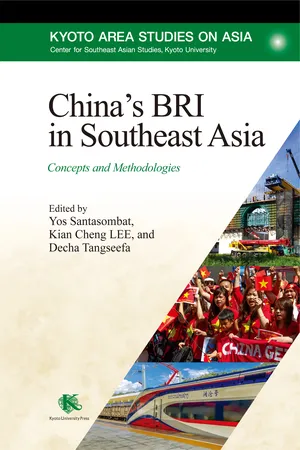
eBook - ePub
China's BRI in Southeast Asia
Concepts and Methodologies
- 304 pages
- English
- ePUB (mobile friendly)
- Available on iOS & Android
eBook - ePub
China's BRI in Southeast Asia
Concepts and Methodologies
About this book
Information
Publisher
Trans Pacific PresseBook ISBN
9781920850531
Year
2025Table of contents
- Cover
- Title Page
- Copyright
- Table of Contents
- List of Figures
- List of Photos
- List of Tables
- Contributors
- Preface
- Introduction
- 1. Anthropology of Regionalization, Multi-sited Ethnography, and Voice Approach in BRI Research
- 2. Making Sense of BRI in Malaysia: Negotiating Volatile Political Situations
- 3. Reconceptualizing Mobile Infrastructures and Infrastructural Temporality in the Transnational Cattle Trade
- 4. Chinese Loans for Infrastructure Development? Narratives of Railways, Highways, and China’s Belt and Road Initiative in Vietnam
- 5. Constructing the Field: Anthropological Infrastructure Studies on Transnational Railways in Laos and Thailand
- 6. Shadow Zones: Fraudulent Infrastructure, the Alchemy of Sovereignty, and Destructive Economies in Shwe Kokko SEZ/KK Park and Thailand’s EEC
- 7. The Belt and Road Initiative in Myanmar: A Review
- 8. The Belt and Road Initiative from the Perspectives of Political Economy and Business Transnationalism
- 9. Maximizing the Benefits of the Mekong Subregional Cooperation Frameworks
- Index
Trusted by 375,005 students
Access to over 1.5 million titles for a fair monthly price.
Study more efficiently using our study tools.