Biotics and the Gut–Brain Axis in Neurological Disorders
- English
- ePUB (mobile friendly)
- Available on iOS & Android
Biotics and the Gut–Brain Axis in Neurological Disorders
About this book
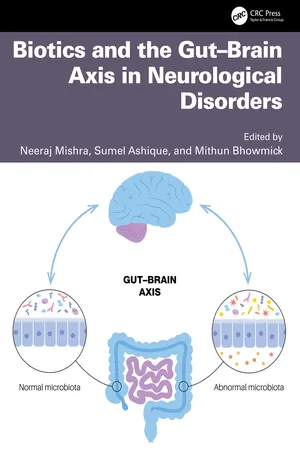
This book reviews the pivotal role of prebiotics, probiotics, and postbiotics in modulating the gut–brain axis, offering insights into their potential therapeutic applications and impact on neurological health. The initial chapters provide a foundational overview of prebiotics and introduce readers to the concept of the gut–brain axis. These chapters discuss bidirectional communication within the gut–brain axis and the impacts of gut dysbiosis on neurological health. Further chapters investigate the relationship between the gut–brain axis and autoimmune diseases, as well as the role of probiotics in major neurodegenerative diseases such as Alzheimer's and Parkinson's, amyotrophic lateral sclerosis (ALS), Huntington's disease, and conditions like multiple sclerosis (MS), epilepsy, and seizures. The book also examines the influence of prebiotics on mental health disorders such as anxiety and depression, and their impact on ischemic stroke via the gut–brain axis. It further covers the role of probiotics in reactive oxygen species (ROS) and inflammation-mediated neurodegenerative diseases and explores the correlation between gut microbiota, malnutrition, and neurological disorders. The book explores signaling pathways within the gut–brain axis and their relationships with neurological disorders, the application of prebiotics as functional foods, and the therapeutic potential of postbiotics and psychobiotics. This book is intended for scientists and researchers in the fields of microbiology, neuroscience, and gastroenterology. The book:
- Provides a thorough understanding of prebiotics, probiotics, and postbiotics, and their roles in the gut–brain axis
- Explores bidirectional communication within the gut–brain axis and its impact on neurological health
- Examines the relationship between the gut microbiota and various neurological disorders
- Discusses the influence of prebiotics and probiotics on mental health disorders such as anxiety and depression
- Investigates the connection between the gut–brain axis and autoimmune diseases
- Covers advanced tools and bioinformatics approaches for studying gut microbiota and neurodegeneration
Frequently asked questions
- Essential is ideal for learners and professionals who enjoy exploring a wide range of subjects. Access the Essential Library with 800,000+ trusted titles and best-sellers across business, personal growth, and the humanities. Includes unlimited reading time and Standard Read Aloud voice.
- Complete: Perfect for advanced learners and researchers needing full, unrestricted access. Unlock 1.4M+ books across hundreds of subjects, including academic and specialized titles. The Complete Plan also includes advanced features like Premium Read Aloud and Research Assistant.
Please note we cannot support devices running on iOS 13 and Android 7 or earlier. Learn more about using the app.
Information
Table of contents
- Cover
- Half-Title
- Title
- Copyright
- Contents
- Acknowledgment
- Preface
- About the Editors
- Chapter 1 Prebiotics: General Overview, Characteristics, and Application in Health Benefits
- Chapter 2 Introduction to the Gut–Brain Axis
- Chapter 3 Introduction and Overview of Prebiotics, Probiotics, and Postbiotics
- Chapter 4 Bidirectional Communication in the Gut–Brain Axis
- Chapter 5 Gut Dysbiosis and Its Impact on Neurological Health
- Chapter 6 Connection between Gut Microbiota and Neurodegenerative Diseases
- Chapter 7 Gut Microbiota in Mental Health Disorders
- Chapter 8 Gut–Brain Axis and Autoimmune Diseases: Correlation between Both
- Chapter 9 Signaling Events from the Gut: Regulate Brain Function and Its Link to Autoimmune Disorders
- Chapter 10 Role of Probiotics in Alzheimer’s Disease and Parkinson’s Disease
- Chapter 11 Role of Probiotics in Amyotrophic Lateral Sclerosis (ALS) and Huntington’s Disease
- Chapter 12 Role of Probiotics in MS, Epilepsy, and Seizures
- Chapter 13 Role of Probiotics in Anxiety and Depression
- Chapter 14 Role of Probiotics and Prebiotics in Ischemic Stroke in Connection with the Gut–Brain Axis
- Chapter 15 Role of Probiotics
- Chapter 16 Correlation between Gut Microbiome and Malnutrition and Other Factors in Neurological Disorders
- Chapter 17 Tools and Bioinformatic Approaches to Study Gut Microbiota and Neurodegeneration
- Chapter 18 Brain–Gut Axis Focusing on High-Throughput Technologies Like Gene Sequencing, Brain Imaging, and Metabolomics
- Chapter 19 Signaling Pathways and Gut–Brain Axis: Relationship in Neurological Disorders
- Chapter 20 Prebiotic as Functional Food in Neurological Disorder
- Chapter 21 Postbiotics and Psychobiotics: Therapeutic Interventions in Neurodegenerative Diseases
- Chapter 22 Gut Microbiota-Derived Bacterial Metabolites: Role in Neurological Disorders
- Chapter 23 Therapeutic Applications of Prebiotics, Probiotics, and Postbiotics
- Chapter 24 Nanocarriers Encapsulated Polyphenols, Functional Foods to Modulate Gut Microbiota: In Neurological Disorders
- Chapter 25 Probiotics as Nutraceuticals in Neurological Disorders
- Chapter 26 Lifestyle and Environmental Factors: Impact on Gut Microbiota and Neurological Disorder
- Chapter 27 Prebiotics, Probiotics, and Postbiotics as a Complementary Therapy in the Management of Neurological Disorders: Clinical Trials and Case Studies
- Chapter 28 Application of Artificial Intelligence in Connection with Gut Microbiota to Detect Neurological Disorders
- Chapter 29 Future Perspectives and Challenges of Probiotics, Prebiotics, and Postbiotics and Gut–Brain Axis in Neurodegenerative Disorders
- Chapter 30 Regulatory Concern of Prebiotics, Probiotics, Postbiotics, and Market Growth in India
- Index