How have Americans grappled with the moral and financial issues of veterans' health care?
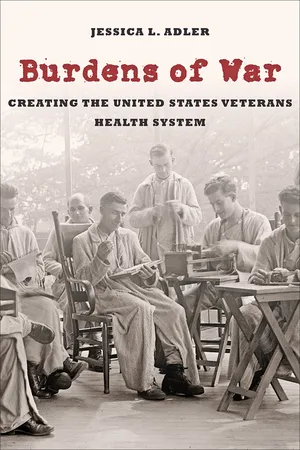
In the World War I era, veterans fought for a unique right: access to government-sponsored health care. In the process, they built a pillar of American social policy. Burdens of War explores how the establishment of the veterans' health system marked a reimagining of modern veterans' benefits and signaled a pathbreaking validation of the power of professionalized institutional medical care.
Adler reveals that a veterans' health system came about incrementally, amid skepticism from legislators, doctors, and army officials concerned about the burden of long-term obligations, monetary or otherwise, to ex-service members. She shows how veterans' welfare shifted from centering on pension and domicile care programs rooted in the nineteenth century to direct access to health services. She also traces the way that fluctuating ideals about hospitals and medical care influenced policy at the dusk of the Progressive Era; how race, class, and gender affected the health-related experiences of soldiers, veterans, and caregivers; and how interest groups capitalized on a tense political and social climate to bring about change.
The book moves from the 1910s—when service members requested better treatment, Congress approved new facilities and increased funding, and elected officials expressed misgivings about who should have access to care—to the 1930s, when the economic crash prompted veterans to increasingly turn to hospitals for support while bureaucrats, politicians, and doctors attempted to rein in the system. By the eve of World War II, the roots of what would become the country's largest integrated health care system were firmly planted and primed for growth. Drawing readers into a critical debate about the level of responsibility America bears for wounded service members, Burdens of War is a unique and moving case study.