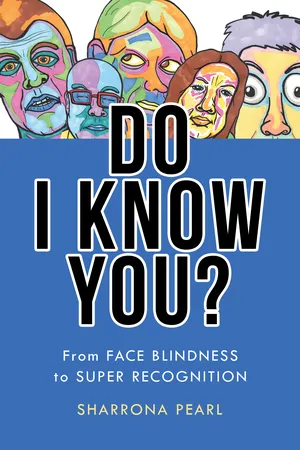
A fascinating history of how we recognize faces—or fail to recognize them.
In Do I Know You? Sharrona Pearl explores the fascinating category of face recognition and the "the face recognition spectrum," which ranges from face blindness at one end to super recognition at the other. Super recognizers can recall faces from only the briefest exposure, while face blind people lack the capacity to recognize faces at all, including those of their closest loved ones. Informed by archival research, the latest neurological studies, and testimonials from people at both ends of the spectrum, Pearl tells a nuanced story of how we relate to each other through our faces.
The category of face recognition is relatively new despite the importance of faces in how we build relationships and understand our own humanity. Pearl shows how this most tacit of knowledge came to enter the scientific and diagnostic field despite difficulties with identifying it. She offers a grounded framework for how we evaluate others and draw conclusions about them, with significant implications for race, gender, class, and disability. Pearl explores the shifting ideas around the face-recognition spectrum, explaining the effects of these diagnoses on real people alongside implications for how facial recognition is studied and understood. Face blindness is framed as a disability, while super recognition is framed as a superpower with no meaningful disadvantages. This superhero rhetoric is tied to the use of super recognizers in criminal detection, prosecution, and other forms of state surveillance. Do I Know You? demonstrates a humanistic approach to the study of the brain, one that offers an entirely new method for examining this fundamental aspect of human interaction.
The combination of personal narratives, scientific and medical research, and high-profile advocates like Oliver Sacks helped to establish face recognition as a category and a spectrum in both diagnostic and experiential realms. Building on an interdisciplinary foundation that includes the history of medicine, science, and technology, disability studies, media and communication, artificial intelligence ethics, and the health humanities, Pearl challenges the binary nature of spectrum thinking in general and provides a fascinating case study in the treatment of this new scientific category.