eBook - PDF
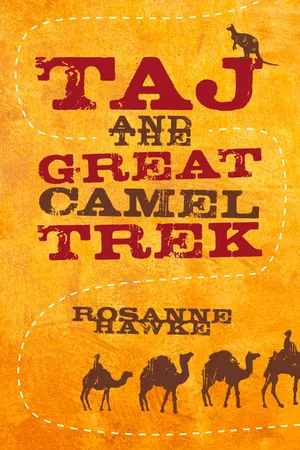
Taj and the Great Camel Trek
About this book
Beltana, South Australia, 1875. Twelve-year-old Taj and his camel Mustara are about to embark on the adventure of a lifetime. They are joining explorer Ernest Giles on his second attempt to cross the Australian desert where wild dogs, scorpions, poisonous snakes and a constant shortage of water mean they are never far from disaster. As if things weren't tough enough, Taj, raised in the ways of the Afghan people, is struggling to find his place in this new and exciting land.
Taj and the Great Camel Trek is an inspirational, gripping adventure and a tribute to the Afghan camel drivers who helped explore Australia.
Information
Publisher
University of Queensland PresseBook ISBN
9780702247200
Year
2012Table of contents
- Cover
- Map
- About the Author
- Copyright
- Also by Rosanne Hawke
- Dedication
- Camel Race
- Choosing Camels
- Mustara
- The Expedition Sets Out
- Camel Road
- A Strange Thing
- Port Augusta
- Taj Rides a Goat
- The Goat Race
- Taj Has an Accident
- The Elizabeth
- Coondambo
- Mustara in Danger
- Wynbring
- Tommy’s Big Water
- The Camels are Lost
- Youldeh is Born
- Colona Station
- Ooldabinna
- Alec Finds a Dam
- Return to Ooldabinna
- Mr Giles’ Challenge
- Leaving Boundary Dam
- Arguing Over the Camels
- Tommy Finds a Dingo
- Youldeh
- The Seventeenth Day
- Taj has a Birthday
- A Tornado Blows
- Asad
- Leaving Queen Victoria Spring
- The Camels in Danger
- Tommy Finds Water
- Ularring
- EG 1875
- Pigeon Rocks
- Ghost Boy
- Tootra Station
- Taj Receives a Telegram
- The Expedition Reaches Perth
- Afterword
- Conversion Tables
- Acknowledgements
Trusted by 375,005 students
Access to over 1.5 million titles for a fair monthly price.
Study more efficiently using our study tools.