- English
- ePUB (mobile friendly)
- Available on iOS & Android
eBook - ePub
Mumbles & Gower Pubs
About this book
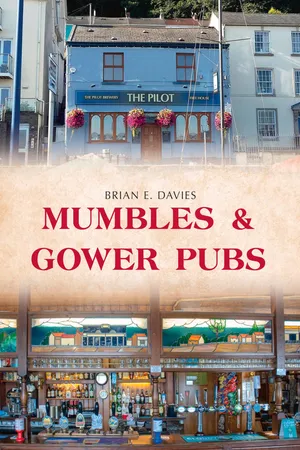
Mumbles and the Gower peninsula occupy a very special corner of Wales that has much history and folklore. The peninsula was Britain's first Area of Outstanding Natural Beauty and many visitors are attracted to its beautiful beaches and stunning landscape. This fascinating new book about its inns and taverns encapsulates much of the area's history and character. Mumbles is a village by the sea once well known for oyster fishing, limestone quarrying and the Mumbles Train. The 'Mumbles Mile' became famous as a pub crawl in the 1970s but it was in business a very long time before that. The Welsh Sunday Closing Act of 1881 resulted in so-called 'travellers' taking advantage of a loophole and flocking to Mumbles in their thousands on Sundays and doing their best to drink the pubs dry. This and many other stories are related here, including those times when Dylan Thomas 'communed with those two legendary creatures, the Antelope and the Mermaid'. Gower's past includes many stories of shipwrecks and smuggling and its pubs played their part in this as well. The characters featured include Petty Officer Edgar Evans, who accompanied Captain Scott on his ill-fated journey to the South Pole, and the folk singer Phil Tanner, known as the Gower Nightingale, who married the landlady of the Welcome to Town in Llangennith over a century ago. This well-researched book relates the history of the area's pubs from backstreet locals to smart hotels and will delight all lovers of ale and anecdote.
Trusted by 375,005 students
Access to over 1 million titles for a fair monthly price.
Study more efficiently using our study tools.
Information
Subtopic
British HistoryIndex
HistoryTable of contents
- Cover
- Map
- Key
- Introduction
- 1 - On the Way to Mumbles
- 2 - The ‘Mumbles Mile’
- 3 - From Back Streets to Bays
- 4 - South Gower
- 5 - West Gower
- 6 - North Gower
- Acknowledgements
Frequently asked questions
Yes, you can cancel anytime from the Subscription tab in your account settings on the Perlego website. Your subscription will stay active until the end of your current billing period. Learn how to cancel your subscription
No, books cannot be downloaded as external files, such as PDFs, for use outside of Perlego. However, you can download books within the Perlego app for offline reading on mobile or tablet. Learn how to download books offline
Perlego offers two plans: Essential and Complete
- Essential is ideal for learners and professionals who enjoy exploring a wide range of subjects. Access the Essential Library with 800,000+ trusted titles and best-sellers across business, personal growth, and the humanities. Includes unlimited reading time and Standard Read Aloud voice.
- Complete: Perfect for advanced learners and researchers needing full, unrestricted access. Unlock 1.4M+ books across hundreds of subjects, including academic and specialized titles. The Complete Plan also includes advanced features like Premium Read Aloud and Research Assistant.
We are an online textbook subscription service, where you can get access to an entire online library for less than the price of a single book per month. With over 1 million books across 990+ topics, we’ve got you covered! Learn about our mission
Look out for the read-aloud symbol on your next book to see if you can listen to it. The read-aloud tool reads text aloud for you, highlighting the text as it is being read. You can pause it, speed it up and slow it down. Learn more about Read Aloud
Yes! You can use the Perlego app on both iOS and Android devices to read anytime, anywhere — even offline. Perfect for commutes or when you’re on the go.
Please note we cannot support devices running on iOS 13 and Android 7 or earlier. Learn more about using the app
Please note we cannot support devices running on iOS 13 and Android 7 or earlier. Learn more about using the app
Yes, you can access Mumbles & Gower Pubs by Brian E. Davies in PDF and/or ePUB format, as well as other popular books in History & British History. We have over one million books available in our catalogue for you to explore.