Museum learning is a vital component of the lifelong-learning process.
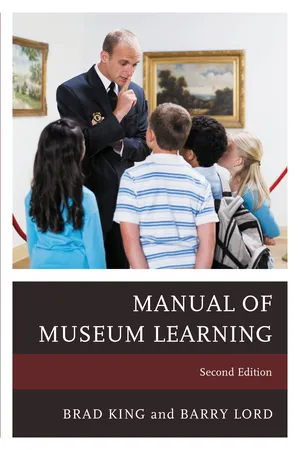
In this new edition of The Manual of Museum Learning, leading museum education professionals offer practical advice for creating successful learning experiences in museums and related institutions (such as galleries, zoos, and botanic gardens) that can attract and intrigue diverse audiences.
The original Manual of Museum Learning was published in 2007. The editors have totally rethought this new edition. This second edition focuses on the ways museum staffs (and the departments for which they work) can facilitate the experience in a way that capitalizes on their individual institutional strengths. The goal of this new edition is to provide museums with guidance in developing a strategic approach to their learning programs. There is a close connection between institution-wide strategic planning – where an institution decides what course and direction it will take for a five to seven-year period – and its approach to museum learning. One size does not fit all, and what each museum is (or aspires to be) will affect its individual approach.
Thus there are many routes for museums to take, many alternative ways for them to play this role. No one museum can be all things to all prospective learners; they will be better suited to some approaches than to others. This new edition identifies these approaches and enables museums to find the paths for which they are individually best suited, to help them identify their own unique approaches to facilitating museum learning. Each one's mission and vision, its relationships with institutional and public stakeholders, local cultural and market factors, its individual collection and programmatic strengths, its financial position – all of these things matter. This second edition aims to help each museum find the right approach to learning for its unique situation by showing them the range of museum "personalities" in terms of their being learning institutions, what constitutes each type, and what the implications are of choosing one or another approach for a particular museum.
A major theme of the 2nd edition of The Manual of Museum Learning is museum as connector; the ways in which museums are facilitating self-directed learning by connecting people with resources. Not all will connect audiences with learning vehicles in the same way. If museum learning is affective learning, then it is the role of the museum to connect its visitors, program participants and others who benefit from its knowledge to the learning resources that best suit the institution's strengths and matches them to the learning needs of the museum's audiences. By connecting users to the resources they are most interested in, or which best suit each individual's particular learning styles, museums are at their best when they empower individuals to design their own learning experience in ways that resonate best with each individual.
- English
- ePUB (mobile friendly)
- Available on iOS & Android
eBook - ePub
The Manual of Museum Learning
About this book
Information
Table of contents
- Acknowledgments
- Prologue
- Part I: Why: Planning Basics
- Chapter 1: Introduction
- Chapter 2: Planning Strategically for Museum Learning
- Chapter 3: Planning for Informal Learning
- Part II: What: A Framework for Museum Learning
- Chapter 4: Learning for Change
- Chapter 5: The Changing Role of the Curator in Museum Learning
- Chapter 6: Planning for Effective Learning Partnerships
- Chapter 7: Museum Learning Outside the Museum
- Part III: How: Transforming the Museum into a Twenty-First-Century Learning Institution
- Chapter 8: Managing Institutional Change
- Chapter 9: Planning for Audiences
- Chapter 10: Planning Learning Programs
- Chapter 11: Conclusion
- Postscript: A Look Ahead
- Glossary
- Bibliography
- List of Contributors
Trusted by 375,005 students
Access to over 1.5 million titles for a fair monthly price.
Study more efficiently using our study tools.
Frequently asked questions
Yes, you can cancel anytime from the Subscription tab in your account settings on the Perlego website. Your subscription will stay active until the end of your current billing period. Learn how to cancel your subscription
No, books cannot be downloaded as external files, such as PDFs, for use outside of Perlego. However, you can download books within the Perlego app for offline reading on mobile or tablet. Learn how to download books offline
Perlego offers two plans: Essential and Complete
- Essential is ideal for learners and professionals who enjoy exploring a wide range of subjects. Access the Essential Library with 800,000+ trusted titles and best-sellers across business, personal growth, and the humanities. Includes unlimited reading time and Standard Read Aloud voice.
- Complete: Perfect for advanced learners and researchers needing full, unrestricted access. Unlock 1.5M+ books across hundreds of subjects, including academic and specialized titles. The Complete Plan also includes advanced features like Premium Read Aloud and Research Assistant.
We are an online textbook subscription service, where you can get access to an entire online library for less than the price of a single book per month. With over 1.5 million books across 990+ topics, we’ve got you covered! Learn about our mission
Look out for the read-aloud symbol on your next book to see if you can listen to it. The read-aloud tool reads text aloud for you, highlighting the text as it is being read. You can pause it, speed it up and slow it down. Learn more about Read Aloud
Yes! You can use the Perlego app on both iOS and Android devices to read anytime, anywhere — even offline. Perfect for commutes or when you’re on the go.
Please note we cannot support devices running on iOS 13 and Android 7 or earlier. Learn more about using the app
Please note we cannot support devices running on iOS 13 and Android 7 or earlier. Learn more about using the app
Yes, you can access The Manual of Museum Learning by Brad King,Barry Lord in PDF and/or ePUB format, as well as other popular books in Business & Museum Administration. We have over 1.5 million books available in our catalogue for you to explore.