2024 Winner, Kjetil Hatlebrekke Memorial Book Prize, King's College Centre for the Study of Intelligence
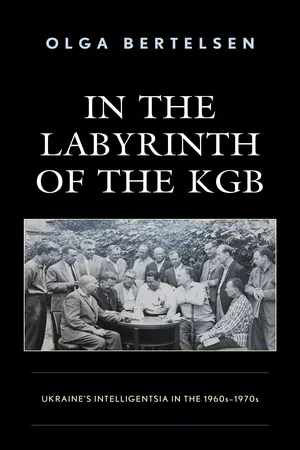
This book focuses on the generation of the sixties and seventies in Kharkiv, Soviet Ukraine, a milieu of writers who lived through the Thaw and the processes of de-Stalinization and re-Stalinization. Special attention is paid to KGB operations against what came to be known as the dissident milieu, and the interaction of Ukrainians, Jews, and Russians in the movement, their persona friendships, formal and informal interactions, and the ways they dealt with repression and arrests. This study demonstrates that the KGB unintentionally facilitated the transnational and intercultural links among the Kharkiv multi-ethnic community of writers and their mutual enrichment. Post-Khrushchev Kharkiv is analyzed as a political space and a place of state violence aimed at combating Ukrainian nationalism and Zionism, two major targets in the 1960s–1970s. Despite their various cultural and social backgrounds, the Kharkiv literati might be identified as a distinct bohemian group possessing shared aesthetic and political values that emerged as the result of de-Stalinization under Khrushchev. Archival documents, diaries, and memoirs suggest that the 1960s–1970s was a period of intense KGB operations, "active measures" designed to disrupt a community of intellectuals and to fragment friendships, bonds, and support among Ukrainians, Russians, and Jews along ethnic lines domestically and abroad.
- 371 pages
- English
- PDF
- Available on iOS & Android
eBook - PDF
About this book
Information
Table of contents
- Cover
- Half Title
- Title Page
- Copyright Page
- Dedication
- Contents
- Acknowledgments
- Introduction
- Chapter 1: “The Revolution of Poets” and Re-Stalinization
- Chapter 2: Petro Shelest, the Literati, and the “Jewish Question”
- Chapter 3: The Writers, the Dissent, and the Human Rights Movement in the West
- Chapter 4: The Labyrinths of Silence and Psychiatric Abuse
- Chapter 5: The Writers and the Chekists’ Discourse about the Holodomor
- Chapter 6: The Years of Timelessness
- Conclusion
- Bibliography
- Index
- About the Author
Trusted by 375,005 students
Access to over 1.5 million titles for a fair monthly price.
Study more efficiently using our study tools.
Frequently asked questions
Yes, you can cancel anytime from the Subscription tab in your account settings on the Perlego website. Your subscription will stay active until the end of your current billing period. Learn how to cancel your subscription
No, books cannot be downloaded as external files, such as PDFs, for use outside of Perlego. However, you can download books within the Perlego app for offline reading on mobile or tablet. Learn how to download books offline
Perlego offers two plans: Essential and Complete
- Essential is ideal for learners and professionals who enjoy exploring a wide range of subjects. Access the Essential Library with 800,000+ trusted titles and best-sellers across business, personal growth, and the humanities. Includes unlimited reading time and Standard Read Aloud voice.
- Complete: Perfect for advanced learners and researchers needing full, unrestricted access. Unlock 1.5M+ books across hundreds of subjects, including academic and specialized titles. The Complete Plan also includes advanced features like Premium Read Aloud and Research Assistant.
We are an online textbook subscription service, where you can get access to an entire online library for less than the price of a single book per month. With over 1.5 million books across 990+ topics, we’ve got you covered! Learn about our mission
Look out for the read-aloud symbol on your next book to see if you can listen to it. The read-aloud tool reads text aloud for you, highlighting the text as it is being read. You can pause it, speed it up and slow it down. Learn more about Read Aloud
Yes! You can use the Perlego app on both iOS and Android devices to read anytime, anywhere — even offline. Perfect for commutes or when you’re on the go.
Please note we cannot support devices running on iOS 13 and Android 7 or earlier. Learn more about using the app
Please note we cannot support devices running on iOS 13 and Android 7 or earlier. Learn more about using the app
Yes, you can access In the Labyrinth of the KGB by Olga Bertelsen in PDF and/or ePUB format, as well as other popular books in History & Russian History. We have over 1.5 million books available in our catalogue for you to explore.