In the 80's and 90's it was Designing Women and The Real World, today it's Grey's
Anatomy and How to Get Away with Murder. 35 years since HIV hit prime time it
remains a hot topic for TV producers to include in storylines. While the motivation
behind creating an HIV narrative is sometimes the disseminate facts about HIV and STIs, far
more often it is the sexy ratings a show can receive by including a "taboo" or controversial topic. As a result, while some education is provided to audiences, far more shows are found only perpetuating misinformation and stereotypes. As a result viewers, young populations especially,
continue to believe they are not at risk.
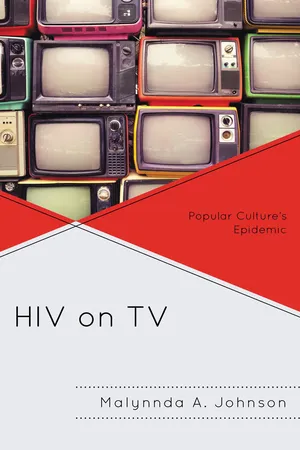
HIV on TV: Popular Culture's Epidemic offers a discussion of how HIV has
permeated popular culture. News broadcasts, movies, television shows, even music
lyrics have imbedded messages about HIV. Examining over 35-years of the
HIV evolution on television this book offers a critical lens for examining how medial topics, specifically HIV, are covered in the media. Cutting across three common genres (news, drama, and comedy), characterizations, contexts, and themes are critically analyzed to uncover what each genre has contributed to audience's understanding of risk, and what it is like to live with HIV. In total, the book offers three perspectives of the lessons presented about HIV. First, is the view from the screen; asking what the characters themselves say to the viewer. Second the book shares results from interviews with viewers themselves who have recalled seeing the shows mentioned. Finally, the book offers thoughts and reflections from writers, producers, and actors involved in the narratives. Providing the greatest insight, an interview with Daniel Franzese (Mean Girls, Road to Recovery, Looking) offers his experience in playing multiple roles as someone living with HIV and a challenge to media writers to be cautious in how they choose to write HIV into a storyline.
- 183 pages
- English
- PDF
- Available on iOS & Android
eBook - PDF
About this book
Information
Table of contents
- Contents
- Introduction
- 1: Teaching HIV
- 2: Previously On . . . HIV on Television
- 3: AIDS: The Body, The People, The Perceptions
- 4: Stay Tuned for Clips of Next Season
- Appendix A
- Bibliography
- Index
- About the Author
Trusted by 375,005 students
Access to over 1.5 million titles for a fair monthly price.
Study more efficiently using our study tools.
Frequently asked questions
Yes, you can cancel anytime from the Subscription tab in your account settings on the Perlego website. Your subscription will stay active until the end of your current billing period. Learn how to cancel your subscription
No, books cannot be downloaded as external files, such as PDFs, for use outside of Perlego. However, you can download books within the Perlego app for offline reading on mobile or tablet. Learn how to download books offline
Perlego offers two plans: Essential and Complete
- Essential is ideal for learners and professionals who enjoy exploring a wide range of subjects. Access the Essential Library with 800,000+ trusted titles and best-sellers across business, personal growth, and the humanities. Includes unlimited reading time and Standard Read Aloud voice.
- Complete: Perfect for advanced learners and researchers needing full, unrestricted access. Unlock 1.5M+ books across hundreds of subjects, including academic and specialized titles. The Complete Plan also includes advanced features like Premium Read Aloud and Research Assistant.
We are an online textbook subscription service, where you can get access to an entire online library for less than the price of a single book per month. With over 1.5 million books across 990+ topics, we’ve got you covered! Learn about our mission
Look out for the read-aloud symbol on your next book to see if you can listen to it. The read-aloud tool reads text aloud for you, highlighting the text as it is being read. You can pause it, speed it up and slow it down. Learn more about Read Aloud
Yes! You can use the Perlego app on both iOS and Android devices to read anytime, anywhere — even offline. Perfect for commutes or when you’re on the go.
Please note we cannot support devices running on iOS 13 and Android 7 or earlier. Learn more about using the app
Please note we cannot support devices running on iOS 13 and Android 7 or earlier. Learn more about using the app
Yes, you can access HIV on TV by Malynnda A. Johnson in PDF and/or ePUB format, as well as other popular books in Social Sciences & Diseases & Allergies. We have over 1.5 million books available in our catalogue for you to explore.