In contemporary society, cinema has become a primary way in which people gain knowledge about events taking place in the world. Films often go beyond news reports by showing in-depth, behind-the-scenes footage, whether in a documentary or recreated in fictional features. More than fleeting scenes of events shown on the nightly news, a film can influence people's feelings about war and what our political leaders should do about it. This has certainly been the case since the attack on 9/11 and the subsequent incursions into Iraq and Afghanistan.
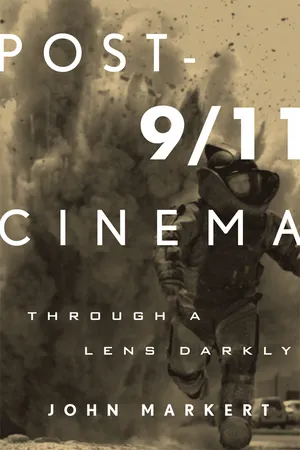
In Post-9/11 Cinema: Through a Lens Darkly, John Markert takes a close look at the films depicting these events. Covering cinematic portrayals of 9/11 and the attacks that followed, this book examines both dramas and documentaries that depict what some have termed "Bush's war," as well as rebuttal films, films about terrorist activities, and films seen from the vantage point of journalists and military personnel. Post-9/11 Cinema not only shows how motion pictures reflect societal values but also how such works can influence social attitudes and thus promote change. In addition, Markert appraises the film industry and critiques how images are manipulated to sway the viewer to appreciate the side being advocated.
Examining such dramas as The Messenger, Stop-Loss, The Lucky Ones, In the Valley of Elah, and The Hurt Locker, as well as documentaries including Fahrenheit 9/11, Soldiers of Conscience, and Taxi to the Dark Side, Post-9/11 Cinema is a valuable read for professors of media and mass communication, popular culture, and film studies, as well as cultural sociologists.
- English
- ePUB (mobile friendly)
- Available on iOS & Android
eBook - ePub
About this book
Information
Subtopic
Film & VideoTable of contents
- Preface
- Introduction
- Chapter 1: Cinema Simplicity
- Chapter 2: The Cinematic Dialectic
- Chapter 3: The Dialectic Rages On
- Chapter 4: Fictional Features Belatedly Appear
- Chapter 5: Conclusion
- Selected Bibliography
- About the Author
Trusted by 375,005 students
Access to over 1.5 million titles for a fair monthly price.
Study more efficiently using our study tools.
Frequently asked questions
Yes, you can cancel anytime from the Subscription tab in your account settings on the Perlego website. Your subscription will stay active until the end of your current billing period. Learn how to cancel your subscription
No, books cannot be downloaded as external files, such as PDFs, for use outside of Perlego. However, you can download books within the Perlego app for offline reading on mobile or tablet. Learn how to download books offline
Perlego offers two plans: Essential and Complete
- Essential is ideal for learners and professionals who enjoy exploring a wide range of subjects. Access the Essential Library with 800,000+ trusted titles and best-sellers across business, personal growth, and the humanities. Includes unlimited reading time and Standard Read Aloud voice.
- Complete: Perfect for advanced learners and researchers needing full, unrestricted access. Unlock 1.5M+ books across hundreds of subjects, including academic and specialized titles. The Complete Plan also includes advanced features like Premium Read Aloud and Research Assistant.
We are an online textbook subscription service, where you can get access to an entire online library for less than the price of a single book per month. With over 1.5 million books across 990+ topics, we’ve got you covered! Learn about our mission
Look out for the read-aloud symbol on your next book to see if you can listen to it. The read-aloud tool reads text aloud for you, highlighting the text as it is being read. You can pause it, speed it up and slow it down. Learn more about Read Aloud
Yes! You can use the Perlego app on both iOS and Android devices to read anytime, anywhere — even offline. Perfect for commutes or when you’re on the go.
Please note we cannot support devices running on iOS 13 and Android 7 or earlier. Learn more about using the app
Please note we cannot support devices running on iOS 13 and Android 7 or earlier. Learn more about using the app
Yes, you can access Post-9/11 Cinema by John Markert in PDF and/or ePUB format, as well as other popular books in Media & Performing Arts & Film & Video. We have over 1.5 million books available in our catalogue for you to explore.